Notice: تابع WP_Block_Type_Registry::register به طورنادرست فراخوانی شد. نامهای نوع بلوک نباید حروف بزرگ داشته باشند. لطفاً برای اطلاعات بیشتر، اشکال زدایی در وردپرس را مشاهده کنید. (این پیام در نگارش 5.0.0 افزوده شده است.) in /home/ethicsho/public_html/wp-includes/functions.php on line 5313
Warning: Use of undefined constant TDC_PATH_LEGACY - assumed 'TDC_PATH_LEGACY' (this will throw an Error in a future version of PHP) in /home/ethicsho/public_html/wp-content/plugins/td-composer/td-composer.php on line 109
Warning: Use of undefined constant TDSP_THEME_PATH - assumed 'TDSP_THEME_PATH' (this will throw an Error in a future version of PHP) in /home/ethicsho/public_html/wp-content/plugins/td-composer/td-composer.php on line 113 بایگانیهای 0-203-98257-6 - خانه اخلاق پژوهان جوان Notice: Trying to access array offset on value of type bool in /home/ethicsho/public_html/wp-content/plugins/wp-ulike/inc/general-functions.php on line 807
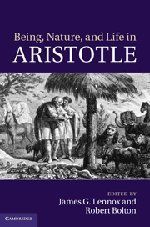
“This volume of essays explores major connected themes in Aristotle’s metaphysics, philosophy of nature, and ethics, especially themes related to essence, definition, teleology, activity, potentiality, and the highest good. The volume is united by the belief that all aspects of Aristotle’s work need to be studied together if any one of the areas of thought is to be fully understood. Many of the papers were contributions to a conference at the University of Pittsburgh entitled ‘Being, Nature, and Life in Aristotle’, to honor Professor Allan Gotthelf’s many contributions to the field of ancient philosophy; a few are contributions from those who were invited but could not attend. The contributors, all longstanding friends of Professor Gotthelf, are among the most accomplished scholars in the field of ancient philosophy today”–
In this book, C. G. Prado addresses the difficult question of when and whether it is rational to end one’s life in order to escape devastating terminal illness. He specifically considers this question in light of the impact of multiculturalism on perceptions and judgments about what is right and wrong, permissible and impermissible. Prado introduces the idea of a “coincidental culture” to clarify the variety of values and commitments that influence decision. He also introduces the idea of a “proxy premise” to deal with reasoning issues that are raised by intractably held beliefs. Primarily intended for medical ethicists, this book will be of interest to anyone concerned about the ability of modern medicine to keep people alive, thereby forcing people to choose between living and dying. In addition, Prado calls upon medical ethicists and practitioners to appreciate the value of a theoretical basis for their work.
How can we establish a political/legal order that in principles does not require the human flourishing of any person or group to be given structured preference over that of any other? Addressing this question as the central problem of political philosophy, Norms of Liberty offers a new conceptual foundation for political liberalism that takes protecting liberty, understood in terms of individual negative rights, as the primary aim of the political/legal order. Rasmussen and Den Uyl argue for construing individual rights as metanormative principles, directly tied to politics, that are used to establish the political/legal conditions under which full moral conduct can take place. These they distinguish from normative principles, used to provide guidance for moral conduct within the ambit of normative ethics. This crucial distinction allows them to develop liberalism as a metanormative theory, not a guide for moral conduct. The moral universe need not be minimized or morality grounded in sentiment or contracts to support liberalism, they show. Rather, liberalism can be supported, and many of its internal tensions avoided, with an ethical framework of Aristotelian inspiration–one that understands human flourishing to be an objective, inclusive, individualized, agent-relative, social, and self-directed activity.
In The Ethics of Romanticism Laurence Lockridge vigorously revives ethical criticism and at the same time brings to light the Romantics’ profound engagement with ethical questions. He argues that a will to value is the pervasive motive of Romantic writers from Blake, Wordsworth, Coleridge and De Quincey to Shelley, Hazlitt, Keats and Byron. They articulate a compelling ethics that has had a significant influence on modern thought. Yet its character has never before been systematically explored within the larger contexts of European thought. Lockridge argues that a focus on the ethical dimension of literature is the single most powerful strategy for structuring a writer’s work as a whole, and that it can even prove congenial. He gives original, interrelated readings of the eight major British Romantic writers. In discussing the place of ethical criticism in modern letters, he qualifies or refutes opposing views – conservative, Marxist, and deconstructive. His book gives strong evidence of one direction criticism might fruitfully take in future years.
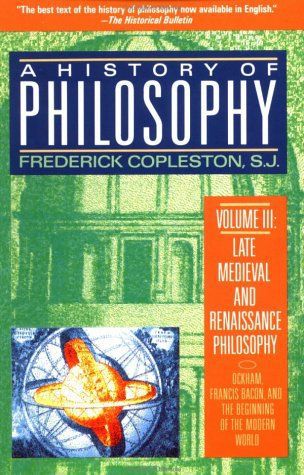
Conceived originally as a serious presentation of the development of philosophy for Catholic seminary students, Frederick Copleston’s nine-volume “A History Of Philosophy” has journeyed far beyond the modest purpose of its author to universal acclaim as the best history of philosophy in English.
ما از اخلاق چه انتظاری داریم؟ این سوال شاید تاحدودی برای عموم مردم و یا متخصصان این رشته قابل پاسخ باشد؛ اینکه خوب بودن را به ما بیاموزد و در تنظیم روابط فردی م...

جشن کتاب تهران به ایستگاه سی و یکم رسیده است. حال و احوال نشر کتاب خوب نیست و باید فرهنگدوستان را به خرید و هدیه دادن کتاب ترغیب نمود. خانه اخلاقپژوهان جوان ب...

بنیاد کتابهای اخلاق اسلامی عمدتا پالایش جان از آلودگیها و آراستن آن به زیباییها است. اندیشه محوری این قبیل کتابها آن است که انسان فعلی آنی نیست که باید باشد...

-
0 Comments