Notice: تابع WP_Block_Type_Registry::register به طورنادرست فراخوانی شد. نامهای نوع بلوک نباید حروف بزرگ داشته باشند. لطفاً برای اطلاعات بیشتر، اشکال زدایی در وردپرس را مشاهده کنید. (این پیام در نگارش 5.0.0 افزوده شده است.) in /home/ethicsho/public_html/wp-includes/functions.php on line 5313
Warning: Use of undefined constant TDC_PATH_LEGACY - assumed 'TDC_PATH_LEGACY' (this will throw an Error in a future version of PHP) in /home/ethicsho/public_html/wp-content/plugins/td-composer/td-composer.php on line 109
Warning: Use of undefined constant TDSP_THEME_PATH - assumed 'TDSP_THEME_PATH' (this will throw an Error in a future version of PHP) in /home/ethicsho/public_html/wp-content/plugins/td-composer/td-composer.php on line 113 بایگانیهای 773 - خانه اخلاق پژوهان جوان Notice: Trying to access array offset on value of type bool in /home/ethicsho/public_html/wp-content/plugins/wp-ulike/inc/general-functions.php on line 807
Gottfried Wilhelm Leibniz (1646-1716) was hailed by Bertrand Russell as ‘one of the supreme intellects of all time’. A towering figure in seventeenth-century philosophy, his complex thought has been championed and satirized in equal measure, most famously in Voltaire’s Candide. In this outstanding introduction to his philosophy, Nicholas Jolley introduces and assesses the whole of Leibniz’s philosophy. Beginning with an introduction to Leibniz’s life and work, he carefully introduces the core elements of Leibniz’s metaphysics: his theories of substance, identity and individuation; monads and space and time; and his important debate over the nature of space and time with Newton’s champion, Samuel Clarke. He then introduces Leibniz’s theories of mind, knowledge, and innate ideas, showing how Leibniz anticipated the distinction between conscious and unconscious states, before examining his theory of free will and the problem of evil. An important feature of the book is its introduction to Leibniz’s moral and political philosophy, an overlooked aspect of his work. The final chapter assesses legacy and the impact of his philosophy on philosophy as a whole, particularly on the work of Immanuel Kant. Throughout, Nicholas Jolley places Leibniz in relation to some of the other great philosophers, such as Descartes, Spinoza and Locke, and discusses Leibniz’s key works, such as the Monadology and Discourse on Metaphysics.
John Pollock aims to construct a theory of rational decision making for real agents–not ideal agents. Real agents have limited cognitive powers, but traditional theories of rationality have applied only to idealized agents that lack such constraints. Pollock argues that theories of ideal rationality are largely irrelevant to the decision making of real agents. Thinking about Acting aims to provide a theory of “real rationality.”
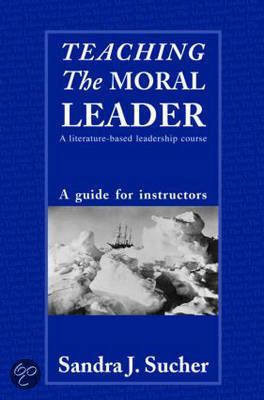
This book is a comprehensive, practical manual to help instructors integrate moral leadership in their own courses, drawing from the experience and resources of the Harvard Business School course ‘The Moral Leader’, an MBA elective taken by thousands of HBS students over nearly twenty years. Through the close study of literature–novels, plays, and historical accounts– followed by rigorous classroom discussion, this innovative course encourages students to confront fundamental moral challenges, to develop skills in moral analysis and judgment, and to come to terms with their own definition of moral leadership. Using this guide’s background material and detailed teaching plans, instructors will be well prepared to lead their students in the study of this vital and important subject. Featuring a website to run alongside that links the manual with the textbook and provides a wealth of extra resources, including on-line links to Harvard Business School case studies and teaching notes this manual forms a perfect complement to The Moral Leader core text also by Sandra Sucher.The detailed and hands-on nature of the guide makes it possible for instructors, with or without a specialized background, to replicate the 13-session Harvard Business School course, or to integrate moral leadership into an existing course, or as a module, or as stand-alone sessions. The manual presents flexible class plans, easily adaptable to a wide variety of business and academic topics. It suggests how to adapt the course to other settings, provides supporting materials, and reviews the approach to teaching The Moral Leader, differentiating it from other literature-based courses. The author, a Harvard Business School professor with a successful record in teaching this course, also brings into the text the kind of real world understanding of effective leadership development that comes from decades of experience as a high level corporate executive. An accompanying student book, focused on class preparation and the context of each work, helps students address questions like: What is the nature of a moral challenge? How do people reason morally? How do leaders – formal and informal – contend with the moral choices they face? How is moral leadership different from leadership of any other kind? Struggling with these questions, both individually and as members of a vibrant learning community, students internalize moral leadership concepts and choices, and develop the skills to pursue it in their careers and personal lives.
ما از اخلاق چه انتظاری داریم؟ این سوال شاید تاحدودی برای عموم مردم و یا متخصصان این رشته قابل پاسخ باشد؛ اینکه خوب بودن را به ما بیاموزد و در تنظیم روابط فردی م...

جشن کتاب تهران به ایستگاه سی و یکم رسیده است. حال و احوال نشر کتاب خوب نیست و باید فرهنگدوستان را به خرید و هدیه دادن کتاب ترغیب نمود. خانه اخلاقپژوهان جوان ب...

بنیاد کتابهای اخلاق اسلامی عمدتا پالایش جان از آلودگیها و آراستن آن به زیباییها است. اندیشه محوری این قبیل کتابها آن است که انسان فعلی آنی نیست که باید باشد...

-
0 Comments