Notice: تابع WP_Block_Type_Registry::register به طورنادرست فراخوانی شد. نامهای نوع بلوک نباید حروف بزرگ داشته باشند. لطفاً برای اطلاعات بیشتر، اشکال زدایی در وردپرس را مشاهده کنید. (این پیام در نگارش 5.0.0 افزوده شده است.) in /home/ethicsho/public_html/wp-includes/functions.php on line 5313
Warning: Use of undefined constant TDC_PATH_LEGACY - assumed 'TDC_PATH_LEGACY' (this will throw an Error in a future version of PHP) in /home/ethicsho/public_html/wp-content/plugins/td-composer/td-composer.php on line 109
Warning: Use of undefined constant TDSP_THEME_PATH - assumed 'TDSP_THEME_PATH' (this will throw an Error in a future version of PHP) in /home/ethicsho/public_html/wp-content/plugins/td-composer/td-composer.php on line 113 بایگانیهای 597 - خانه اخلاق پژوهان جوان Notice: Trying to access array offset on value of type bool in /home/ethicsho/public_html/wp-content/plugins/wp-ulike/inc/general-functions.php on line 807
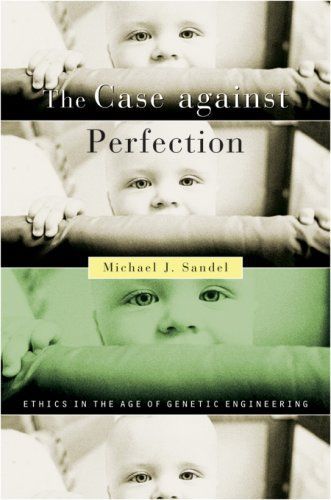
Producer: Heron & CraneBreakthroughs in genetics present us with a promise and a predicament. The promise is that we will soon be able to treat and prevent a host of debilitating diseases. The predicament is that our newfound genetic knowledge may enable us to manipulate our nature–to enhance our genetic traits and those of our children. Although most people find at least some forms of genetic engineering disquieting, it is not easy to articulate why. What is wrong with re-engineering our nature?The Case against Perfection explores these and other moral quandaries connected with the quest to perfect ourselves and our children. Michael Sandel argues that the pursuit of perfection is flawed for reasons that go beyond safety and fairness. The drive to enhance human nature through genetic technologies is objectionable because it represents a bid for mastery and dominion that fails to appreciate the gifted character of human powers and achievements. Carrying us beyond familiar terms of political discourse, this book contends that the genetic revolution will change the way philosophers discuss ethics and will force spiritual questions back onto the political agenda.In order to grapple with the ethics of enhancement, we need to confront questions largely lost from view in the modern world. Since these questions verge on theology, modern philosophers and political theorists tend to shrink from them. But our new powers of biotechnology make these questions unavoidable. Addressing them is the task of this book, by one of America’s preeminent moral and political thinkers.
Social Motivation, Justice, and the Moral Emotions proposes an attribution theory of interpersonal or social motivation that distinguishes between the role of thinking and feeling in determining action. The place of this theory within the larger fields of motivation and attributional analyses is explored. It features new thoughts concerning social motivation on such topics as help giving, aggression, achievement evaluation, compliance to commit a transgression, as well as new contributions to the understanding of social justice. Included also is material on moral emotions, with discussions of admiration, contempt, envy, gratitude, and other affects not considered in Professor Weiner’s prior work. The text also contains previously unexamined topics regarding social inferences of arrogance and modesty and the role of mediators versus moderators in theory building. Divided into five chapters, this book: *Considers the logical development and structure of a proposed theory of social motivation and justice; *Reviews meta-analytic tests of the theory within the contexts of help giving and aggression and examines issues related to cultural and individual differences; *Focuses on moral emotions including an analysis of admiration, envy, gratitude, jealousy, scorn, and others; *Discusses conditions where reward decreases motivation while punishment augments strivings; and *Provides applications that are beneficial in the classroom, in therapy, and in training programs. Social Motivation, Justice, and the Moral Emotions appeals to practicing and research psychologists and advanced students in a variety of fields including social, educational, personality, political/legal, health, and clinical psychology. It will also serve as a supplement in courses on motivational psychology, emotion and motivation, altruism and/or pro-social behavior, aggression, social judgment, and morality. Also included is the raw material (e.g., questionnaires, surveys, etc.) for 13 experiments relating to core predictions of the proposed attribution theory.
Featuring Douglas J. Soccio’s lucid and conversational prose and a well-chosen, reader-friendly array of succinct excerpts from canonical primary sources, ARCHETYPES OF WISDOM brings philosophy to life for its readers through the examination of many paradigmatic philosophies and philosophers. Very much a student-focused book that speaks out of Soccio’s non-condescending desire to speak to students where they “are” and not where they “should be,” ARCHETYPES OF WISDOM includes numerous pedagogical illustrations and features (Philosophical Queries, a Marginal Glossary, Chapter Summaries, End-of-Chapter Questions for Reflection, to name a few) to make this often-times daunting subject the approachable and engaging subject it ought to be. The Sixth Edition represents a careful revision, with all changes made by Soccio to enhance and refresh the book’s reader-praised search-for-wisdom motif. In particular, this edition features new coverage of Lao-Tzu; expanded, chapter-length treatment of Kierkegaard; and an engaging introduction to the complex landscape of philosophy in the twentieth century focusing on the two archetypal thinkers of this time period: Wittgenstein and Heidegger. Soccio’s lauded prose is also enhanced in this Sixth Edition by the text’s new full-color design. The text is supported by an unmatched array of teaching and learning resources that include CengageNOW-a powerful online tutorial and course management system, and dynamic easy-to-use lecture and class preparation tools exclusive to Wadsworth, a part of Cengage Learning.
ما از اخلاق چه انتظاری داریم؟ این سوال شاید تاحدودی برای عموم مردم و یا متخصصان این رشته قابل پاسخ باشد؛ اینکه خوب بودن را به ما بیاموزد و در تنظیم روابط فردی م...

جشن کتاب تهران به ایستگاه سی و یکم رسیده است. حال و احوال نشر کتاب خوب نیست و باید فرهنگدوستان را به خرید و هدیه دادن کتاب ترغیب نمود. خانه اخلاقپژوهان جوان ب...

بنیاد کتابهای اخلاق اسلامی عمدتا پالایش جان از آلودگیها و آراستن آن به زیباییها است. اندیشه محوری این قبیل کتابها آن است که انسان فعلی آنی نیست که باید باشد...

-
0 Comments