Notice: تابع WP_Block_Type_Registry::register به طورنادرست فراخوانی شد. نامهای نوع بلوک نباید حروف بزرگ داشته باشند. لطفاً برای اطلاعات بیشتر، اشکال زدایی در وردپرس را مشاهده کنید. (این پیام در نگارش 5.0.0 افزوده شده است.) in /home/ethicsho/public_html/wp-includes/functions.php on line 5313
Warning: Use of undefined constant TDC_PATH_LEGACY - assumed 'TDC_PATH_LEGACY' (this will throw an Error in a future version of PHP) in /home/ethicsho/public_html/wp-content/plugins/td-composer/td-composer.php on line 109
Warning: Use of undefined constant TDSP_THEME_PATH - assumed 'TDSP_THEME_PATH' (this will throw an Error in a future version of PHP) in /home/ethicsho/public_html/wp-content/plugins/td-composer/td-composer.php on line 113 بایگانیهای 471 - خانه اخلاق پژوهان جوان Notice: Trying to access array offset on value of type bool in /home/ethicsho/public_html/wp-content/plugins/wp-ulike/inc/general-functions.php on line 807
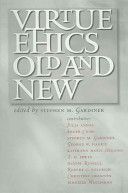
In Virtue Ethics, Old and New, ten philosophers seek to enrich the contemporary understanding and development of virtue ethics through a detailed examination of some key contributions from its past. Their essays demonstrate the continuing relevance of the history of moral philosophy to contemporary debates.
During the last two decades, applied ethics has not only developed into one of the most important philosophical disciplines but has also differentiated into so many subdisciplines that it is becoming increasingly difficult to survey it. A much-needed overview is provided by the eighteen contributions to this volume, in which internationally renowned experts deal with central questions of environmental ethics, bioethics and medical ethics, professional and business ethics, social, political, and legal ethics as well as with the aims and foundations of applied ethics in general. Thanks to a philosophical introduction and selected bibliographical references added to each chapter, the book is very well suited as a basis for courses in applied ethics. It is directed not only to philosophers and to ethicists from other disciplines but to scientists in general and to all people who are interested in the rational discussion of moral principles and their application to concrete problems in the sciences and in everyday life.
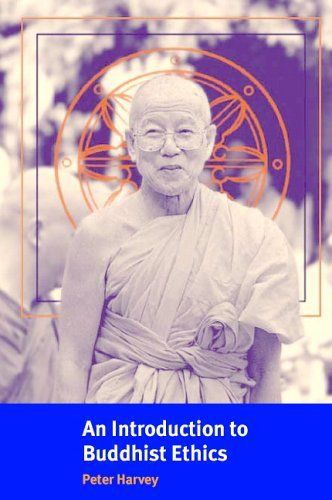
This systematic introduction to Buddhist ethics is aimed at anyone interested in Buddhism, including students, scholars and general readers. Peter Harvey is the author of the acclaimed Introduction to Buddhism (Cambridge, 1990), and his new book is written in a clear style, assuming no prior knowledge. At the same time it develops a careful, probing analysis of the nature and practical dynamics of Buddhist ethics in both its unifying themes and in the particularities of different Buddhist traditions. The book applies Buddhist ethics to a range of issues of contemporary concern: humanity’s relationship with the rest of nature; economics; war and peace; euthanasia; abortion; the status of women; and homosexuality. Professor Harvey draws on texts of the main Buddhist traditions, and on historical and contemporary accounts of the behaviour of Buddhists, to describe existing Buddhist ethics, to assess different views within it, and to extend its application into new areas.
Philosophers typically see the issue of free will and determinism in terms of a debate between two standard positions. Incompatibilism holds that freedom and responsibility require causal and metaphysical independence from the impersonal forces of nature. According to compatibilism, people are free and responsible as long as their actions are governed by their desires. In Freedom Within Reason, Susan Wolf charts a path between these traditional positions: We are not free and responsible, she argues, for actions that are governed by desires that we cannot help having. But the wish to form our own desires from nothing is both futile and arbitrary. Some of the forces beyond our control are friends to freedom rather than enemies of it: they endow us with faculties of reason, perception, and imagination, and provide us with the data by which we come to see and appreciate the world for what it is. The independence we want, Wolf argues, is not independence from the world, but independence from forces that prevent or preclude us from choosing how to live in light of a sufficient appreciation of the world. The freedom we want is a freedom within reason and the world.
Firmly established as the standard text for undergraduate courses in ethics, this concise, lively book combines clear explanations of the main theories of ethics with discussions of interesting examples. Topics covered include famine relief, homosexuality, and the treatment of animals. The text’s versatility allows it to be widely used not only in ethical theory courses, but also in applied ethics courses of all kinds.
ما از اخلاق چه انتظاری داریم؟ این سوال شاید تاحدودی برای عموم مردم و یا متخصصان این رشته قابل پاسخ باشد؛ اینکه خوب بودن را به ما بیاموزد و در تنظیم روابط فردی م...

جشن کتاب تهران به ایستگاه سی و یکم رسیده است. حال و احوال نشر کتاب خوب نیست و باید فرهنگدوستان را به خرید و هدیه دادن کتاب ترغیب نمود. خانه اخلاقپژوهان جوان ب...

بنیاد کتابهای اخلاق اسلامی عمدتا پالایش جان از آلودگیها و آراستن آن به زیباییها است. اندیشه محوری این قبیل کتابها آن است که انسان فعلی آنی نیست که باید باشد...

-
0 Comments