Notice: تابع WP_Block_Type_Registry::register به طورنادرست فراخوانی شد. نامهای نوع بلوک نباید حروف بزرگ داشته باشند. لطفاً برای اطلاعات بیشتر، اشکال زدایی در وردپرس را مشاهده کنید. (این پیام در نگارش 5.0.0 افزوده شده است.) in /home/ethicsho/public_html/wp-includes/functions.php on line 5313
Warning: Use of undefined constant TDC_PATH_LEGACY - assumed 'TDC_PATH_LEGACY' (this will throw an Error in a future version of PHP) in /home/ethicsho/public_html/wp-content/plugins/td-composer/td-composer.php on line 109
Warning: Use of undefined constant TDSP_THEME_PATH - assumed 'TDSP_THEME_PATH' (this will throw an Error in a future version of PHP) in /home/ethicsho/public_html/wp-content/plugins/td-composer/td-composer.php on line 113 بایگانیهای 376 - خانه اخلاق پژوهان جوان Notice: Trying to access array offset on value of type bool in /home/ethicsho/public_html/wp-content/plugins/wp-ulike/inc/general-functions.php on line 807
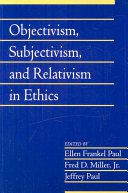
Do we desire things because they are good, or are they good because we desire them? Objectivists answer that we desire things because they are good; subjectivists answer that things are good because we desire them. Further, does it make sense to account for moral disagreement by claiming, as the moral relativist does, that something might be good for one person but not for another? Some essays in this book consider whether objective moral truths can be grounded in an understanding of the nature of human beings as rational and social animals. Some discuss the ethical theories of historical figures-Aristotle, Aquinas, or Kant-or offer critical assessments of the work of recent and contemporary theorists-such as Moore, Putnam, Ayn Rand, Philippa Foot, and Rosalind Hursthouse. Other essays ask whether moral principles and values can be constructed through a process of practical reasoning or deliberation. Still others consider what the phenomenology of our moral experiences can reveal about moral objectivity.
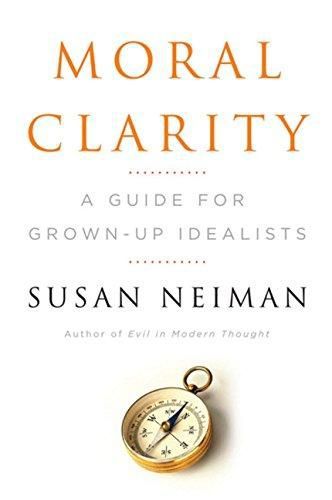
Susan Neiman is a moral philosopher committed to making the tools of her trade relevant to real life. In Moral Clarity, she shows how resurrecting a moral vocabulary good and evil, heroism and nobility can steer us clear of the dogmas of the right and the helpless pragmatism of the left. In search of a framework for forming clear opinions and taking responsible action on today’s urgent political and social questions, Neiman reaches back to the eighteenth century, retrieving a set of virtues happiness, reason, reverence, and hope that were held high by every Enlightenment thinker. She shows that the pursuit of moral clarity is not a matter of religious faith but is open to all who are committed to these ideals, believers and nonbelievers alike. And she draws on literature, evolutionary theory, and other contemporary research to show why, by keeping before us the distinction between the real and the possible, these ideals continue to guide and inspire.
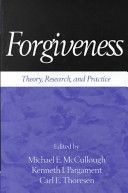
Bringing together a distinguished array of researchers and scholars, this volume reviews the breadth of current knowledge on the psychology of forgiveness. In addition to presenting cutting-edge theory and research, the book outlines crucial issues that must be addressed to advance the state of the science in years to come. The first section provides a historical and conceptual overview, examining definitional problems and giving special attention to religious and cultural influences on how forgiveness is understood and experienced. The biological, developmental, social, and personality foundations of forgiveness are then explored. The final section covers applications in clinical research and practice, including guidelines for studying and applying forgiveness-based strategies in psychotherapy, counseling, and interventions to promote health. This volume will be of interest to a broad interdisciplinary audience of researchers, educators, students, and practicing professionals.
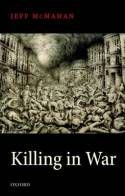
The dominant view throughout history has been that mere participation in an unjust war is not wrong. Soldiers are not to blame for the unjustness of the military actions into which their leaders throw them. The principles governing what is permissible in war apply equally to any combatants.Jeff McMahan argues powerfully that this dominant view must be overturned. Combatants who fight for an unjust cause are acting wrongly and are themselves morally responsible for their own wrongdoings. If a soldier fighting for an unjust cause kills an opposing soldier, he is killing an innocentperson and is morally responsible for that killing.This is a highly controversial view, which threatens to undermine the moral standing of military personnel in many contexts around the world today. McMahan shows that the view is nevertheless one which common sense can see to be demanded by our basic moral intuitions. We must rethink our attitudesto the moral role of the individual in war.
ما از اخلاق چه انتظاری داریم؟ این سوال شاید تاحدودی برای عموم مردم و یا متخصصان این رشته قابل پاسخ باشد؛ اینکه خوب بودن را به ما بیاموزد و در تنظیم روابط فردی م...

جشن کتاب تهران به ایستگاه سی و یکم رسیده است. حال و احوال نشر کتاب خوب نیست و باید فرهنگدوستان را به خرید و هدیه دادن کتاب ترغیب نمود. خانه اخلاقپژوهان جوان ب...

بنیاد کتابهای اخلاق اسلامی عمدتا پالایش جان از آلودگیها و آراستن آن به زیباییها است. اندیشه محوری این قبیل کتابها آن است که انسان فعلی آنی نیست که باید باشد...

-
0 Comments