Notice: تابع WP_Block_Type_Registry::register به طورنادرست فراخوانی شد. نامهای نوع بلوک نباید حروف بزرگ داشته باشند. لطفاً برای اطلاعات بیشتر، اشکال زدایی در وردپرس را مشاهده کنید. (این پیام در نگارش 5.0.0 افزوده شده است.) in /home/ethicsho/public_html/wp-includes/functions.php on line 5313
Warning: Use of undefined constant TDC_PATH_LEGACY - assumed 'TDC_PATH_LEGACY' (this will throw an Error in a future version of PHP) in /home/ethicsho/public_html/wp-content/plugins/td-composer/td-composer.php on line 109
Warning: Use of undefined constant TDSP_THEME_PATH - assumed 'TDSP_THEME_PATH' (this will throw an Error in a future version of PHP) in /home/ethicsho/public_html/wp-content/plugins/td-composer/td-composer.php on line 113 بایگانیهای 3376 - خانه اخلاق پژوهان جوان Notice: Trying to access array offset on value of type bool in /home/ethicsho/public_html/wp-content/plugins/wp-ulike/inc/general-functions.php on line 807
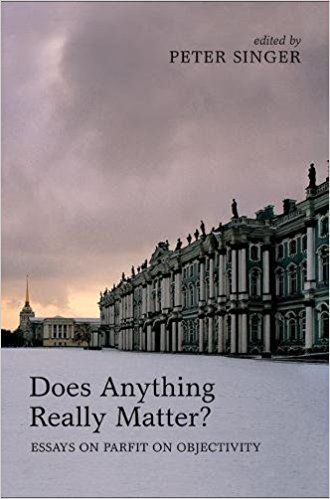
“In the first two volumes of On What Matters Derek Parfit argues that there are objective moral truths, and other normative truths about what we have reasons to believe, and to want, and to do. He thus challenges a view of the role of reason in action that can be traced back to David Hume, and is widely assumed to be correct, not only by philosophers but also by economists. In defending his view, Parfit argues that if there are no objective normative truths, nihilism follows, and nothing matters. He criticizes, often forcefully, many leading contemporary philosophers working on the nature of ethics, including Simon Blackburn, Stephen Darwall, Allen Gibbard, Frank Jackson, Peter Railton, Mark Schroeder, Michael Smith, and Sharon Street. ‘Does Anything Really Matter?’ gives these philosophers an opportunity to respond to Parfit’s criticisms, and includes essays on Parfit’s views by Richard Chappell, Andrew Huddleston, Katarzyna de Lazari-Radek and Peter Singer, Bruce Russell, and Larry Temkin. A third volume of On What Matters, in which Parfit engages with his critics and breaks new ground in finding significant agreement between his own views and theirs, is appearing as a separate companion volume.”–
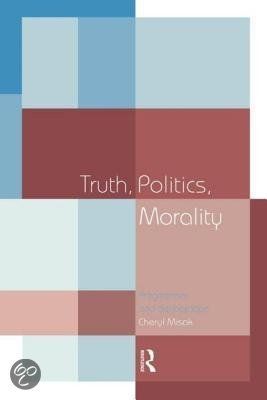
Can we criticize those who hold beliefs which are likely to be wrong? Or must we abandon notions of truth and objectivity and claim that certain beliefs are best for us while incompatible beliefs are best for others? Truth, Politics, Moralityaddresses this crucial issue and its implications for democracy by arguing that the notion of truth ought to be returned to the center of moral and political philosophy. Cheryl Misak persuasively makes a case for a certain kind of pragmatism in which a true belief is one that could not be improved by inquiry, nor defeated by experience or argument. Her compelling discussion makes sense of the idea that, despite conflict, pluralism, and the expression of difference, our moral and political beliefs aim at truth and can be subject to justified criticism.
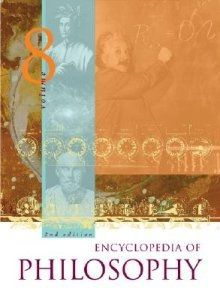
Since 1967, the Encyclopedia of Philosophy, described by Booklist as ”the best and most comprehensive English-language reference source for philosophy,” has been the cornerstone of the philosophy reference shelf. Lauded for its clear and accessible presentation of wide-ranging philosophical subjects, the Encyclopedia has earned its place as a first-stop resource for general readers, students and educators. A Supplement to the first edition was released to critical acclaim in 1996. A new and updated edition of this multivolume set – the first comprehensive new edition in almost 40 years – has been compiled under the close guidance of a 20-member board of scholars headed by Donald Borchert (Ohio University). Containing material from hundreds of highly distinguished contributors representing the world’s top universities and institutions, the new edition has a truly global perspective. It contains more than 2,100 entries – including more than 450 new articles. Among the many topics covered are African, Islamic, Jewish, Russian, Chinese, and Buddhist philosophies; bioethics and biomedical ethics; art and aesthetics; epistemology; metaphysics; peace and war; social and political philosophy; the Holocaust; feminist thought; and much more. Additionally, the second edition also features 1,000 biographical entries on major figures in philosophical thought throughout history.
Ethics and World Religions presents eighteen original cases that discuss ethical issues of diverse peoples and religions situated around the world. Each case is followed by two commentaries that explore the relevant issues from the perspective of two different religious traditions. Commentaries highlight the religious values, principles, and laws that are relevant, and they also suggest the range of options for resolution that exist within the perspective of that religion.
ما از اخلاق چه انتظاری داریم؟ این سوال شاید تاحدودی برای عموم مردم و یا متخصصان این رشته قابل پاسخ باشد؛ اینکه خوب بودن را به ما بیاموزد و در تنظیم روابط فردی م...

جشن کتاب تهران به ایستگاه سی و یکم رسیده است. حال و احوال نشر کتاب خوب نیست و باید فرهنگدوستان را به خرید و هدیه دادن کتاب ترغیب نمود. خانه اخلاقپژوهان جوان ب...

بنیاد کتابهای اخلاق اسلامی عمدتا پالایش جان از آلودگیها و آراستن آن به زیباییها است. اندیشه محوری این قبیل کتابها آن است که انسان فعلی آنی نیست که باید باشد...

-
0 Comments