Notice: تابع WP_Block_Type_Registry::register به طورنادرست فراخوانی شد. نامهای نوع بلوک نباید حروف بزرگ داشته باشند. لطفاً برای اطلاعات بیشتر، اشکال زدایی در وردپرس را مشاهده کنید. (این پیام در نگارش 5.0.0 افزوده شده است.) in /home/ethicsho/public_html/wp-includes/functions.php on line 5313
Warning: Use of undefined constant TDC_PATH_LEGACY - assumed 'TDC_PATH_LEGACY' (this will throw an Error in a future version of PHP) in /home/ethicsho/public_html/wp-content/plugins/td-composer/td-composer.php on line 109
Warning: Use of undefined constant TDSP_THEME_PATH - assumed 'TDSP_THEME_PATH' (this will throw an Error in a future version of PHP) in /home/ethicsho/public_html/wp-content/plugins/td-composer/td-composer.php on line 113 بایگانیهای 3333 - خانه اخلاق پژوهان جوان Notice: Trying to access array offset on value of type bool in /home/ethicsho/public_html/wp-content/plugins/wp-ulike/inc/general-functions.php on line 807
This volume examines comparatively the views and principles of seven prominent ethical traditions on the issue of the making of state and national boundaries. The traditions represented are Judaism, Christianity, Islam, natural law, Confucianism, liberalism and international law. Each contributor is an expert within one of these traditions and demonstrates how that tradition can handle the five dominant methods of altering state and national boundaries: conquest, settlement, purchase, inheritance and secession. Readers range from upper-level undergraduates to scholars in philosophy, political science, international relations and comparative religion.
In addressing the political and theoretical debates between critical and post-Marxist theorists, this book discusses the politics of communication and rationality, subjectivity, sovereignty, ethics and deliberative democracy, considering questions such as: * Does the theory of communicative action justify deliberative democracy? * Is a theory of hegemony compatible with an account which relies upon an ideal of communicative success? * Is autonomy a good which should be fostered? * Can the ideal of democracy extend beyond the nation state? * Does post-Marxism have anything interesting to say about ethics? Analysing the work of Ernesto Laclau and Jürgen Habermas – as representatives of different choices made in regard to theory, politics and morality – Ethics and Politics in Contemporary Theorydevelops a critical response to the contrasting conclusions of these approaches.
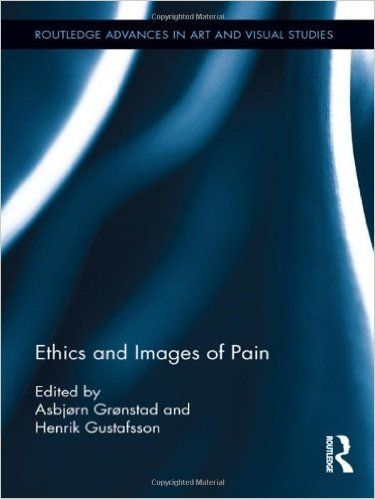
Few phenomena are as formative of our experience of the visual world as displays of suffering. But what does it mean to have an ethical experience of disturbing or traumatizing images? What kind of ethical proposition does an image of pain mobilize? How may the spectator learn from and make use of the painful image as a source of ethical reflection? Engaging with a wide range of visual media–from painting, theatre, and sculpture, to photography, film, and video–this interdisciplinary collection of essays by leading and emerging scholars of visual culture offers a reappraisal of the increasingly complex relationship between images of pain and the ethics of viewing. Ethics and Images of Pain reconsiders the persistent and ever pertinent nexus of aesthetics and ethics, the role of painful images as generators of unpredictable forms of affect, the moral transformation of spectatorship, the ambivalence of the witness and the representation of afflication as a fundamental form of our shared scopic experience. The instructive and illuminating essays in the collection introduce a phenomenological context in which to make sense of our current ecology of excruciating images, one that accentuates notions of responsibility, empathy, and imagination. Contributors trace the images of pain across a miscellany of case studies, and amongst the topics addressed are: the work of artists as disparate as Doris Salcedo, Anselm Kiefer and Bendik Riis; photographs from Abu Ghraib and Rwanda; Hollywood war films and animated documentaries; performances of self-immolations and incidents of police brutality captured on mobile phones.
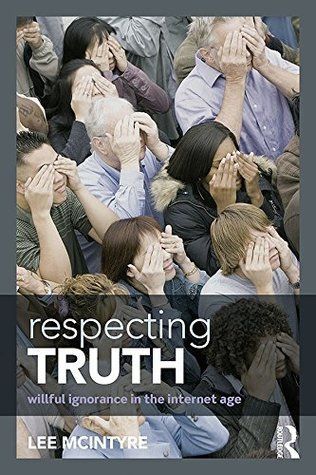
Throughout history, humans have always indulged in certain irrationalities and held some fairly wrong-headed beliefs. But in his newest book, philosopher Lee McIntyre shows how we’ve now reached a watershed moment for ignorance in the modern era, due to the volume of misinformation, the speed with which it can be digitally disseminated, and the savvy exploitation of our cognitive weaknesses by those who wish to advance their ideological agendas. In Respecting Truth: Willful Ignorance in the Internet Age, McIntyre issues a call to fight back against this slide into the witless abyss. In the tradition of Galileo, the author champions the importance of using tested scientific methods for arriving at true beliefs, and shows how our future survival is dependent on a more widespread, reasonable world.
ما از اخلاق چه انتظاری داریم؟ این سوال شاید تاحدودی برای عموم مردم و یا متخصصان این رشته قابل پاسخ باشد؛ اینکه خوب بودن را به ما بیاموزد و در تنظیم روابط فردی م...

جشن کتاب تهران به ایستگاه سی و یکم رسیده است. حال و احوال نشر کتاب خوب نیست و باید فرهنگدوستان را به خرید و هدیه دادن کتاب ترغیب نمود. خانه اخلاقپژوهان جوان ب...

بنیاد کتابهای اخلاق اسلامی عمدتا پالایش جان از آلودگیها و آراستن آن به زیباییها است. اندیشه محوری این قبیل کتابها آن است که انسان فعلی آنی نیست که باید باشد...

-
0 Comments