Notice: تابع WP_Block_Type_Registry::register به طورنادرست فراخوانی شد. نامهای نوع بلوک نباید حروف بزرگ داشته باشند. لطفاً برای اطلاعات بیشتر، اشکال زدایی در وردپرس را مشاهده کنید. (این پیام در نگارش 5.0.0 افزوده شده است.) in /home/ethicsho/public_html/wp-includes/functions.php on line 5313
Warning: Use of undefined constant TDC_PATH_LEGACY - assumed 'TDC_PATH_LEGACY' (this will throw an Error in a future version of PHP) in /home/ethicsho/public_html/wp-content/plugins/td-composer/td-composer.php on line 109
Warning: Use of undefined constant TDSP_THEME_PATH - assumed 'TDSP_THEME_PATH' (this will throw an Error in a future version of PHP) in /home/ethicsho/public_html/wp-content/plugins/td-composer/td-composer.php on line 113 بایگانیهای 3103 - خانه اخلاق پژوهان جوان Notice: Trying to access array offset on value of type bool in /home/ethicsho/public_html/wp-content/plugins/wp-ulike/inc/general-functions.php on line 807
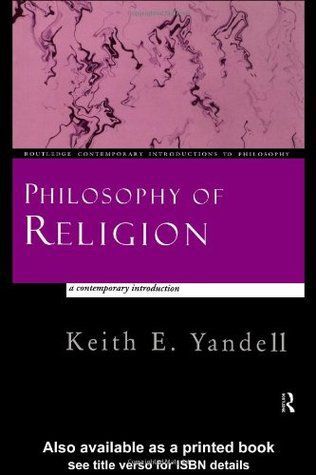
Philosophy of Religion provides an account of the central issues and viewpoints in the philosophy of religion but also shows how such issues can be rationally assessed and in what ways competing views can be rationally assessed. It includes major philosophical figures in religious traditions as well as discussions by important contemporary philosophers. Keith Yandell deals lucidly and constructively with representative views from Judaism, Christianity, Islam, Hinduism, Buddhism, and Jainism. This book will appeal to students of both philosophy and religion as well as to the general reader interested in the subject.Unique features of Philosophy of Religion: * key reading and new reading in the subject area* questions at the ends of chapters* a glossary of philosophical terms* annotated further reading
In the Fall of 1930 Will Durant found himself outside his home in Lake Hill, New York, raking leaves. He was approached by a well-dressed man who told him in a quiet tone that he was going to kill himself unless the philosopher could give him a valid reason not to. Not having the time to wax philosophic on the matter, Durant did his best to furnish the man with reasons to continue his existence. Haunted by the encounter with the despondent stranger, Durant contacted 100 luminaries in the arts, politics, religion and sciences, challenging them to respond not only to the fundamental question of life’s meaning (in the abstract) but also to relate how they each (in the particular) found meaning, purpose and fulfillment in their own lives. Durant turned their answers and his own into a book entitled “On The Meaning Of Life,” which was released to the general public in 1932. Unpromoted, the litte treasure found its way into few hands, and almost no copies of the book exist today. Now available for a new generation through Promethean Press, “On The Meaning Of Life” is a powerful book on a very powerful topic. In this book Will Durant has fashioned an unprecedented “dream team” of luminaries that is both profound and diverse: poets, philosophers, saints, inmates, athletes, Nobel Prize winners, college professors, psychologists, entertainers, musicians, authors and leaders. Within their varied insights, despite their uniqueness as individuals and the very different lives they led, the reader will note a consistent thread running through their viewpoints, revealing a commonality among human beings who not only seek meaning in life, but who actually achieve it.
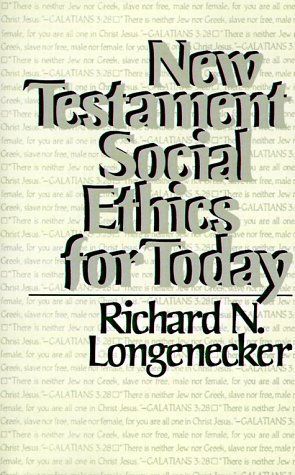
To Answer the Question of what role the New Testament should play in the formation and expression of Christian social morality today, Richard Longenecker here proposes a developmental hermeneutic, which distinguishes between “dedared principles” and “described practices” in the New Testament writings. With this distinction in mind; he focuses on the three couplets of Galatians 3:28 – “neither Jew nor Greek, slave nor free, male nor female” – showing how these matters were treated in early Christian thought and explaining their meaning for us today. In so doing, Longenecker lays a hermeneutical foundation for the much larger discussion of Christian social ethics. Book jacket.
In this important study Nicholas Wolterstorff interprets and discusses the ethics of belief which Locke developed in the latter part of Book IV of his “Essay Concerning Human Understanding.” After lengthy discussion on the origin of ideas, the nature of language, and the nature of knowledge, Locke got around to arguing what he indicated in the opening Epistle to the Reader to be his overarching aim: how we ought to govern our belief, especially (though by no means only) on matters of religion and morality. Professor Wolterstorff shows that what above all placed this topic on Locke’s agenda was the collapse, in his day, of a once-unified moral and religious tradition in Europe into warring factions. Locke’s epistemology was thus a culturally and socially engaged one; it was his response to the cultural crisis of his day. Convinced also that of genuine knowledge we human beings have very little, Locke argued that instead of following tradition we ought to turn “to the things themselves” and let “Reason be your guide.” This view of Locke, in which centrality is given to the last book of the “Essay,” invites an interpretation of the origins of modern philosophy different from most of the current ones. Accordingly, after discussing Hume’s powerful attack on Locke’s recommended practice, Wolterstorff argues for Locke’s originality and discusses his contribution to the modernity of post-sixteenth-century philosophy.
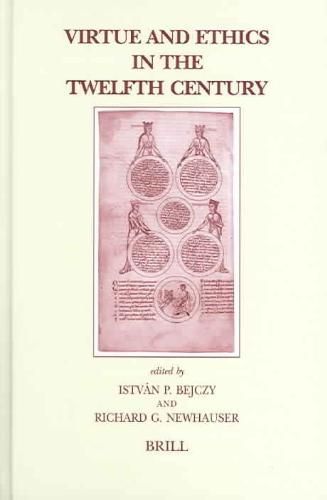
This volume analyses the renewal of Western moral thought in the twelfth century. This renewal was marked by a burgeoning of increasingly systematized texts, a lively reception of ancient moral philosophy and a greater emphasis on the psychology of the moral agent. Five contributions are devoted to monastic morality (Anselm of Canterbury, Bernard of Clairvaux, Hugh of Folieto, Hugh of Saint Victor, Peter Abelard); another five to (proto-)scholastic thought (John of Salisbury, Peter Abelard, Stephen Langton, the idea of natural virtue, the justification of lying); three discuss moral issues in a wider social context (liberality vs. avarice, royal justice in England, the cardinal virtues and the French monarchy). The two remaining contributions explore ethical traditions in Islamic and Jewish philosophy.
ما از اخلاق چه انتظاری داریم؟ این سوال شاید تاحدودی برای عموم مردم و یا متخصصان این رشته قابل پاسخ باشد؛ اینکه خوب بودن را به ما بیاموزد و در تنظیم روابط فردی م...

جشن کتاب تهران به ایستگاه سی و یکم رسیده است. حال و احوال نشر کتاب خوب نیست و باید فرهنگدوستان را به خرید و هدیه دادن کتاب ترغیب نمود. خانه اخلاقپژوهان جوان ب...

بنیاد کتابهای اخلاق اسلامی عمدتا پالایش جان از آلودگیها و آراستن آن به زیباییها است. اندیشه محوری این قبیل کتابها آن است که انسان فعلی آنی نیست که باید باشد...

-
0 Comments