Notice: تابع WP_Block_Type_Registry::register به طورنادرست فراخوانی شد. نامهای نوع بلوک نباید حروف بزرگ داشته باشند. لطفاً برای اطلاعات بیشتر، اشکال زدایی در وردپرس را مشاهده کنید. (این پیام در نگارش 5.0.0 افزوده شده است.) in /home/ethicsho/public_html/wp-includes/functions.php on line 5313
Warning: Use of undefined constant TDC_PATH_LEGACY - assumed 'TDC_PATH_LEGACY' (this will throw an Error in a future version of PHP) in /home/ethicsho/public_html/wp-content/plugins/td-composer/td-composer.php on line 109
Warning: Use of undefined constant TDSP_THEME_PATH - assumed 'TDSP_THEME_PATH' (this will throw an Error in a future version of PHP) in /home/ethicsho/public_html/wp-content/plugins/td-composer/td-composer.php on line 113 بایگانیهای 2992 - خانه اخلاق پژوهان جوان Notice: Trying to access array offset on value of type bool in /home/ethicsho/public_html/wp-content/plugins/wp-ulike/inc/general-functions.php on line 807
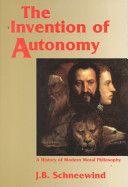
This remarkable book is the most comprehensive study ever written of the history of moral philosophy in the seventeenth and eighteenth centuries. Its aim is to set Kant’s still influential ethics in its historical context by showing in detail what the central questions in moral philosophy were for him and how he arrived at his own distinctive ethical views. The book is organised into four main sections, each exploring moral philosophy by discussing the work of many influential philosophers of the seventeenth and eighteenth centuries. In an epilogue the author discusses Kant’s view of his own historicity, and of the aims of moral philosophy. In its range, in its analyses of many philosophers not discussed elsewhere, and in revealing the subtle interweaving of religious and political thought with moral philosophy, this is an unprecedented account of the evolution of Kant’s ethics.
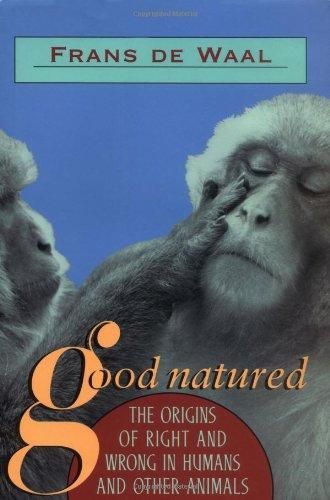
To observe a dog’s guilty look.to witness a gorilla’s self-sacrifice for a wounded mate, to watch an elephant herd’s communal effort on behalf of a stranded calf–to catch animals in certain acts is to wonder what moves them. Might there he a code of ethics in the animal kingdom? Must an animal be human to he humane? In this provocative book, a renowned scientist takes on those who have declared ethics uniquely human Making a compelling case for a morality grounded in biology, he shows how ethical behavior is as much a matter of evolution as any other trait, in humans and animals alike.World famous for his brilliant descriptions of Machiavellian power plays among chimpanzees-the nastier side of animal life–Frans de Waal here contends that animals have a nice side as well. Making his case through vivid anecdotes drawn from his work with apes and monkeys and holstered by the intriguing, voluminous data from his and others’ ongoing research, de Waal shows us that many of the building blocks of morality are natural: they can he observed in other animals. Through his eyes, we see how not just primates but all kinds of animals, from marine mammals to dogs, respond to social rules, help each other, share food, resolve conflict to mutual satisfaction, even develop a crude sense of justice and fairness.Natural selection may be harsh, but it has produced highly successful species that survive through cooperation and mutual assistance. De Waal identifies this paradox as the key to an evolutionary account of morality, and demonstrates that human morality could never have developed without the foundation of fellow feeling our species shares with other animals. As his work makes clear, a morality grounded in biology leads to an entirely different conception of what it means to he human–and humane.
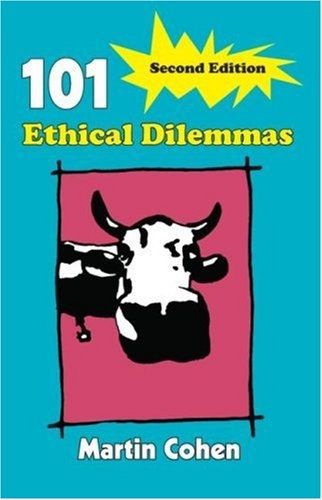
Will meat eaters get into heaven? Do trees have rights? Is it ever right to design a baby? What would you do? Would you always do the right thing? IS there a right thing? In this second edition of his thought-provoking and highly engaging introduction to ethics, Martin Cohen brings us eleven brand new ethical dilemmas including: The Dodgy Donor Clinic The Famous Footbridge Dilemma The Human Canonball. From overcrowded lifeboats to the censor’s pen, Martin Cohen’s stimulating and amusing dilemmas reveal the subtleties, complexities and contradictions that make up the rich tapestry of ethics. From DIY babies and breeding experiments to ‘Twinkies courtroom drama’ and Newgate Prison, there is a dilemma for everyone. Dilemmas from the worlds of medical, business, legal and war ethics; dilemmas in the shape of beautiful and ugly sisters, frogs, kings, ancient volcanic islands and suspiciously exotic villages. This book may not help you become a good person, but atleast you will have had a good think about it.
Offering clear and reliable guidance to the ideas of philosophers from antiquity to the present day and to the major philosophical systems around the globe, he Oxford Companion to Philosophy is the definitive philosophical reference work for readers at all levels. For ten years the original volume has served as a stimulating introduction for general readers and as an indispensable guide for students and scholars. A distinguished international assembly of 249 philosophers contributed almost 2,000 entries, and many of these have now been considerably revised and updated in this major new edition; to these are added over 300 brand-new pieces on a fascinating range of current topics such as animal consciousness, cloning, corporate responsibility, the family, globalization, terrorism . Here is, indeed, a world of thought, with entries on idealism and empiricism, epicureanism and stoicism, passion and emotion, deism and pantheism. The contributors represent a veritable who’s who of modern philosophy, including such eminent figures as Isaiah Berlin, Sissela Bok, Ronald Dworkin, John Searle, Michael Walzer, and W. V. Quine. We meet the great thinkers–from Aristotle and Plato, to Augustine and Aquinas, to Descartes and Kant, to Nietzsche and Schopenhauer, right up to contemporary thinkers such as Richard Rorty, Jacques Derrida, Luce Iragaray, and Noam Chomsky. There are short entries on key concepts such as personal identity and the mind-body problem, major doctrines from utilitarianism to Marxism, schools of thought such as the Heidelberg School or the Vienna Circle, and contentious public issues such as abortion, capital punishment, and welfare. In addition, the book offers short explanations of philosophical terms (qualia, supervenience, iff), puzzles (the Achilles paradox, the prisoner’s dilemma), and curiosities (the philosopher’s stone, slime). Almost every entry is accompanied by suggestions for further reading, and the book includes both a chronological chart of the history of philosophy and a gallery of portraits of eighty eminent philosophers. An indispensable guide and a constant source of stimulation and enlightenment, The Oxford Companion to Philosophy will appeal to everyone interested in abstract thought, the eternal questions, and the foundations of human understanding.
ما از اخلاق چه انتظاری داریم؟ این سوال شاید تاحدودی برای عموم مردم و یا متخصصان این رشته قابل پاسخ باشد؛ اینکه خوب بودن را به ما بیاموزد و در تنظیم روابط فردی م...

جشن کتاب تهران به ایستگاه سی و یکم رسیده است. حال و احوال نشر کتاب خوب نیست و باید فرهنگدوستان را به خرید و هدیه دادن کتاب ترغیب نمود. خانه اخلاقپژوهان جوان ب...

بنیاد کتابهای اخلاق اسلامی عمدتا پالایش جان از آلودگیها و آراستن آن به زیباییها است. اندیشه محوری این قبیل کتابها آن است که انسان فعلی آنی نیست که باید باشد...

-
0 Comments