Notice: تابع WP_Block_Type_Registry::register به طورنادرست فراخوانی شد. نامهای نوع بلوک نباید حروف بزرگ داشته باشند. لطفاً برای اطلاعات بیشتر، اشکال زدایی در وردپرس را مشاهده کنید. (این پیام در نگارش 5.0.0 افزوده شده است.) in /home/ethicsho/public_html/wp-includes/functions.php on line 5313
Warning: Use of undefined constant TDC_PATH_LEGACY - assumed 'TDC_PATH_LEGACY' (this will throw an Error in a future version of PHP) in /home/ethicsho/public_html/wp-content/plugins/td-composer/td-composer.php on line 109
Warning: Use of undefined constant TDSP_THEME_PATH - assumed 'TDSP_THEME_PATH' (this will throw an Error in a future version of PHP) in /home/ethicsho/public_html/wp-content/plugins/td-composer/td-composer.php on line 113 بایگانیهای 2719 - خانه اخلاق پژوهان جوان Notice: Trying to access array offset on value of type bool in /home/ethicsho/public_html/wp-content/plugins/wp-ulike/inc/general-functions.php on line 807
Sentimental Rules is an ambitious and highly interdisciplinary work, which proposes and defends a new theory about the nature and evolution of moral judgment. In it, philosopher Shaun Nichols develops the theory that emotions play a critical role in both the psychological and the cultural underpinnings of basic moral judgment. Nichols argues that our norms prohibiting the harming of others are fundamentally associated with our emotional responses to those harms, and that such “sentimental rules” enjoy an advantage in cultural evolution, which partly explains the success of certain moral norms. This has sweeping and exciting implications for philosophical ethics. Nichols builds on an explosion of recent intriguing experimental work in psychology on our capacity for moral judgment and shows how this empirical work has broad import for enduring philosophical problems. The result is an account that illuminates fundamental questions about the character of moral emotions and the role of sentiment and reason in how we make our moral judgments. This work should appeal widely across philosophy and the other disciplines that comprise cognitive science.
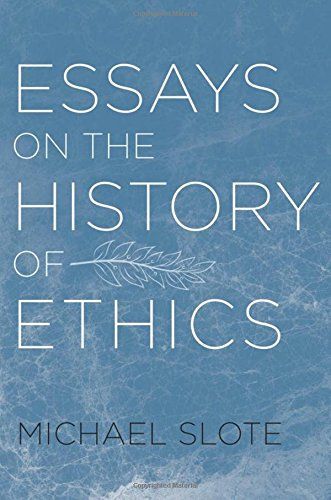
In Essays on the History of Ethics Michael Slote collects his essays that deal with aspects of both ancient and modern ethical thought and seek to point out conceptual/normative comparisons and contrasts among different views. Arranged in chronological order of the philosopher under discussion, the relationship between ancient ethical theory and modern moral philosophy is a major theme of several of the papers and, in particular, Plato, Aristotle, Hume, Kant, and/or utilitarianism feature centrally in (most of) the discussions. One essay seeks to show that there are three main ways to conceive the relationship between human well-being and virtue: one is dualistic a la Kant (they are disparate notions); one is the sort of reductionism familiar from the history of utilitarianismm; and one, not previously named by philosophers, is implicit in the approach the Stoics, Plato, and Aristotle take (in their different ways) to the topic of virtue and well-being. Slote names this third approach “elevationism” and argue that it is more promising than either reductionism or dualism. Two of the essays are narrowly focused on Hume’s ethics, and one seeks to show that even Kant’s opponents have reason to accept a number of important and original Kantian ideas. Finally, the two last essays in the volume talk about ethical thought during the last half of the twentieth century and the first few years of the twenty-first, arguing that the care ethics of Carol Gilligan and Nel Noddings has a distinctive and important contribution to make to ongoing ethical theorizing–and to our understanding of the history of ethics as well.
Is it possible to study ethics objectively, or are moral judgements inevitably subjective? Are ancient theories of ethics of any contemporary relevance? Which ethical theory offers the most convincing explanation of how best to live one’s life? Eight Theories of Ethics is a comprehensive introduction to the theories of ethics encountered by first-time students. Gordon Graham introduces the fundamental concepts that underpin ethics, such as relativism and objectivity, and then devotes his attention to each of the eight major theories of ethics: * egoism* hedonism* naturalism and virtue theory* existentialism* Kantianism* utilitarianism* contractualism* religion. Throughout the book, Gordon Graham draws on examples from great moral philosophers such as Aristotle, Kant and Mill, and also from contemporary debates over human nature, the environment and citizenship. Eight Theories of Ethics is written in an engaging and student-friendly style, with detailed suggestions for further reading at the end of each chapter – including original sources and contemporary discussions. It is ideal for anyone coming to this area of philosophy for the first time, and for those studying ethics in related disciplines such as politics, law, nursing and medicine.
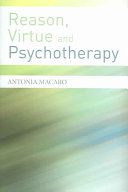
In recent years philosophy has become increasingly popular as an alternative source of inspiration in helping people to lead a good life. Ancient Greek philosophy in particular was conceived as a practical endeavour intended to have an impact on how people lived.This book, loosely organised around the structure of Aristotle’s Nicomachean Ethics, draws on Aristotle’s ideas about virtue and on contemporary virtue ethics to create a framework that can be used by psychotherapists and counsellors in helping their clients – or themselves – to live flourishing lives. It provides a clear discussion of Aristotle’s key ideas about virtue and the good life and places these within the context of other philosophical and psychological theories, both ancient and contemporary. It goes on to address the practical relevance of these ideas to the everyday work of the therapist, providing suggestions for practice and a number of useful exercises. These will be particularly helpful for practitioners working with issues such as finding value and meaning in life, making difficult decisions, developing helpful character traits, managing disruptive emotions and increasing self-control.Reason, Virtue and Psychotherapy bridges the gap between academic philosophy and real life. It will be of interest to practising counsellors and psychotherapists as well as students and trainees in these areas. Since it is written in a clear, jargon-free style, it is also appropriate for all those who are curious about how ancient understandings can improve their life.
ما از اخلاق چه انتظاری داریم؟ این سوال شاید تاحدودی برای عموم مردم و یا متخصصان این رشته قابل پاسخ باشد؛ اینکه خوب بودن را به ما بیاموزد و در تنظیم روابط فردی م...

جشن کتاب تهران به ایستگاه سی و یکم رسیده است. حال و احوال نشر کتاب خوب نیست و باید فرهنگدوستان را به خرید و هدیه دادن کتاب ترغیب نمود. خانه اخلاقپژوهان جوان ب...

بنیاد کتابهای اخلاق اسلامی عمدتا پالایش جان از آلودگیها و آراستن آن به زیباییها است. اندیشه محوری این قبیل کتابها آن است که انسان فعلی آنی نیست که باید باشد...

-
0 Comments