Notice: تابع WP_Block_Type_Registry::register به طورنادرست فراخوانی شد. نامهای نوع بلوک نباید حروف بزرگ داشته باشند. لطفاً برای اطلاعات بیشتر، اشکال زدایی در وردپرس را مشاهده کنید. (این پیام در نگارش 5.0.0 افزوده شده است.) in /home/ethicsho/public_html/wp-includes/functions.php on line 5313
Warning: Use of undefined constant TDC_PATH_LEGACY - assumed 'TDC_PATH_LEGACY' (this will throw an Error in a future version of PHP) in /home/ethicsho/public_html/wp-content/plugins/td-composer/td-composer.php on line 109
Warning: Use of undefined constant TDSP_THEME_PATH - assumed 'TDSP_THEME_PATH' (this will throw an Error in a future version of PHP) in /home/ethicsho/public_html/wp-content/plugins/td-composer/td-composer.php on line 113 بایگانیهای 2697 - خانه اخلاق پژوهان جوان Notice: Trying to access array offset on value of type bool in /home/ethicsho/public_html/wp-content/plugins/wp-ulike/inc/general-functions.php on line 807
In his many best-selling books, Yi-Fu Tuan seizes big, metaphysical issues and considers them in uniquely accessible ways. Human Goodness is evidence of this talent and is both as simple, and as epic, as it sounds. Genuinely good people and their actions, Tuan contends, are far from boring, naive, and trite; they are complex, varied, and enormously exciting. In a refreshing antidote to skeptical times, he writes of ordinary human courtesies, as simple as busing your dishes after eating, that make society functional and livable. And he writes of extraordinary courage and inventiveness under the weight of adversity and evil. He considers the impact of communal goodness over time, and his sketches of six very different individuals—Confucius, Socrates, Wolfgang Amadeus Mozart, John Keats, Dr. Albert Schweitzer, and Simone Weil—confirm that there are human lives that can encourage and lead us to our better selves.
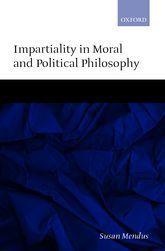
The debate between impartialists and their critics has dominated both moral and political philosophy for over a decade. Characteristically, impartialists argue that any sensible form of impartialism can accommodate the partial concerns we have for others. By contrast, partialists deny that this is so. They see the division as one which runs exceedingly deep and argue that, at the limit, impartialist thinking requires that we marginalise those concerns and commitments that make our lives meaningful. This book attempts to show both that the dispute between impartialists and their critics runs very deep, and that it can nonetheless be resolved. The resolution begins by asking how impartialist political philosophy can defend the priority of justice when it conflicts with people’s commitments to their conceptions of the good. It is argued that priority can only defended if political impartialism has a moral foundation, and that moral foundation must not be a foundation in the ideal of equality (as is often thought), but a foundation in the partial concerns we have for others. In short, impartialist moral philosophy must take our partial concerns as central if it is to gain allegiance. However, if it does take our partial concerns as central, then it can generate a defence of political impartialism which shows why justice must take priority, but which also acknowledges that pluralism about the good is permanent.
Death is the one ineradicable fact of being human. How we think about it is central to our understanding of and engagement with the world. Our human and cultural construction of death and dying shapes the structure and purpose of our institutions and has underpinned the work of scholars and philosophers down the ages. In its organization and values, its form and content, its construction of the past and of the future, the relationship between law and mortality remains one of the most perplexing and under-theorized aspects of the legal system, whether dealing with AIDS, euthanasia, sadomasochism, “mercy killings,” murder, the judicial review of the right to die, or the criminal death sentence. This timely and important collection brings together scholars from Australia, Britain and the United States to reconsider the relationship between death and the law, in ways that will be of particular interest to post-structural philosophers and legal theorists and to cultural theorists and practitioners in a much wider field, for whom there is nothing more certain than the existence of “death and taxes.” Contributors, and their university or col
ما از اخلاق چه انتظاری داریم؟ این سوال شاید تاحدودی برای عموم مردم و یا متخصصان این رشته قابل پاسخ باشد؛ اینکه خوب بودن را به ما بیاموزد و در تنظیم روابط فردی م...

جشن کتاب تهران به ایستگاه سی و یکم رسیده است. حال و احوال نشر کتاب خوب نیست و باید فرهنگدوستان را به خرید و هدیه دادن کتاب ترغیب نمود. خانه اخلاقپژوهان جوان ب...

بنیاد کتابهای اخلاق اسلامی عمدتا پالایش جان از آلودگیها و آراستن آن به زیباییها است. اندیشه محوری این قبیل کتابها آن است که انسان فعلی آنی نیست که باید باشد...

-
0 Comments