Notice: تابع WP_Block_Type_Registry::register به طورنادرست فراخوانی شد. نامهای نوع بلوک نباید حروف بزرگ داشته باشند. لطفاً برای اطلاعات بیشتر، اشکال زدایی در وردپرس را مشاهده کنید. (این پیام در نگارش 5.0.0 افزوده شده است.) in /home/ethicsho/public_html/wp-includes/functions.php on line 5313
Warning: Use of undefined constant TDC_PATH_LEGACY - assumed 'TDC_PATH_LEGACY' (this will throw an Error in a future version of PHP) in /home/ethicsho/public_html/wp-content/plugins/td-composer/td-composer.php on line 109
Warning: Use of undefined constant TDSP_THEME_PATH - assumed 'TDSP_THEME_PATH' (this will throw an Error in a future version of PHP) in /home/ethicsho/public_html/wp-content/plugins/td-composer/td-composer.php on line 113 بایگانیهای 2654 - خانه اخلاق پژوهان جوان Notice: Trying to access array offset on value of type bool in /home/ethicsho/public_html/wp-content/plugins/wp-ulike/inc/general-functions.php on line 807
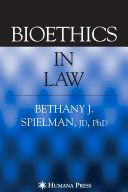
This groundbreaking volume is the first to analyze how and to what extent bioethics considerations influence today’s judges. Previous books have attended to the law that governs bioethics problems, but Bioethics in Law is the first to examine when and how bioethical issues impact judicial reasoning and decision-making. The author undertakes careful analysis of health care committee recommendations, institutional review board determinations, bioethics commission reports, bioethics research materials, briefs of bioethics amicus curiae, and bioethics expert testimony that has been used in legal proceedings during the last decade. Through such examination, Bioethics in Law is able to offer critical insight into the ways that judges have invited, accepted, relied on, followed, critiqued, ignored, rejected, overridden, transformed, and otherwise responded to bioethics communications. This volume is the on the cutting-edge of the relationship of bioethics to law, and explores how law receives, assesses, and uses bioethics. Unlike previous treatments, which perceive the relationship between law and bioethics in an abstract or idealized sense, this book presents actual communications that have found their way to law, and then analyzes their effect on judicial outcomes.
The idea of a virtue has traditionally been important in ethics, but only recently has gained attention as an idea that can explain how we ought to form beliefs as well as how we ought to act. Moral philosophers and epistemologists have different approaches to the idea of intellectual virtue; here, Michael DePaul and Linda Zagzebski bring work from both fields together for the first time to address all of the important issues. It will be required reading for anyone working on either side of the debate.
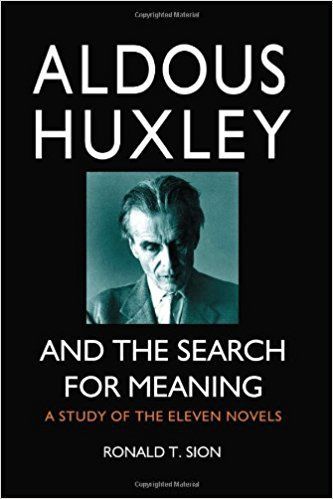
“This critical biography explores Huxley’s life-long quest for self-actualization by interfacing the events of his life with details of the creative period that produced each book, weaving Huxley’s letters, essays and interviews with the thematic content of each novel, providing a unique look into the man’s life and work”–Provided by publisher.
This book provides a novel formulation and defence of moral error theory. It also provides a novel solution to the so-called now what question; viz., the question what we should do with our moral thought and talk after moral error theory. The novel formulation of moral error theory uses pragmatic presupposition rather than conceptual entailment to argue that moral judgments carry a non-negotiable commitment to categorical moral reasons. The new answer to the now what question is pragmatic presupposition substitutionism: we should substitute our current moral judgments, which pragmatically presuppose the existence of categorical moral reasons with ‘schmoral’ judgments that pragmatically presuppose the existence of a specific class of prudential reasons. These are prudential reasons that, when we act on them, contribute to the satisfaction of what the author calls ‘the fundamental desire’; namely, the desire to live in a world with mutually beneficial cooperation.
Kant is generally conceived to have offered little attention to the fact that we experience the world in and through our bodies. This book argues that this standard image of the great German philosopher is radically wrong. Not only does Kant – throughout his career and in works published before and after the Critique of pure reason – reflect constantly upon the fact that human life is embodied, but the Critique of pure reason itself may be read as a critical reflection aimed at exploring some significant philosophical implications of this fact. Bringing this aspect of Kant’s philosophy into focus is important, not only because it sheds new light on our understanding of Kant’s work, but also because it is relevant to contemporary discussions in philosophy about embodiment, learning and practice. By taking his philosophy of embodiment into account, the author makes Kant stand out as a true contemporary in new and unexpected ways.
ما از اخلاق چه انتظاری داریم؟ این سوال شاید تاحدودی برای عموم مردم و یا متخصصان این رشته قابل پاسخ باشد؛ اینکه خوب بودن را به ما بیاموزد و در تنظیم روابط فردی م...

جشن کتاب تهران به ایستگاه سی و یکم رسیده است. حال و احوال نشر کتاب خوب نیست و باید فرهنگدوستان را به خرید و هدیه دادن کتاب ترغیب نمود. خانه اخلاقپژوهان جوان ب...

بنیاد کتابهای اخلاق اسلامی عمدتا پالایش جان از آلودگیها و آراستن آن به زیباییها است. اندیشه محوری این قبیل کتابها آن است که انسان فعلی آنی نیست که باید باشد...

-
0 Comments