Notice: تابع WP_Block_Type_Registry::register به طورنادرست فراخوانی شد. نامهای نوع بلوک نباید حروف بزرگ داشته باشند. لطفاً برای اطلاعات بیشتر، اشکال زدایی در وردپرس را مشاهده کنید. (این پیام در نگارش 5.0.0 افزوده شده است.) in /home/ethicsho/public_html/wp-includes/functions.php on line 5313
Warning: Use of undefined constant TDC_PATH_LEGACY - assumed 'TDC_PATH_LEGACY' (this will throw an Error in a future version of PHP) in /home/ethicsho/public_html/wp-content/plugins/td-composer/td-composer.php on line 109
Warning: Use of undefined constant TDSP_THEME_PATH - assumed 'TDSP_THEME_PATH' (this will throw an Error in a future version of PHP) in /home/ethicsho/public_html/wp-content/plugins/td-composer/td-composer.php on line 113 بایگانیهای 2473 - خانه اخلاق پژوهان جوان Notice: Trying to access array offset on value of type bool in /home/ethicsho/public_html/wp-content/plugins/wp-ulike/inc/general-functions.php on line 807
This long-awaited book sets out the implications of Habermas’s theory of communicative action for moral theory. ‘Discourse ethics’ attempts to reconstruct a moral point of view from which normative claims can be imperative with a procedure of justification based on reasoned agreement among participants in practical discourse.
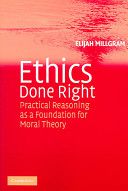
Ethics Done Right examines how practical reasoning can be put into the service of ethical and moral theory. Elijah Millgram demonstrates that the key to thinking about ethics is to understand generally how to make decisions. The papers in this volume support a methodological approach and trace the connections between two kinds of theory in utilitarianism, Kantian ethics, virtue ethics, Hume’s moral philosophy, and moral particularism. Unlike other studies of ethics, the book does not advocate a particular moral theory. Rather, it offers a tool that enables one to decide for oneself.
Step-by-step instructions to build deep and continuous experience of kindheartedness, a fundamental Buddhist practice, interwoven with the personal recollections of the author, for ten years translator for the Dalai Lama.
Sullivan and Kymlicka seek to provide an alternative to post-9/11 pessimism about the ability of serious ethical dialogue to resolve disagreements and conflict across national, religious, and cultural differences. It begins by acknowledging the gravity of the problem: on our tightly interconnected planet, entire populations look for moral guidance to a variety of religious and cultural traditions, and these often stiffen, rather than soften, opposing moral perceptions. How, then, to set minimal standards for the treatment of persons while developing moral bases for coexistence and cooperation across different ethical traditions? The Globalization of Ethics argues for a tempered optimism in approaching these questions. Its distinguished contributors report on some of the most globally influential traditions of ethical thought in order to identify the resources within each tradition for working toward consensus and accommodation among the ethical traditions that shape the contemporary world.
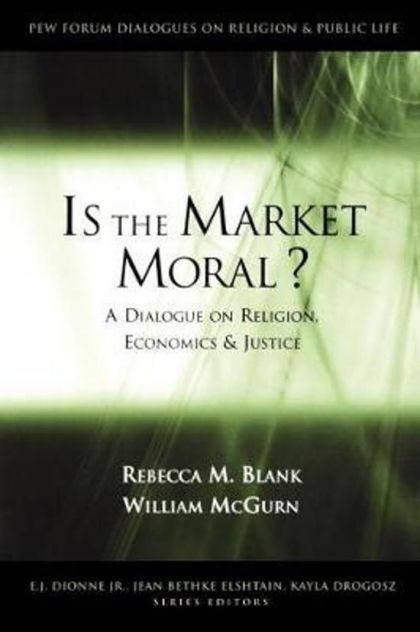
In the great tradition of moral argument about the nature of the economic market, Rebecca Blank and William McGurn join to debate the fundamental questionsequality and efficiency, productivity and social justice, individual achievement and personal rights in the workplace, the costs and benefits of corporate and entrepreneurial capitalism. And they do so grounded in both economic sophistication and religious commitment.Rebecca Blank is an economist by training and describes herself as culturally Protestant in the habits of mind and heart. She has also chaired the committee that wrote the statement on Christian faith and economic life adopted by the United Church of Christ. Addressing market failure, for her, requires that sometimes “freedom to choose” give way to other human values.William McGurn, a journalist and a Roman Catholic, uses his expertise in economics to reflect on the teachings of the church concerning the morality of the market. For McGurn, humans reach their fullest potential when they are free from the constraints of others. He writes that “our quarrel is not so much with Adam Smith or Milton Friedman but with the Providence that so clearly designed man to be his most prosperous at his most free.”This book grapples with the new imperatives of a global economy while working in the classic tradition of political economy which always treated seriously the questions of morality, justice, productivity, and freedom.
ما از اخلاق چه انتظاری داریم؟ این سوال شاید تاحدودی برای عموم مردم و یا متخصصان این رشته قابل پاسخ باشد؛ اینکه خوب بودن را به ما بیاموزد و در تنظیم روابط فردی م...

جشن کتاب تهران به ایستگاه سی و یکم رسیده است. حال و احوال نشر کتاب خوب نیست و باید فرهنگدوستان را به خرید و هدیه دادن کتاب ترغیب نمود. خانه اخلاقپژوهان جوان ب...

بنیاد کتابهای اخلاق اسلامی عمدتا پالایش جان از آلودگیها و آراستن آن به زیباییها است. اندیشه محوری این قبیل کتابها آن است که انسان فعلی آنی نیست که باید باشد...

-
0 Comments