Notice: تابع WP_Block_Type_Registry::register به طورنادرست فراخوانی شد. نامهای نوع بلوک نباید حروف بزرگ داشته باشند. لطفاً برای اطلاعات بیشتر، اشکال زدایی در وردپرس را مشاهده کنید. (این پیام در نگارش 5.0.0 افزوده شده است.) in /home/ethicsho/public_html/wp-includes/functions.php on line 5313
Warning: Use of undefined constant TDC_PATH_LEGACY - assumed 'TDC_PATH_LEGACY' (this will throw an Error in a future version of PHP) in /home/ethicsho/public_html/wp-content/plugins/td-composer/td-composer.php on line 109
Warning: Use of undefined constant TDSP_THEME_PATH - assumed 'TDSP_THEME_PATH' (this will throw an Error in a future version of PHP) in /home/ethicsho/public_html/wp-content/plugins/td-composer/td-composer.php on line 113 بایگانیهای 2403 - خانه اخلاق پژوهان جوان Notice: Trying to access array offset on value of type bool in /home/ethicsho/public_html/wp-content/plugins/wp-ulike/inc/general-functions.php on line 807
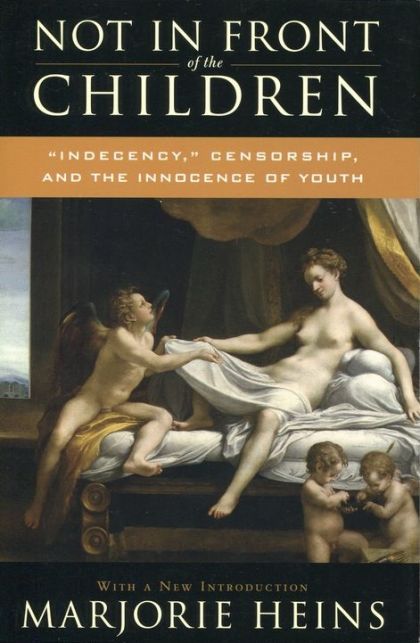
From Huckleberry Finn to Harry Potter, from Internet filters to the v-chip, censorship exercised on behalf of children and adolescents is often based on the assumption that they must be protected from “indecent” information that might harm their development—whether in art, in literature, or on a Web site. But where does this assumption come from, and is it true? In Not in Front of the Children, Marjorie Heins explores the fascinating history of “indecency” laws and other restrictions aimed at protecting youth. From Plato’s argument for rigid censorship, through Victorian laws aimed at repressing libidinous thoughts, to contemporary battles over sex education in public schools and violence in the media, Heins guides us through what became, and remains, an ideological minefield. With fascinating examples drawn from around the globe, she suggests that the “harm to minors” argument rests on shaky foundations.
The Blackwell Guide to Business Ethics, written by international experts in the field, acquaints the reader with theoretical and pedagogical issues, ethical issues in the practice of business and exciting new directions in the field.
Liberalism, the founding philosophy of many constitutional democracies, has been criticized in recent years from both the left and the right for placing too much faith in individual rights and distributive justice. David Johnston argues for a reinterpretation of liberal principles he contends will restore liberalism to a position of intellectual leadership from which it can guide political and social reforms. He begins by surveying the three major contemporary schools of liberal political thought–rights-based, perfectionist, and political liberalism– and, by weeding out their weaknesses, sketches a new approach he calls humanist liberalism. Valuable not only for its contribution to academic scholarship but also as a means of introducing liberal political thought to serious undergraduate students.–Choice Raises … a tremendous number of criticisms of the standard accounts of liberal politics. The book is novel, built on solid foundations, [and] very powerful, clever, well thought out.–Alan Ryan, Princeton University This clear and useful new work moves through a swift yet thorough critique of three leading liberal philosophies to reach a sketch of a new, improved theory.–Virginia Quarterly Review
Art and Moralityis a collection of groundbreaking new papers on the theme of aesthetics and ethics, and the link between the two subjects. A group of world-class contributors tackle the important question that arise when one thinks about the moral dimensions of art and the aesthetic dimension of moral life. The volume is a significant contribution to the philosophical literature, opening up unexplored questions and shedding new light on more traditional debates in aesthetics. The topics explored include the relation of aesthetic to ethical judgment; the relation of artistic experience to moral consciousness; the moral status of fiction; the concepts of sentimentality and decadence; the moral dimension of critical practice, pictorial art and music; the moral significance of tragedy; and the connections between artistic and moral issues elaborated in the writings of central figures in modern philosophy such as Kant, Schopenhauer and Nietzsche.
ما از اخلاق چه انتظاری داریم؟ این سوال شاید تاحدودی برای عموم مردم و یا متخصصان این رشته قابل پاسخ باشد؛ اینکه خوب بودن را به ما بیاموزد و در تنظیم روابط فردی م...

جشن کتاب تهران به ایستگاه سی و یکم رسیده است. حال و احوال نشر کتاب خوب نیست و باید فرهنگدوستان را به خرید و هدیه دادن کتاب ترغیب نمود. خانه اخلاقپژوهان جوان ب...

بنیاد کتابهای اخلاق اسلامی عمدتا پالایش جان از آلودگیها و آراستن آن به زیباییها است. اندیشه محوری این قبیل کتابها آن است که انسان فعلی آنی نیست که باید باشد...

-
0 Comments