Notice: تابع WP_Block_Type_Registry::register به طورنادرست فراخوانی شد. نامهای نوع بلوک نباید حروف بزرگ داشته باشند. لطفاً برای اطلاعات بیشتر، اشکال زدایی در وردپرس را مشاهده کنید. (این پیام در نگارش 5.0.0 افزوده شده است.) in /home/ethicsho/public_html/wp-includes/functions.php on line 5313
Warning: Use of undefined constant TDC_PATH_LEGACY - assumed 'TDC_PATH_LEGACY' (this will throw an Error in a future version of PHP) in /home/ethicsho/public_html/wp-content/plugins/td-composer/td-composer.php on line 109
Warning: Use of undefined constant TDSP_THEME_PATH - assumed 'TDSP_THEME_PATH' (this will throw an Error in a future version of PHP) in /home/ethicsho/public_html/wp-content/plugins/td-composer/td-composer.php on line 113 بایگانیهای 2310 - خانه اخلاق پژوهان جوان Notice: Trying to access array offset on value of type bool in /home/ethicsho/public_html/wp-content/plugins/wp-ulike/inc/general-functions.php on line 807
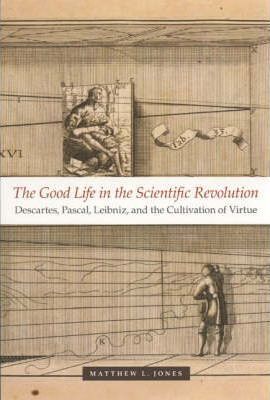
Amid the unrest, dislocation, and uncertainty of seventeenth-century Europe, readers seeking consolation and assurance turned to philosophical and scientific books that offered ways of conquering fears and training the mind—guidance for living a good life. The Good Life in the Scientific Revolution presents a triptych showing how three key early modern scientists, René Descartes, Blaise Pascal, and Gottfried Leibniz, envisioned their new work as useful for cultivating virtue and for pursuing a good life. Their scientific and philosophical innovations stemmed in part from their understanding of mathematics and science as cognitive and spiritual exercises that could create a truer mental and spiritual nobility. In portraying the rich contexts surrounding Descartes’ geometry, Pascal’s arithmetical triangle, and Leibniz’s calculus, Matthew L. Jones argues that this drive for moral therapeutics guided important developments of early modern philosophy and the Scientific Revolution.
Aimed at the beginning student, it presents the ideas of the major philosophers and their schools of thought in a readable and engaging way, highlighting the central points in each contributor’s doctrines and offering a lucid discussion of the next-level details that both fills out the general themes and encourages the reader to pursue the arguments still further through a detailed guide to further reading.
Medical error is a leading problem of health care in the United States. Each year, more patients die as a result of medical mistakes than are killed by motor vehicle accidents, breast cancer, or AIDS. While most government and regulatory efforts are directed toward reducing and preventing errors, the actions that should follow the injury or death of a patient are still hotly debated. According to Nancy Berlinger, conversations on patient safety are missing several important components: religious voices, traditions, and models. In After Harm, Berlinger draws on sources in theology, ethics, religion, and culture to create a practical and comprehensive approach to addressing the needs of patients, families, and clinicians affected by medical error. She emphasizes the importance of acknowledging fallibility, telling the truth, confronting feelings of guilt and shame, and providing just compensation. After Harm adds important human dimensions to an issue that has profound consequences for patients and health care providers.
This book takes a fresh look at the most dynamic area of American law today, comprising the fields of copyright, patent, trademark, trade secrecy, publicity rights, and misappropriation. Topics range from copyright in private letters to defensive patenting of business methods, from moral rights in the visual arts to the banking of trademarks, from the impact of the court of patent appeals to the management of Mickey Mouse. The history and political science of intellectual property law, the challenge of digitization, the many statutes and judge-made doctrines, and the interplay with antitrust principles are all examined. The treatment is both positive (oriented toward understanding the law as it is) and normative (oriented to the reform of the law). Previous analyses have tended to overlook the paradox that expanding intellectual property rights can effectively reduce the amount of new intellectual property by raising the creators’ input costs. Those analyses have also failed to integrate the fields of intellectual property law. They have failed as well to integrate intellectual property law with the law of physical property, overlooking the many economic and legal-doctrinal parallels.This book demonstrates the fundamental economic rationality of intellectual property law, but is sympathetic to critics who believe that in recent decades Congress and the courts have gone too far in the creation and protection of intellectual property rights.
ما از اخلاق چه انتظاری داریم؟ این سوال شاید تاحدودی برای عموم مردم و یا متخصصان این رشته قابل پاسخ باشد؛ اینکه خوب بودن را به ما بیاموزد و در تنظیم روابط فردی م...

جشن کتاب تهران به ایستگاه سی و یکم رسیده است. حال و احوال نشر کتاب خوب نیست و باید فرهنگدوستان را به خرید و هدیه دادن کتاب ترغیب نمود. خانه اخلاقپژوهان جوان ب...

بنیاد کتابهای اخلاق اسلامی عمدتا پالایش جان از آلودگیها و آراستن آن به زیباییها است. اندیشه محوری این قبیل کتابها آن است که انسان فعلی آنی نیست که باید باشد...

-
0 Comments