Notice: تابع WP_Block_Type_Registry::register به طورنادرست فراخوانی شد. نامهای نوع بلوک نباید حروف بزرگ داشته باشند. لطفاً برای اطلاعات بیشتر، اشکال زدایی در وردپرس را مشاهده کنید. (این پیام در نگارش 5.0.0 افزوده شده است.) in /home/ethicsho/public_html/wp-includes/functions.php on line 5313
Warning: Use of undefined constant TDC_PATH_LEGACY - assumed 'TDC_PATH_LEGACY' (this will throw an Error in a future version of PHP) in /home/ethicsho/public_html/wp-content/plugins/td-composer/td-composer.php on line 109
Warning: Use of undefined constant TDSP_THEME_PATH - assumed 'TDSP_THEME_PATH' (this will throw an Error in a future version of PHP) in /home/ethicsho/public_html/wp-content/plugins/td-composer/td-composer.php on line 113 بایگانیهای 2302 - خانه اخلاق پژوهان جوان Notice: Trying to access array offset on value of type bool in /home/ethicsho/public_html/wp-content/plugins/wp-ulike/inc/general-functions.php on line 807
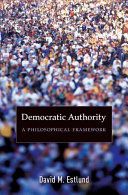
Democracy is not naturally plausible. Why turn such important matters over to masses of people who have no expertise? Many theories of democracy answer by appealing to the intrinsic value of democratic procedure, leaving aside whether it makes good decisions. In Democratic Authority, David Estlund offers a groundbreaking alternative based on the idea that democratic authority and legitimacy must depend partly on democracy’s tendency to make good decisions. Just as with verdicts in jury trials, Estlund argues, the authority and legitimacy of a political decision does not depend on the particular decision being good or correct. But the “epistemic value” of the procedure–the degree to which it can generally be accepted as tending toward a good decision–is nevertheless crucial. Yet if good decisions were all that mattered, one might wonder why those who know best shouldn’t simply rule. Estlund’s theory–which he calls “epistemic proceduralism”–avoids epistocracy, or the rule of those who know. He argues that while some few people probably do know best, this can be used in political justification only if their expertise is acceptable from all reasonable points of view. If we seek the best epistemic arrangement in this respect, it will be recognizably democratic–with laws and policies actually authorized by the people subject to them.
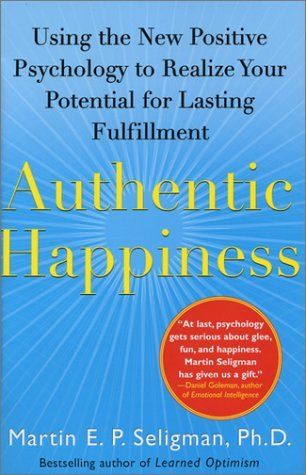
In this national bestseller — Martin Seligman’s most stimulating, persuasive book to date — the acclaimed author of Learned Optimism introduces yet another revolutionary idea. Drawing on groundbreaking scientific research, Seligman shows how Positive Psychology is shifting the profession’s paradigm away from its narrow-minded focus on pathology, victimology, and mental illness to positive emotion and mental health. Happiness, studies show, is not the result of good genes or luck. It can be cultivated by identifying and nurturing traits that we already possess — including kindness, originality, humor, optimism, and generosity.Seligman provides the tools you need in order to ascertain your most positive traits or strengths. Then he explains how, by frequently calling upon these “signature strengths” in all the crucial realms of life — health, relationships, career — you will not only develop natural buffers against misfortune and negative emotion, but also achieve new and sustainable levels of authentic contentment, gratification, and meaning.
What rational justification is there for conceiving of all living things as possessing inherent worth? In Respect for Nature, Paul Taylor draws on biology, moral philosophy, and environmental science to defend a biocentric environmental ethic in which all life has value. Without making claims for the moral rights of plants and animals, he offers a reasoned alternative to the prevailing anthropocentric view–that the natural environment and its wildlife are valued only as objects for human use or enjoyment. Respect for Nature provides both a full account of the biological conditions for life–human or otherwise–and a comprehensive view of the complex relationship between human beings and the whole of nature. This classic book remains a valuable resource for philosophers, biologists, and environmentalists alike–along with all those who care about the future of life on Earth. A new foreword by Dale Jamieson looks at how the original 1986 edition of Respect for Nature has shaped the study of environmental ethics, and shows why the work remains relevant to debates today.
ما از اخلاق چه انتظاری داریم؟ این سوال شاید تاحدودی برای عموم مردم و یا متخصصان این رشته قابل پاسخ باشد؛ اینکه خوب بودن را به ما بیاموزد و در تنظیم روابط فردی م...

جشن کتاب تهران به ایستگاه سی و یکم رسیده است. حال و احوال نشر کتاب خوب نیست و باید فرهنگدوستان را به خرید و هدیه دادن کتاب ترغیب نمود. خانه اخلاقپژوهان جوان ب...

بنیاد کتابهای اخلاق اسلامی عمدتا پالایش جان از آلودگیها و آراستن آن به زیباییها است. اندیشه محوری این قبیل کتابها آن است که انسان فعلی آنی نیست که باید باشد...

-
0 Comments