Notice: تابع WP_Block_Type_Registry::register به طورنادرست فراخوانی شد. نامهای نوع بلوک نباید حروف بزرگ داشته باشند. لطفاً برای اطلاعات بیشتر، اشکال زدایی در وردپرس را مشاهده کنید. (این پیام در نگارش 5.0.0 افزوده شده است.) in /home/ethicsho/public_html/wp-includes/functions.php on line 5313
Warning: Use of undefined constant TDC_PATH_LEGACY - assumed 'TDC_PATH_LEGACY' (this will throw an Error in a future version of PHP) in /home/ethicsho/public_html/wp-content/plugins/td-composer/td-composer.php on line 109
Warning: Use of undefined constant TDSP_THEME_PATH - assumed 'TDSP_THEME_PATH' (this will throw an Error in a future version of PHP) in /home/ethicsho/public_html/wp-content/plugins/td-composer/td-composer.php on line 113 بایگانیهای 1825 - خانه اخلاق پژوهان جوان Notice: Trying to access array offset on value of type bool in /home/ethicsho/public_html/wp-content/plugins/wp-ulike/inc/general-functions.php on line 807
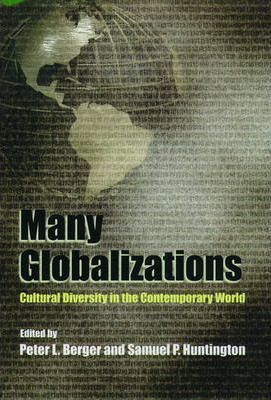
Much discussed but poorly understood, globalization is praised as the answer to all the world’s problems and blamed for everything from pollution to poverty. In Many Globalizations, Peter Berger and Samuel Huntington bring together an array of scholars from around the world, who paint a far subtler and more richly shaded portrait, showing both the power and the unexpected consequences of this great force. Here the stereotypes of globalization as American imperialism on the one hand or economic cure-all on the other fall apart under the close scrutiny of these leading scholars. Looking at globalization in countries such as Chile, Japan, South Africa, Germany, Turkey, Hungary, Taiwan, India, and the United States, they show that an emerging global culture does indeed exist, one that is heavily American in origin and content, but that is far from a centrally directed force like classic imperialism–nor is it simply a “metastasized Disneyland.” They examine the currents that carry this culture, from a worldwide class of young professionals to nongovernmental organizations, and define globalization’s many variations (ranging from Buddhist influences to Islamic modernism) as well as subglobalizations that bind regions together. The authors also draw attention to globalizing forces that have escaped media scrutiny, such as the role of evangelical Protestantism (which both adapts to local languages and cultures, and introduce distinctively American values) and Opus Dei, the conservative Catholic movement that originated in Spain. Analytical, incisive and stimulating, Many Globalizations offers rare insight into perhaps the central issue of modern times, one that is changing the West as much as the developing world.
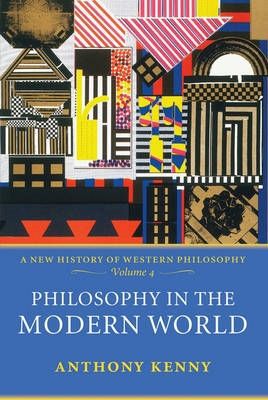
Here is the concluding volume of Sir Anthony Kenny’s monumental four-volume history of philosophy, the first major single-author narrative history to appear for several decades. Here Kenny tells the fascinating story of the development of philosophy in the modern world, from the early nineteenth century to the end of the millennium. Alongside (and intertwined with) extraordinary scientific advances, cultural changes, and political upheavals, the last two centuries have seen some of the most intriguing and original developments in philosophical thinking, which have transformed our understanding of ourselves and our world. In the first part of the book, Kenny offers a lively narrative introducing the major thinkers in their historical context. Among those we meet are the great figures of continental European philosophy, from Schopenhauer, Kierkegaard, and Nietzsche to Heidegger, Sartre, and Derrida; the Pragmatists such as C.S. Pierce and William James, who first developed a distinctively American philosophical tradition; Marx, Darwin, and Freud, the non-philosophers whose influence on philosophy was immense; and Wittgenstein and Russell, friends and colleagues who set the agenda for analytic philosophy in the twentieth century. Kenny then proceeds to guide the reader lucidly through the nine main areas of philosophical work in the period, offering a serious engagement with ideas and arguments about logic, language, epistemology, metaphysics, ethics, aesthetics, politics, and the existence of God. Graced with many beautiful illustrations, Philosophy in the Modern World concludes Kenny’s stimulating history of the intellectual development of Western civilization, allowing readers to trace the birth and growth of philosophy from antiquity to the present day.
Experience and Value: Essays on John Dewey and Pragmatic Naturalism brings together twelve philosophical essays spanning the career of noted Dewey scholar, S. Morris Eames. The volume includes both critiques and interpretations of important issues in John Dewey’s value theory as well as the application of Eames’s pragmatic naturalism in addressing contemporary problems in social theory, education, and religion. The collection begins with a discussion of the underlying principles of Dewey’s pragmatic naturalism, including the concepts of nature, experience, and philosophic method. Essays “Experience and Philosophical Method in John Dewey” and “Primary Experience in the Philosophy of John Dewey” develop what Eames believed to be a central theme in Dewey’s thought and provide a theoretical framework for subsequent discussion. The volume continues with specific applications of this framework in the areas of value theory, moral theory, social philosophy, and the philosophy of religion. Eames’s analysis of value exposes the connection between the immediately felt values of experience and the more sophisticated judgments of value that are the product of reflection. From this basis in moral theory, Eames considers the derivation of judgments of obligation from judgments of fact. This discussion provides a grounding for a consideration of contemporary social issues directed by naturalistic and scientific principles. In the third section, with regard to educational theory, Eames considers possible resolutions of the current dichotomy between the factual worldview of science and the humanistic worldview of the liberal arts. The comprehensive article, “Dewey’s Views of Truth, Beauty, and Goodness,” connects the essays of the first and second sections and explores the placement of Dewey’s value theory with respect to morals and aesthetics. With “Creativity and Democracy,” in the fourth section, Eames also considers the concept of democracy from the standpoint of current and historical issues faced by society. This article hints at a major project of Eames’s intellectual life—the theory of democracy. The volume concludes with a discussion of the difficulty of maintaining the values of religious experience in a scientifically and technologically sophisticated world, the very topic that first brought Eames to philosophy—the meaning of religion and the religious life. Suggested solutions are offered in “The Lost Individual and Religious Unity.” Experience and Value: Essays on John Dewey and Pragmatic Naturalism illuminates Eames’ life of inquiry, a life that included moral, social, aesthetic, and religious dimensions of value—all suffused with the influence of John Dewey.
ما از اخلاق چه انتظاری داریم؟ این سوال شاید تاحدودی برای عموم مردم و یا متخصصان این رشته قابل پاسخ باشد؛ اینکه خوب بودن را به ما بیاموزد و در تنظیم روابط فردی م...

جشن کتاب تهران به ایستگاه سی و یکم رسیده است. حال و احوال نشر کتاب خوب نیست و باید فرهنگدوستان را به خرید و هدیه دادن کتاب ترغیب نمود. خانه اخلاقپژوهان جوان ب...

بنیاد کتابهای اخلاق اسلامی عمدتا پالایش جان از آلودگیها و آراستن آن به زیباییها است. اندیشه محوری این قبیل کتابها آن است که انسان فعلی آنی نیست که باید باشد...

-
0 Comments