Notice: تابع WP_Block_Type_Registry::register به طورنادرست فراخوانی شد. نامهای نوع بلوک نباید حروف بزرگ داشته باشند. لطفاً برای اطلاعات بیشتر، اشکال زدایی در وردپرس را مشاهده کنید. (این پیام در نگارش 5.0.0 افزوده شده است.) in /home/ethicsho/public_html/wp-includes/functions.php on line 5313
Warning: Use of undefined constant TDC_PATH_LEGACY - assumed 'TDC_PATH_LEGACY' (this will throw an Error in a future version of PHP) in /home/ethicsho/public_html/wp-content/plugins/td-composer/td-composer.php on line 109
Warning: Use of undefined constant TDSP_THEME_PATH - assumed 'TDSP_THEME_PATH' (this will throw an Error in a future version of PHP) in /home/ethicsho/public_html/wp-content/plugins/td-composer/td-composer.php on line 113 بایگانیهای 1642 - خانه اخلاق پژوهان جوان Notice: Trying to access array offset on value of type bool in /home/ethicsho/public_html/wp-content/plugins/wp-ulike/inc/general-functions.php on line 807
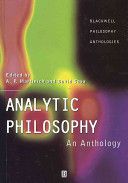
Introduction.Part I: Philosophy of Language.1. On Sense and Reference. (Gottlob Frege).2. Thought. (Gottlob Frege).3. On Denoting. (Bertrand Russell).4. On Referring. (P. F. Strawson).5. Meaning. (H. P. Grice).6. Truth and Meaning. (Donald Davidson).7. Identity and Necessity. (Saul Kripke).8. Meaning and Reference. (Hilary Putnam).Further Reading in Philosophy of Language.Part II: Metaphysics.9. On the Relations of Universals and Particulars. (Bertrand Russell).10. From the Tractatus Logico-Philosophicus. (Ludwig Wittgenstein).11. Particular and General. (P. F. Strawson).12. On What There Is. (W. V. Quine).13. The Identity of Indiscernibles. (Max Black).Further Reading in Metaphysics.Part III: Epistemology.14. Four Forms of Skepticism. (G. E. Moore).15. From On Certainty. (Ludwig Wittgenstein).16. Knowledge by Acquaintance and Knowledge by Description. (Bertrand Russell).17. The Problem of the Criterion. (Roderick Chisholm).18. Is Knowledge Justified True Belief? (Edmund Gettier).19. Aspects of Scientific Explanation. (Carl Hempel).20. The New Riddle of Induction. (Nelson Goodman).21. Epistemology Naturalized. (W. V. Quine).Further Reading in Epistemology.Part IV: Philosophy of Mind.22. The Nature of Mind. (David Armstrong).23. The Nature of Mental States. (Hilary Putnam).24. Mental Events. (Donald Davidson).25. What is it Like to Be a Bat? (Thomas Nagel).26. Mad Pain and Martian Pain. (David Lewis).27. Can Computers Think? (John Searle).Further Reading in Philosophy of Mind.Part V: Freedom and Personal Identity.28. The Conceivability of Mechanism. (Norman Malcolm).29. Freedom and Resentment. (P. F. Strawson).30. Human Freedom and the Self. (Roderick Chisholm).31. The Self and the Future. (Bernard Williams).32. Action, Reasons, and Causes. (Donald Davidson).Further Reading in Freedom and Personal Identity.Part VI: Ethics.33. The Subject Matter of Ethics. (G. E. Moore).34. The Emotive Meaning of Ethical Terms. (C. L. Stevenson).35. Justice as Fairness. (John Rawls).36. Modern Moral Philosophy. (G. E. M. Anscombe).37. Morality as a System of Hypothetical Imperatives. (Philippa Foot).Further Reading in Ethics.Part VII: Methodology.38. The Notion of Analysis in Moore’s Philosophy. (C. H. Langford).39. Reply to Langford. (G. E. Moore).40. The Elimination of Metaphysics. (A. J. Ayer).41. Empiricism, Semantics, and Ontology. (Rudolf Carnap).42. A Plea for Excuses. (J. L. Austin).43. Two Dogmas of Empiricism. (W. V. Quine).44. In Defense of a Dogma. (H. P. Grice and P. F. Strawson.45. Philosophy and the Scientific Image of Man. (Wilfrid Sellars).46. From The Blue and the Brown Books. (Ludwig Wittgenstein).Further Reading in Methodology.Index.
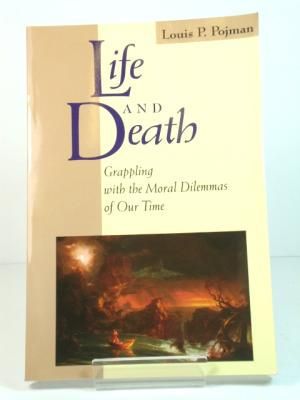
Gives students philosophical tools to think clearly about divisive moral issues faced today. Early chapters introduce moral theory, ethical relativism and objectivism, and classical ethical theories to provide a framework for understanding moral issues. Later chapters explore specific moral issues, such as cloning, suicide, abortion, the death penalty, and animal rights. This second edition contains four new chapters. Can be used as a stand-alone text, or with an anthology by the author. The author teaches philosophy at the US Military Academy in West Point, NY.
Civil War officer, Reconstruction “carpetbagger,” best-selling novelist, and relentless champion of equal rights, Albion Tourgee battled his entire life for racial justice. Now, in this engaging biography, Mark Elliott offers an insightful portrait of a fearless lawyer, jurist, and writer, who fought for equality long after most Americans had abandoned the ideals of Reconstruction. Elliott provides a fascinating account of Tourgee’s life, from his childhood in the Western Reserve region of Ohio (then a hotbed of abolitionism), to his years as a North Carolina judge during Reconstruction, to his memorable role as lead plaintiff’s counsel in the landmark Supreme Court case Plessy v. Ferguson. Tourgee’s brief coined the phrase that justice should be “color-blind,” and his career was one long campaign to made good on that belief. A redoubtable lawyer and an accomplished jurist, Tourgee wrote fifteen political novels, eight books of historical and social criticism, and several hundred newspaper and magazine articles that all told represent a mountain of dissent against the prevailing tide of racial oppression.
ما از اخلاق چه انتظاری داریم؟ این سوال شاید تاحدودی برای عموم مردم و یا متخصصان این رشته قابل پاسخ باشد؛ اینکه خوب بودن را به ما بیاموزد و در تنظیم روابط فردی م...

جشن کتاب تهران به ایستگاه سی و یکم رسیده است. حال و احوال نشر کتاب خوب نیست و باید فرهنگدوستان را به خرید و هدیه دادن کتاب ترغیب نمود. خانه اخلاقپژوهان جوان ب...

بنیاد کتابهای اخلاق اسلامی عمدتا پالایش جان از آلودگیها و آراستن آن به زیباییها است. اندیشه محوری این قبیل کتابها آن است که انسان فعلی آنی نیست که باید باشد...

-
0 Comments