Notice: تابع WP_Block_Type_Registry::register به طورنادرست فراخوانی شد. نامهای نوع بلوک نباید حروف بزرگ داشته باشند. لطفاً برای اطلاعات بیشتر، اشکال زدایی در وردپرس را مشاهده کنید. (این پیام در نگارش 5.0.0 افزوده شده است.) in /home/ethicsho/public_html/wp-includes/functions.php on line 5313
Warning: Use of undefined constant TDC_PATH_LEGACY - assumed 'TDC_PATH_LEGACY' (this will throw an Error in a future version of PHP) in /home/ethicsho/public_html/wp-content/plugins/td-composer/td-composer.php on line 109
Warning: Use of undefined constant TDSP_THEME_PATH - assumed 'TDSP_THEME_PATH' (this will throw an Error in a future version of PHP) in /home/ethicsho/public_html/wp-content/plugins/td-composer/td-composer.php on line 113 بایگانیهای 1088 - خانه اخلاق پژوهان جوان Notice: Trying to access array offset on value of type bool in /home/ethicsho/public_html/wp-content/plugins/wp-ulike/inc/general-functions.php on line 807
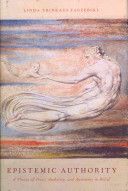
In this book Linda Trinkaus Zagzebski gives an extended argument that the self-reflective person is committed to belief on authority. Epistemic authority is compatible with autonomy, but epistemic self-reliance is incoherent. She argues that epistemic and emotional self-trust are rational and inescapable, that consistent self-trust commits us to trust in others, and that among those we are committed to trusting are some whom we ought to treat as epistemic authorities, modeled on the well-known principles of authority of Joseph Raz. Some of these authorities can be in the moral and religious domains. Why have people for thousands of years accepted epistemic authority in religious communities? A religious community’s justification for authority is typically based on beliefs unique to that community. Unfortunately, that often means that from the community’s perspective, its justifying claims are insulated from the outside; whereas from an outside perspective, epistemic authority in the community appears unjustified. But as Zagzebski’s argument shows, an individual’s acceptance of authority in her community can be justified by principles that outsiders accept, and the particular beliefs justified by that authority are not immune to external critiques. Why have people for thousands of years accepted epistemic authority in religious communities? A religious community’s justification for authority is typically based on beliefs unique to that community. Unfortunately, that often means that from the community’s perspective, its justifying claims are insulated from the outside; whereas from an outside perspective, epistemic authority in the community appears unjustified. But as Zagzebski’s argument shows, an individual’s acceptance of authority in her community can be justified by principles that outsiders accept, and the particular beliefs justified by that authority are not immune to external critiques.
The philosophy of Friedrich Nietzsche (1844-1900) was almost wholly neglected during his sane life, which came to an abrupt end in 1889. Since then he has been appropriated as an icon by an astonishingly diverse spectrum of people, whose interpretations of his thought range from the highly irrational to the firmly analytical. Thus Spoke Zarathustra introduced the ‘superman’ and The Twilight of the Idols developed the ‘Will to Power’ concept; these term, together with ‘Sklavenmoral’ and ‘Herrenmoral’, became confused with the rise of nationalism in Germany. Idiosyncratic and aphoristic, Nietzsche is always bracing and provocative, and temptingly easy to dip into. Michael Tanner’s readable introduction to the philosopher’s life and work examines the numerous ambiguities inherent in his writings. It also explodes the many misconceptions fostered in the hundred years since Nietzsche wrote, prophetically: ‘Do not, above all, confound me with what I am not!’
ما از اخلاق چه انتظاری داریم؟ این سوال شاید تاحدودی برای عموم مردم و یا متخصصان این رشته قابل پاسخ باشد؛ اینکه خوب بودن را به ما بیاموزد و در تنظیم روابط فردی م...

جشن کتاب تهران به ایستگاه سی و یکم رسیده است. حال و احوال نشر کتاب خوب نیست و باید فرهنگدوستان را به خرید و هدیه دادن کتاب ترغیب نمود. خانه اخلاقپژوهان جوان ب...

بنیاد کتابهای اخلاق اسلامی عمدتا پالایش جان از آلودگیها و آراستن آن به زیباییها است. اندیشه محوری این قبیل کتابها آن است که انسان فعلی آنی نیست که باید باشد...

-
0 Comments