Notice: تابع WP_Block_Type_Registry::register به طورنادرست فراخوانی شد. نامهای نوع بلوک نباید حروف بزرگ داشته باشند. لطفاً برای اطلاعات بیشتر، اشکال زدایی در وردپرس را مشاهده کنید. (این پیام در نگارش 5.0.0 افزوده شده است.) in /home/ethicsho/public_html/wp-includes/functions.php on line 5313
Warning: Use of undefined constant TDC_PATH_LEGACY - assumed 'TDC_PATH_LEGACY' (this will throw an Error in a future version of PHP) in /home/ethicsho/public_html/wp-content/plugins/td-composer/td-composer.php on line 109
Warning: Use of undefined constant TDSP_THEME_PATH - assumed 'TDSP_THEME_PATH' (this will throw an Error in a future version of PHP) in /home/ethicsho/public_html/wp-content/plugins/td-composer/td-composer.php on line 113 بایگانیهای 617 - خانه اخلاق پژوهان جوان Notice: Trying to access array offset on value of type bool in /home/ethicsho/public_html/wp-content/plugins/wp-ulike/inc/general-functions.php on line 807
“Relativism is one of philosophy’s oldest — and most polarizing — concepts. It has captivated thinkers since the days of Protagoras (who supported the notion) and Plato (who did not). Relativism is assailed by popes as leading people away from absolute religious truths, and blamed by social commentators for many of society’s ills. With a few notable exceptions, 20th-century philosophers grew to dismiss relativism as an obviously mistaken or even self-refuting concept. But in the past decade, even its staunchest philosophical critics have come to realize that relativism is a legitimate option for explaining a variety of phenomena, including faultless disagreement, the utility of alternative logics, varieties of cross-cultural moralities, and differing ontological conceptual schemes. Reflecting this overdue reappraisal, A Companion to Relativism presents the latest thinking on the role of relativism in the philosophy of language, epistemology, ethics, philosophy of science, logic, and metaphysics. Original contributions to this volume feature cutting edge thinking from a variety of eminent scholars who approach relativism from various perspectives and philosophical subfields”–
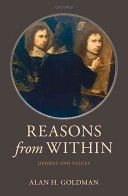
Do the reasons we have for acting as we do derive from our concerns and desires, or are there objective values in the world that we are rationally required to pursue and protect? Alan Goldman argues for the internalist or subjectivist view of practical reasons on the grounds that it is simpler, more unified, and more comprehensible than the rival objectivist position. He provides a naturalistic account of practical rationality in terms of coherence within sets of desires or motivational states, and between motivations, intentions, and actions. Coherence is defined as the avoidance of self-defeat, the defeat of one’s own deepest concerns. The demand for coherence underlies both practical and theoretical reason and derives from the natural aims of belief and action. In clarifying which desires create reasons, drawing on the literature of cognitive psychology, Goldman offers conceptual analyses of desires, emotions, and attitudes. Reasons are seen to derive ultimately from our deepest occurrent concerns. These concerns require no reasons themselves but provide reasons for many more superficial desires. In defense of this theory, Goldman argues that rational agents need not be morally motivated or concerned for their narrow self-interest. Objective values would demand such concern. They would be independent of our desires but would provide reasons for us to pursue and protect them. They would require rational agents to be motivated by them. But, Goldman argues, we are not motivated in that way, and it makes no sense to demand that our informed and coherent desires be generally other than they are. We need not appeal to such objective values in order to explain how our lives can be good and meaningful. Reasons from Within will appeal to anyone interested in the nature of values and reasons, particularly students of philosophy, psychology, and decision theory.
The essays in this volume offer an approach to the history of moral and political philosophy that takes its inspiration from John Rawls. The distinctive feature of this approach is to address substantive normative questions in moral and political philosophy through an analysis of the texts and theories of major figures in the history of the subject: Aristotle, Hobbes, Hume, Rousseau, Kant, and Marx. By reconstructing the core of these theories in a way that is informed by contemporary theoretical concerns, the contributors show how the history of the subject is a resource for understanding present and perennial problems in moral and political philosophy.
John Pollock aims to construct a theory of rational decision making for real agents–not ideal agents. Real agents have limited cognitive powers, but traditional theories of rationality have applied only to idealized agents that lack such constraints. Pollock argues that theories of ideal rationality are largely irrelevant to the decision making of real agents. Thinking about Acting aims to provide a theory of “real rationality.”
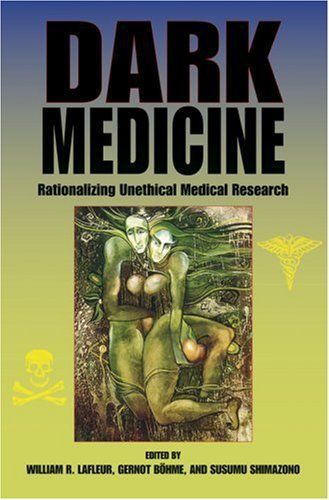
The trial of the “German doctors” exposed atrocities of Nazi medical science and led to the Nuremberg Code governing human experimentation. In Japan, Unit 731 carried out hideous experiments on captured Chinese and downed American pilots. In the United States, stories linger of biological experimentation during the Korean War. This collection of essays looks at the dark medical research conducted during and after World War II. Contributors describe this research, how it was brought to light, and the rationalizations of those who perpetrated and benefited from it.
ما از اخلاق چه انتظاری داریم؟ این سوال شاید تاحدودی برای عموم مردم و یا متخصصان این رشته قابل پاسخ باشد؛ اینکه خوب بودن را به ما بیاموزد و در تنظیم روابط فردی م...

جشن کتاب تهران به ایستگاه سی و یکم رسیده است. حال و احوال نشر کتاب خوب نیست و باید فرهنگدوستان را به خرید و هدیه دادن کتاب ترغیب نمود. خانه اخلاقپژوهان جوان ب...

بنیاد کتابهای اخلاق اسلامی عمدتا پالایش جان از آلودگیها و آراستن آن به زیباییها است. اندیشه محوری این قبیل کتابها آن است که انسان فعلی آنی نیست که باید باشد...

-
0 Comments