Notice: تابع WP_Block_Type_Registry::register به طورنادرست فراخوانی شد. نامهای نوع بلوک نباید حروف بزرگ داشته باشند. لطفاً برای اطلاعات بیشتر، اشکال زدایی در وردپرس را مشاهده کنید. (این پیام در نگارش 5.0.0 افزوده شده است.) in /home/ethicsho/public_html/wp-includes/functions.php on line 5313
Warning: Use of undefined constant TDC_PATH_LEGACY - assumed 'TDC_PATH_LEGACY' (this will throw an Error in a future version of PHP) in /home/ethicsho/public_html/wp-content/plugins/td-composer/td-composer.php on line 109
Warning: Use of undefined constant TDSP_THEME_PATH - assumed 'TDSP_THEME_PATH' (this will throw an Error in a future version of PHP) in /home/ethicsho/public_html/wp-content/plugins/td-composer/td-composer.php on line 113 بایگانیهای Human Experimentation - History - خانه اخلاق پژوهان جوان Notice: Trying to access array offset on value of type bool in /home/ethicsho/public_html/wp-content/plugins/wp-ulike/inc/general-functions.php on line 807
Governments now face complex dilemmas regarding the promotion of human rights, the punishment of crimes against humanity, and the scope for humanitarian intervention. This book offers a theoretical and empirical analysis of these issues. The contributors explore the meaning of “ethical foreign policy” and look at potential or actual instruments of ethical foreign policy-making. Finally, three case studies examine more closely developments in the foreign policies of the U.S., the U.K., and the European Union, to assess the difficulties raised by the incorporation of ethical considerations into foreign policy.
Defending Life is arguably the most comprehensive defense of the prolife position on abortion – morally, legally, and politically – that has ever been published in an academic monograph. It offers a detailed and critical analysis of Roe v. Wade and Planned Parenthood v. Casey as well as arguments by those who defend a Rawlsian case for abortion-choice, such as J. J. Thomson. The author defends the substance view of persons as the view with the most explanatory power. The substance view entails that the unborn is a subject of moral rights from conception. While defending this view, the author responds to the arguments of thinkers such as Boonin, Dworkin, Stretton, Ford, and Brody. He also critiques Thomson’s famous violinist argument and its revisions by Boonin and McDonagh. Defending Life includes chapters critiquing arguments found in popular politics and the controversy over cloning and stem cell research.
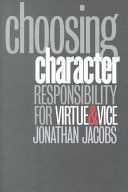
Are there key respects in which character and character defects are voluntary? Can agents with serious vices be rational agents? Jonathan Jacobs answers in the affirmative. Moral character is shaped through voluntary habits, including the ways we habituate ourselves, Jacobs believes. Just as individuals can voluntarily lead unhappy lives without making unhappiness an end, so can they degrade their ethical characters through voluntary action that does not have establishment of vice as its end. Choosing Character presents an account of ethical disability, expanding the domain of responsibility and explicating the role of character in ethical cognition.Jacobs contends that agents become ethically disabled voluntarily when their habits impair their ability to properly appreciate ethical considerations. Such agents are rational, responsible individuals who are yet incapable of virtuous action. The view develops and modifies Aristotelian claims concerning the fixity of character. Jacobs’ interpretation is developed in contrast to the overlooked work of Maimonides, who also used Aristotelian resources but argued for the possibility of character change. The notion of ethical disability has profound ramifications for ethics and for current debates about blame and punishment.
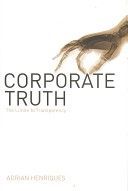
In the corporate jungle inhabited by Enrons and WorldComs, a lack of transparency is the root of all scandal, yet delivering transparency seems immensely difficult with the often competing interests of shareholders, corporate boards, government regulators, and other stakeholders. Written by noted corporate social responsibility practitioner Adrian Henriques and drawing on a vast wealth of real-life examples from the commercial world, this lively business book goes in search of the appropriate limits of transparency. From commercial confidentiality to the ethics of marketing to lobbying and corporate corruption, the author addresses the position, significance, and limits of transparency in modern corporate life and works through the dilemmas that the increasing calls for transparency present. From the secrets of the board room to the struggles of NGOs, transparency is a persistent challenge-how much is enough? How much do we need? How do we do it? This book, ideally suited to business leaders and managers, consultants and business students alike addresses these questions and more.
ما از اخلاق چه انتظاری داریم؟ این سوال شاید تاحدودی برای عموم مردم و یا متخصصان این رشته قابل پاسخ باشد؛ اینکه خوب بودن را به ما بیاموزد و در تنظیم روابط فردی م...

جشن کتاب تهران به ایستگاه سی و یکم رسیده است. حال و احوال نشر کتاب خوب نیست و باید فرهنگدوستان را به خرید و هدیه دادن کتاب ترغیب نمود. خانه اخلاقپژوهان جوان ب...

بنیاد کتابهای اخلاق اسلامی عمدتا پالایش جان از آلودگیها و آراستن آن به زیباییها است. اندیشه محوری این قبیل کتابها آن است که انسان فعلی آنی نیست که باید باشد...

-
0 Comments