Notice: تابع WP_Block_Type_Registry::register به طورنادرست فراخوانی شد. نامهای نوع بلوک نباید حروف بزرگ داشته باشند. لطفاً برای اطلاعات بیشتر، اشکال زدایی در وردپرس را مشاهده کنید. (این پیام در نگارش 5.0.0 افزوده شده است.) in /home/ethicsho/public_html/wp-includes/functions.php on line 5313
Warning: Use of undefined constant TDC_PATH_LEGACY - assumed 'TDC_PATH_LEGACY' (this will throw an Error in a future version of PHP) in /home/ethicsho/public_html/wp-content/plugins/td-composer/td-composer.php on line 109
Warning: Use of undefined constant TDSP_THEME_PATH - assumed 'TDSP_THEME_PATH' (this will throw an Error in a future version of PHP) in /home/ethicsho/public_html/wp-content/plugins/td-composer/td-composer.php on line 113 بایگانیهای 345 - خانه اخلاق پژوهان جوان Notice: Trying to access array offset on value of type bool in /home/ethicsho/public_html/wp-content/plugins/wp-ulike/inc/general-functions.php on line 807
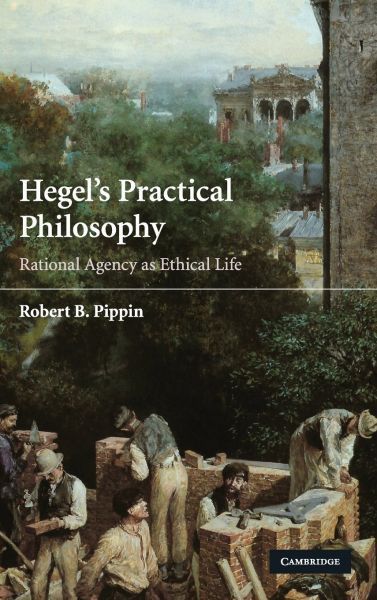
This fresh and original book argues that the central questions in Hegel’s practical philosophy are the central questions in modern accounts of freedom: What is freedom, or what would it be to act freely? Is it possible so to act? And how important is leading a free life? Robert Pippin argues that the core of Hegel’s answers is a social theory of agency, the view that agency is not exclusively a matter of the self-relation and self-determination of an individual but requires the right sort of engagement with and recognition by others. Using a detailed analysis of key Hegelian texts, he develops this interpretation to reveal the bearing of Hegel’s claims on many contemporary issues, including much-discussed core problems in the liberal democratic tradition. His important study will be valuable for all readers who are interested in Hegel’s philosophy and in the modern problems of agency and freedom.
In The Concealed Art of the Soul, Jonardon Ganeri presents a variety of perspectives on the nature of the self as seen by major schools of classical Indian philosophy. For Indian thinkers, a philosophical treatise about the self should not only reveal the truth about the nature of the soul, but should also engage the reader in a process of study and contemplation that will eventually lead to self-transformation. By combining careful attention to philosophical content and sensitivity to literary form, Ganeri deepens our understanding of some of the greatest works in Indian literary history. His magisterial survey includes the Upanisads, the Buddha’s discourses, the epic Mahabharata, and the writings of Candrakirti, whose work was later to provide the foundation for Tibetan Buddhism. Ganeri argues that many Western theories of selfhood are not only present in, but are developed to high degree of sophistication in these writings, and that there are other ideas about the self found in the work of classical Indian thinkers which present-day analytic philosophers have not yet begun to explore. Scholars and students of philosophy and religious studies, particularly those with an interest in Indian and Western conceptions of the self, will find this book fascinating reading.
At the core of Kant’s ethics lies the claim that if there is a supreme principle of morality, then it is not a utilitarian or Aristotelian perfectionist principle, or even a principle resembling the Ten Commandments. The only viable candidate for the supreme principle of morality is the Categorial Imperative. This book is the most detailed investigation of thie claim. It constructs a new, criterial reading of Kant’s derivation of one version of the Categorial Imperative: The Formula of Universal Law. This reading shows this derivation to be far more compelling than contemporary philosophers tend to believe. It also reveals a novel approach to deriving another version of the Categorial Imperative, the Formula of Humanity, a principle widely considered to be the most attractive Kantian candidate for the supreme principle of morality. Lucidly written and dealing with a foundational topic in the history of ethics, this book will be important not just for Kant scholars but for a broad swath of students of philosophy. Samuel Kerstein is Associate Professor of Philosophy at the University of Maryland, College Park
ما از اخلاق چه انتظاری داریم؟ این سوال شاید تاحدودی برای عموم مردم و یا متخصصان این رشته قابل پاسخ باشد؛ اینکه خوب بودن را به ما بیاموزد و در تنظیم روابط فردی م...

جشن کتاب تهران به ایستگاه سی و یکم رسیده است. حال و احوال نشر کتاب خوب نیست و باید فرهنگدوستان را به خرید و هدیه دادن کتاب ترغیب نمود. خانه اخلاقپژوهان جوان ب...

بنیاد کتابهای اخلاق اسلامی عمدتا پالایش جان از آلودگیها و آراستن آن به زیباییها است. اندیشه محوری این قبیل کتابها آن است که انسان فعلی آنی نیست که باید باشد...

-
0 Comments