Notice: تابع WP_Block_Type_Registry::register به طورنادرست فراخوانی شد. نامهای نوع بلوک نباید حروف بزرگ داشته باشند. لطفاً برای اطلاعات بیشتر، اشکال زدایی در وردپرس را مشاهده کنید. (این پیام در نگارش 5.0.0 افزوده شده است.) in /home/ethicsho/public_html/wp-includes/functions.php on line 5313
Warning: Use of undefined constant TDC_PATH_LEGACY - assumed 'TDC_PATH_LEGACY' (this will throw an Error in a future version of PHP) in /home/ethicsho/public_html/wp-content/plugins/td-composer/td-composer.php on line 109
Warning: Use of undefined constant TDSP_THEME_PATH - assumed 'TDSP_THEME_PATH' (this will throw an Error in a future version of PHP) in /home/ethicsho/public_html/wp-content/plugins/td-composer/td-composer.php on line 113 بایگانیهای 297.2/0434092 - خانه اخلاق پژوهان جوان Notice: Trying to access array offset on value of type bool in /home/ethicsho/public_html/wp-content/plugins/wp-ulike/inc/general-functions.php on line 807
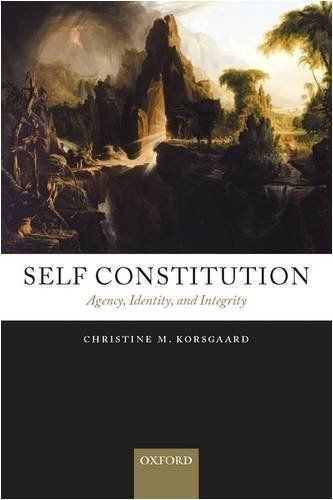
Christine M. Korsgaard presents an account of the foundation of practical reason and moral obligation. Moral philosophy aspires to understand the fact that human actions, unlike the actions of the other animals, can be morally good or bad, right or wrong. Few moral philosophers, however, have exploited the idea that actions might be morally good or bad in virtue of being good or bad of their kind – good or bad as actions. Just as we need to know that it is the function of the heart to pump blood to know that a good heart is one that pumps blood successfully, so we need to know what the function of an action is in order to know what counts as a good or bad action. Drawing on the work of Plato, Aristotle, and Kant, Korsgaard proposes that the function of an action is to constitute the agency and therefore the identity of the person who does it. As rational beings, we are aware of, and therefore in control of, the principles that govern our actions. A good action is one that constitutes its agent as the autonomous and efficacious cause of her own movements. These properties correspond, respectively, to Kant’s two imperatives of practical reason. Conformity to the categorical imperative renders us autonomous, and conformity to the hypothetical imperative renders us efficacious. And in determining what effects we will have in the world, we are at the same time determining our own identities. Korsgaard develops a theory of action and of interaction, and of the form interaction must take if we are to have the integrity that, she argues, is essential for agency. On the basis of that theory, she argues that only morally good action can serve the function of action, which is self-constitution.
John Pollock aims to construct a theory of rational decision making for real agents–not ideal agents. Real agents have limited cognitive powers, but traditional theories of rationality have applied only to idealized agents that lack such constraints. Pollock argues that theories of ideal rationality are largely irrelevant to the decision making of real agents. Thinking about Acting aims to provide a theory of “real rationality.”
This volume is an edited collection of original papers on the theme of “Values, Rational Choice, and the Will”. The editor is a Stanford-trained moral philosopher, and the organizer of a conference held on April 1-3, 2004. The conference succeeded in bringing together a wide range of essays that dealt with most of the central questions of moral philosophy today, in both normative ethics and meta-ethics, theoretical and applied ethics, and especially in moral psychology.
Religion is one of the most powerful forces running through human history, and although often presented as a force for good, its impact is frequently violent and divisive. This provocative work brings together cutting-edge research from both evolutionary and cognitive psychology to help readers understand the psychological structure of religious morality and the origins of religious violence. Introduces a fundamentally new approach to the analysis of religion in a style accessible to the general reader Applies insights from evolutionary and cognitive psychology to both Judaism and Christianity, and their texts, to help understand the origins of religious violence Argues that religious violence is grounded in the moral psychology of religion Illustrates its controversial argument with reference to the 9/11 terrorist attacks, and the response to the attacks from both the terrorists and the President. Suggests strategies for beginning to counter the divisive aspects of religion. Discusses the role of religion and religious criticism in the contemporary world. Argues for a position sceptical of the moral authority of religion, while also critiquing the excesses of the “new atheists” for failing to appreciate the moral contributions of religion.
ما از اخلاق چه انتظاری داریم؟ این سوال شاید تاحدودی برای عموم مردم و یا متخصصان این رشته قابل پاسخ باشد؛ اینکه خوب بودن را به ما بیاموزد و در تنظیم روابط فردی م...

جشن کتاب تهران به ایستگاه سی و یکم رسیده است. حال و احوال نشر کتاب خوب نیست و باید فرهنگدوستان را به خرید و هدیه دادن کتاب ترغیب نمود. خانه اخلاقپژوهان جوان ب...

بنیاد کتابهای اخلاق اسلامی عمدتا پالایش جان از آلودگیها و آراستن آن به زیباییها است. اندیشه محوری این قبیل کتابها آن است که انسان فعلی آنی نیست که باید باشد...

-
0 Comments