



Notice: تابع WP_Block_Type_Registry::register به طورنادرست فراخوانی شد. نامهای نوع بلوک نباید حروف بزرگ داشته باشند. لطفاً برای اطلاعات بیشتر، اشکال زدایی در وردپرس را مشاهده کنید. (این پیام در نگارش 5.0.0 افزوده شده است.) in /home/ethicsho/public_html/wp-includes/functions.php on line 5313
Warning: Use of undefined constant TDC_PATH_LEGACY - assumed 'TDC_PATH_LEGACY' (this will throw an Error in a future version of PHP) in /home/ethicsho/public_html/wp-content/plugins/td-composer/td-composer.php on line 109
Warning: Use of undefined constant TDSP_THEME_PATH - assumed 'TDSP_THEME_PATH' (this will throw an Error in a future version of PHP) in /home/ethicsho/public_html/wp-content/plugins/td-composer/td-composer.php on line 113 بایگانیهای 241 - خانه اخلاق پژوهان جوان Notice: Trying to access array offset on value of type bool in /home/ethicsho/public_html/wp-content/plugins/wp-ulike/inc/general-functions.php on line 807
The articles in this volume dedicated to Hans Daiber, one of the pioneering scholars in the history of Islamic thought in the Middle Ages, offer new insights into this field from a variety of perspectives: philological, philosophical, and historical.
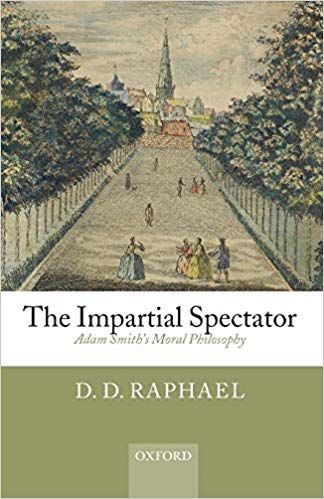
D. D. Raphael provides a critical account of the moral philosophy of Adam Smith, presented in his first book, The Theory of Moral Sentiments. Whilst it does not have the same prominence in its field as his work on economics, The Wealth of Nations, Smith’s writing on ethics is of continuing importance and interest today, especially for its theory of conscience. Smith sees the origin of conscience in the sympathetic and antipathetic feelings of spectators. As spectators of the actions of other people, we can imagine how we would feel in their situation. If we would share their motives, we approve of their action. If not, we disapprove. When we ourselves take an action, we know from experience what spectators would feel, approval or disapproval. That knowledge forms conscience, an imagined impartial spectator who tells us whether an action is right or wrong. In describing the content of moral judgment, Smith is much influenced by Stoic ethics, with an emphasis on self-command, but he voices criticism as well as praise. His own position is a combination of Stoic and Christian values. There is a substantial difference between the first five editions of the Moral Sentiments and the sixth. Failure to take account of this has led some commentators to mistaken views about the supposed youthful idealism of the Moral Sentiments as contrasted with the mature realism of The Wealth of Nations. A further source of error has been the supposition that Smith treats sympathy as the motive of moral action, as contrasted with the supposedly universal motive of self-interest in The Wealth of Nations.
During the last two decades, applied ethics has not only developed into one of the most important philosophical disciplines but has also differentiated into so many subdisciplines that it is becoming increasingly difficult to survey it. A much-needed overview is provided by the eighteen contributions to this volume, in which internationally renowned experts deal with central questions of environmental ethics, bioethics and medical ethics, professional and business ethics, social, political, and legal ethics as well as with the aims and foundations of applied ethics in general. Thanks to a philosophical introduction and selected bibliographical references added to each chapter, the book is very well suited as a basis for courses in applied ethics. It is directed not only to philosophers and to ethicists from other disciplines but to scientists in general and to all people who are interested in the rational discussion of moral principles and their application to concrete problems in the sciences and in everyday life.
ما از اخلاق چه انتظاری داریم؟ این سوال شاید تاحدودی برای عموم مردم و یا متخصصان این رشته قابل پاسخ باشد؛ اینکه خوب بودن را به ما بیاموزد و در تنظیم روابط فردی م...

جشن کتاب تهران به ایستگاه سی و یکم رسیده است. حال و احوال نشر کتاب خوب نیست و باید فرهنگدوستان را به خرید و هدیه دادن کتاب ترغیب نمود. خانه اخلاقپژوهان جوان ب...

بنیاد کتابهای اخلاق اسلامی عمدتا پالایش جان از آلودگیها و آراستن آن به زیباییها است. اندیشه محوری این قبیل کتابها آن است که انسان فعلی آنی نیست که باید باشد...

-
0 Comments