Notice: تابع WP_Block_Type_Registry::register به طورنادرست فراخوانی شد. نامهای نوع بلوک نباید حروف بزرگ داشته باشند. لطفاً برای اطلاعات بیشتر، اشکال زدایی در وردپرس را مشاهده کنید. (این پیام در نگارش 5.0.0 افزوده شده است.) in /home/ethicsho/public_html/wp-includes/functions.php on line 5313
Warning: Use of undefined constant TDC_PATH_LEGACY - assumed 'TDC_PATH_LEGACY' (this will throw an Error in a future version of PHP) in /home/ethicsho/public_html/wp-content/plugins/td-composer/td-composer.php on line 109
Warning: Use of undefined constant TDSP_THEME_PATH - assumed 'TDSP_THEME_PATH' (this will throw an Error in a future version of PHP) in /home/ethicsho/public_html/wp-content/plugins/td-composer/td-composer.php on line 113 بایگانیهای 174.991 - خانه اخلاق پژوهان جوان Notice: Trying to access array offset on value of type bool in /home/ethicsho/public_html/wp-content/plugins/wp-ulike/inc/general-functions.php on line 807
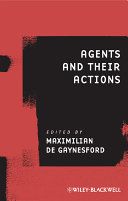
“Reflecting a recent flourishing of creative thinking in the field, Actions and Their Agents presents seven newly commissioned essays by leading international philosophers that highlight the most recent debates in the philosophy of action Features seveninternationally significant authors, including new work by two of philosophy’s ‘super stars’, John McDowell and Joseph Raz Presents the first clear indication of how John McDowell is extending his path-breaking work on intentionality and perceptual experience towards an account of action and agency Covers all the major interconnections between action-agency and central areas of Philosophy: Metaphysics, Epistemology, History of Philosophy, Ethics, Logic, Philosophy of Language Provides a snapshot of current debate on the subject, which is fresh, enlightening, and fruitful”–
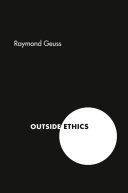
Outside Ethicsbrings together some of the most important and provocative works by one of the most creative philosophers writing today. Seeking to expand the scope of contemporary moral and political philosophy, Raymond Geuss here presents essays bound by a shared skepticism about a particular way of thinking about what is important in human life–a way of thinking that, in his view, is characteristic of contemporary Western societies and isolates three broad categories of things as important: subjective individual preferences, knowledge, and restrictions on actions that affect other people (restrictions often construed as ahistorical laws). He sets these categories in a wider context and explores various human phenomena–including poetry, art, religion, and certain kinds of history and social criticism–that do not fit easily into these categories. As its title suggests, this book seeks a place outside conventional ethics. Following a brief introduction, Geuss sets out his main concerns with a focus on ethics and politics. He then expands these themes by discussing freedom, virtue, the good life, and happiness. Next he examines Theodor Adorno’s views on the relation between suffering and knowledge, the nature of religion, and the role of history in giving us critical distances from existing identities. From here he moves to aesthetic concerns. The volume closes by looking at what it is for a human life to have “gaps”–to be incomplete, radically unsatisfactory, or a failure.
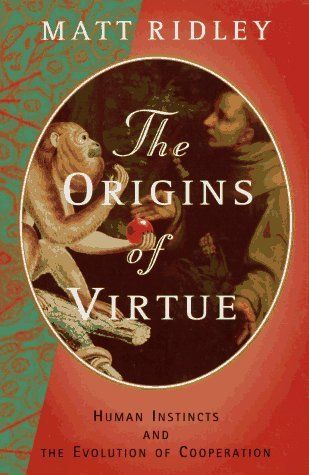
If evolution by natural selection relentlessly favors self-interest, why do human beings live in complex societies and show so much cooperative spirit? In The Origins of Virtue, Matt Ridley, a zoologist and former American editor of the Economist, shows that recent research in a number of fields has suggested a resolution of the apparent contradiction between self-interest and mutual aid.
ما از اخلاق چه انتظاری داریم؟ این سوال شاید تاحدودی برای عموم مردم و یا متخصصان این رشته قابل پاسخ باشد؛ اینکه خوب بودن را به ما بیاموزد و در تنظیم روابط فردی م...

جشن کتاب تهران به ایستگاه سی و یکم رسیده است. حال و احوال نشر کتاب خوب نیست و باید فرهنگدوستان را به خرید و هدیه دادن کتاب ترغیب نمود. خانه اخلاقپژوهان جوان ب...

بنیاد کتابهای اخلاق اسلامی عمدتا پالایش جان از آلودگیها و آراستن آن به زیباییها است. اندیشه محوری این قبیل کتابها آن است که انسان فعلی آنی نیست که باید باشد...

-
0 Comments