Notice: تابع WP_Block_Type_Registry::register به طورنادرست فراخوانی شد. نامهای نوع بلوک نباید حروف بزرگ داشته باشند. لطفاً برای اطلاعات بیشتر، اشکال زدایی در وردپرس را مشاهده کنید. (این پیام در نگارش 5.0.0 افزوده شده است.) in /home/ethicsho/public_html/wp-includes/functions.php on line 5313
Warning: Use of undefined constant TDC_PATH_LEGACY - assumed 'TDC_PATH_LEGACY' (this will throw an Error in a future version of PHP) in /home/ethicsho/public_html/wp-content/plugins/td-composer/td-composer.php on line 109
Warning: Use of undefined constant TDSP_THEME_PATH - assumed 'TDSP_THEME_PATH' (this will throw an Error in a future version of PHP) in /home/ethicsho/public_html/wp-content/plugins/td-composer/td-composer.php on line 113 بایگانیهای 147.4 - خانه اخلاق پژوهان جوان Notice: Trying to access array offset on value of type bool in /home/ethicsho/public_html/wp-content/plugins/wp-ulike/inc/general-functions.php on line 807
At the Roots of Christian Bioethics explores Professor H. Tristram Engelhardt, Jr.s pursuit for the decisive ground of the meaning of human existence and knowledge of appropriate moral choice. Engelhardt has been the most influential, cogent, but critical voice within bioethics of the past several decades. The essays in this volume compass epistemological, methodological and topical contributions to bioethics, political theory, and Christian theology. Each explores Engelhardts diagnosis of the contemporary social and cultural crisis, seeking to make sense of the decidedly post-Christian and often openly anti-Christian ethics that dominates public morality and politic policy.Each author investigates Engelhardts personal and tireless enquiry to secure ultimate moral foundations as well as to recognize the full implications of the results of his investigations: that Christian bioethics does not originate in human reason but in the command of God.
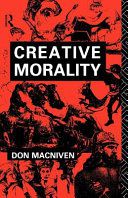
Creative Moralityis a philosophical study of moral dilemmas which is designed to heighten our awareness of the ethical systems on which most of us base our moral decisions. Don MacNiven provides a theoretical basis for critical discussion of these systems and contributes to the development of a comprehensive ethical theory which is suitable for contemporary moral problems. Western moral thought has relied upon two basic ethical perspectives to resolve dilemmas utilitarianism and Kantianism. Don MacNiven argues that no real progress can be made with modern moral problems unless these traditions are coherently synthesized. He examines a diverse range of topics such as academic honesty, confidentiality of medical records, terrorism, experiments with human subjects, euthanasia, bribery and environmental issues. The book develops a new moral epistemology based on the hypothesis that moral thought is inherently creative rather than mechanical. The hypothetical dilemmas usedin the book are based on real life situations, so that theory can be tested against reality. The solutions offered from all perspectives are hypothetical rather than definitive, involving the restructuring of personal and social affairs in ways that adequately express their conflicting values. In order to solve moral dilemmas, MacNiven argues, we need both personal and social growth, which requires creativity in both thought and action. Creative Moralitymakes an important contribution to the development of a comprehensive ethical theory which can address complex moral problems. It integrates ethical theory and practice in unique ways that will appeal to the general educated reader as well as the professional ethicist.
” The Justice of Mercyis exhilarating reading. Teeming with intelligence and insight, this study immediately establishes itself as the unequaled philosophical and legal exploration of mercy. But Linda Meyer’s book reaches beyond mercy to offer reconceptualizations of justice and punishment themselves. Meyer’s ambition is to rethink the failed retributivist paradigm of criminal justice and to replace it with an ideal of merciful punishment grounded in a Heideggerian insight into the gift of being-with-others. The readings of criminal law, Heideggerian and Levinasian philosophy, and literature are powerful and provocative. The Justice of Mercyis a radical and rigorous exploration of both punishment and mercy as profoundly human activities.” —Roger Berkowitz, Director of the Hannah Arendt Center for Ethical and Political Thinking, Bard College “This book addresses a question both ancient and urgently timely: how to reconcile the law’s call to justice with the heart’s call to mercy? Linda Ross Meyer’s answer is both philosophical and pragmatic, taking us from the conceptual roots of the supposed conflict between justice and mercy to concrete examples in both fiction and contemporary criminal law. Energetic, eloquent, and moving, this book’s defense of mercy will resonate with philosophers, legal scholars, lawyers, and policymakers engaged with criminal justice, and anyone concerned about our current harshly punitive legal system.” —Carol Steiker, Harvard Law School “Far from being a utopian, soft and ineffectual concept, Meyer shows that mercy already operates within the law in ways that we usually do not recognize. . . . Meyer’s piercing insights and careful analysis bring the reader to think of law, justice, and mercy itself in a new and far more profound light.” —James Martel, San Francisco State University How can granting mercy be just if it gives a criminal less punishment than he “deserves” and treats his case differently from others like it? This ancient question has become central to debates over truth and reconciliation commissions, alternative dispute resolution, and other new forms of restorative justice. The traditional response has been to marginalize mercy and to cast doubt on its ability to coexist with forms of legal justice. Flipping the relationship between justice and mercy, Linda Ross Meyer argues that our rule-bound and harsh system of punishment is deeply flawed and that mercy should be, not the crazy woman in the attic of the law, but the lady of the house. This book articulates a theory of punishment with mercy and illustrates the implications of that theory with legal examples drawn from criminal law doctrine, pardons, mercy in military justice, and fictional narratives of punishment and mercy. Linda Ross Meyer is Carmen Tortora Professor of Law at Quinnipiac University School of Law; President of the Association for the Study of Law, Culture and the Humanities; and Associate Editor of Journal of Law, Culture and the Humanities.
How should a prize be awarded after a horse race? Should it go to the best rider, the best person, or the one who finishes first? To what extent are bystanders blameworthy when they do nothing to prevent harm? Are there any objective standards of moral responsibility with which to address such perennial questions? In this fluidly written and lively book, Daniel Robinson takes on the prodigious task of setting forth the contours of praise and blame. He does so by mounting an important and provocative new defense of a radical theory of moral realism and offering a critical appraisal of prevailing alternatives such as determinism and behaviorism and of their conceptual shortcomings. The version of moral realism that arises from Robinson’s penetrating inquiry–an inquiry steeped in Aristotelian ethics but deeply informed by modern scientific knowledge of human cognition–is independent of cognition and emotion. At the same time, Robinson carefully explores how such human attributes succeed or fail in comprehending real moral properties. Through brilliant analyses of constitutional and moral luck, of biosocial and genetic versions of psychological determinism, and of relativistic-anthropological accounts of variations in moral precepts, he concludes that none of these conceptions accounts either for the nature of moral properties or the basis upon which they could be known. Ultimately, the theory that Robinson develops preserves moral properties even while acknowledging the conditions that undermine the powers of human will.
This unique introduction to comparative philosophy brings together Chinese, Indian, and Western philosophers of roughly the same sort, of comparable stature, on the same philosophical topics and issues. Discussions are arranged in traditional clusters — logic, epistemology, metaphysics, ethics, and social and political philosophy. Compares equals to equals — logicians with logicians, metaphysicians with metaphysicians, ethicists with ethicists — e.g., compares Indian, Chinese and Western empiricists, utilitarians, hedonists, egoists, atheists, theists, monists, pluralists, idealists, materialists, dualists, skeptics, relativists, political realists, etc. Treats the strictly philosophical arguments as roughly similar across cultures, but presents the larger cultural contexts in which they occur as considerably different. For anyone interested in comparative philosophy.
ما از اخلاق چه انتظاری داریم؟ این سوال شاید تاحدودی برای عموم مردم و یا متخصصان این رشته قابل پاسخ باشد؛ اینکه خوب بودن را به ما بیاموزد و در تنظیم روابط فردی م...

جشن کتاب تهران به ایستگاه سی و یکم رسیده است. حال و احوال نشر کتاب خوب نیست و باید فرهنگدوستان را به خرید و هدیه دادن کتاب ترغیب نمود. خانه اخلاقپژوهان جوان ب...

بنیاد کتابهای اخلاق اسلامی عمدتا پالایش جان از آلودگیها و آراستن آن به زیباییها است. اندیشه محوری این قبیل کتابها آن است که انسان فعلی آنی نیست که باید باشد...

-
0 Comments