Notice: تابع WP_Block_Type_Registry::register به طورنادرست فراخوانی شد. نامهای نوع بلوک نباید حروف بزرگ داشته باشند. لطفاً برای اطلاعات بیشتر، اشکال زدایی در وردپرس را مشاهده کنید. (این پیام در نگارش 5.0.0 افزوده شده است.) in /home/ethicsho/public_html/wp-includes/functions.php on line 5313
Warning: Use of undefined constant TDC_PATH_LEGACY - assumed 'TDC_PATH_LEGACY' (this will throw an Error in a future version of PHP) in /home/ethicsho/public_html/wp-content/plugins/td-composer/td-composer.php on line 109
Warning: Use of undefined constant TDSP_THEME_PATH - assumed 'TDSP_THEME_PATH' (this will throw an Error in a future version of PHP) in /home/ethicsho/public_html/wp-content/plugins/td-composer/td-composer.php on line 113 بایگانیهای Thomas Kingsmill Abbott Immanuel Kant - خانه اخلاق پژوهان جوان Notice: Trying to access array offset on value of type bool in /home/ethicsho/public_html/wp-content/plugins/wp-ulike/inc/general-functions.php on line 807
If globalization is to be a benefit and not a burden to humankind, it must be governed by global institutions that are perceived by all people to be democratic and just. But before we can create such institutions, we must imagine them, and that requires a rethinking and extension of normative political theory. Global Justice and Transnational Politics encourages and advances that work.The book’s first part, “Weak Universalism,” contains essays by Amartya Sen and Leif Wenar that offer constructive developments of John Rawls’s statement of the principles a liberal polity might reasonably propose to govern its relations with other peoples. The second part, “Strong Universalism and Transnational Commitments,” contains essays by Jurgen Habermas, David Luban, Martha Nussbaum, and Thomas Pogge examining the normative sources and possible types of cross-border commitments. In the third part, “Transnational Politics and National Identities,” Habermas discusses the possibility of a democratic political order developing within the institutional framework of the European Union; Thomas McCarthy draws on Kant to show how cosmopolitanism might be reconciled with the legacy of nationalism; and Craig Calhoun tries to retrieve a positive aspect of the tradition of nationalism, namely that it provides large populations with a powerful way of imagining political community across space and time.
Owen Flanagan argues in this book for a more psychologically realistic ethical reflection and spells out the ways in which psychology can enrich moral philosophy. Beginning with a discussion of such “moral saints” as Gandhi, Mother Teresa, and Oskar Shindler, Flanagan charts a middle course between an ethics that is too realistic and socially parochial and one that is too idealistic, giving no weight to our natures.
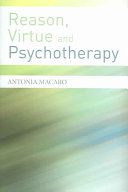
In recent years philosophy has become increasingly popular as an alternative source of inspiration in helping people to lead a good life. Ancient Greek philosophy in particular was conceived as a practical endeavour intended to have an impact on how people lived.This book, loosely organised around the structure of Aristotle’s Nicomachean Ethics, draws on Aristotle’s ideas about virtue and on contemporary virtue ethics to create a framework that can be used by psychotherapists and counsellors in helping their clients – or themselves – to live flourishing lives. It provides a clear discussion of Aristotle’s key ideas about virtue and the good life and places these within the context of other philosophical and psychological theories, both ancient and contemporary. It goes on to address the practical relevance of these ideas to the everyday work of the therapist, providing suggestions for practice and a number of useful exercises. These will be particularly helpful for practitioners working with issues such as finding value and meaning in life, making difficult decisions, developing helpful character traits, managing disruptive emotions and increasing self-control.Reason, Virtue and Psychotherapy bridges the gap between academic philosophy and real life. It will be of interest to practising counsellors and psychotherapists as well as students and trainees in these areas. Since it is written in a clear, jargon-free style, it is also appropriate for all those who are curious about how ancient understandings can improve their life.
Written by renowned Aristotle scholar Sir David Ross, this study has long been established as one of the foremost surveys of Aristotle’s life, work and philosophy. With John L. Ackrill’s introduction and updated bibliography, created for the sixth edition, the book continues to serve as a standard guide, both for the student of ancient history and the general reader.
ما از اخلاق چه انتظاری داریم؟ این سوال شاید تاحدودی برای عموم مردم و یا متخصصان این رشته قابل پاسخ باشد؛ اینکه خوب بودن را به ما بیاموزد و در تنظیم روابط فردی م...

جشن کتاب تهران به ایستگاه سی و یکم رسیده است. حال و احوال نشر کتاب خوب نیست و باید فرهنگدوستان را به خرید و هدیه دادن کتاب ترغیب نمود. خانه اخلاقپژوهان جوان ب...

بنیاد کتابهای اخلاق اسلامی عمدتا پالایش جان از آلودگیها و آراستن آن به زیباییها است. اندیشه محوری این قبیل کتابها آن است که انسان فعلی آنی نیست که باید باشد...

-
0 Comments