Notice: تابع WP_Block_Type_Registry::register به طورنادرست فراخوانی شد. نامهای نوع بلوک نباید حروف بزرگ داشته باشند. لطفاً برای اطلاعات بیشتر، اشکال زدایی در وردپرس را مشاهده کنید. (این پیام در نگارش 5.0.0 افزوده شده است.) in /home/ethicsho/public_html/wp-includes/functions.php on line 5313
Warning: Use of undefined constant TDC_PATH_LEGACY - assumed 'TDC_PATH_LEGACY' (this will throw an Error in a future version of PHP) in /home/ethicsho/public_html/wp-content/plugins/td-composer/td-composer.php on line 109
Warning: Use of undefined constant TDSP_THEME_PATH - assumed 'TDSP_THEME_PATH' (this will throw an Error in a future version of PHP) in /home/ethicsho/public_html/wp-content/plugins/td-composer/td-composer.php on line 113 بایگانیهای Stephen D. Carden - خانه اخلاق پژوهان جوان Notice: Trying to access array offset on value of type bool in /home/ethicsho/public_html/wp-content/plugins/wp-ulike/inc/general-functions.php on line 807
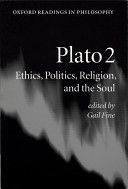
These two volumes, edited by the distinguished Cornell University Plato scholar Gail Fine, contain some 37 articles on various aspects of Plato’s philosophy. Most of the articles have been previously published, although some have been revised for these volumes. None dates from before 1970 and almost all are by scholars from the English-speaking world. These volumes will be widely understood to be doing for Plato scholarship in the last thirty years what the three well-known volumes edited by Gregory Vlastos (two on Plato, one on Socrates) did for Plato scholarship in the period between the end of World War II and 1970. Just as Vlastos attempted to assemble the best of Anglo-American scholarship to provide a snapshot of the contemporary ‘state-of-the-art,’ so Fine’s volumes will no doubt be taken to have done the same. Remarkably, most of the essays in Fine’s volumes cover a range of topics and employ a method strikingly similar to those in Vlastos’ volumes.
The quality of the essays is uniformly very high. A number of them will become or already have become standard starting-points for further discussion of a topic. A re-reading of the essays in the Vlastos volumes after reading these would no doubt be illuminating. Having said this much, it is truly remarkable that in roughly 1000 pages of material there is hardly even a mention of approaches to Plato in the last generation other than that of what can best be termed the Anglo-American analytic tradition.
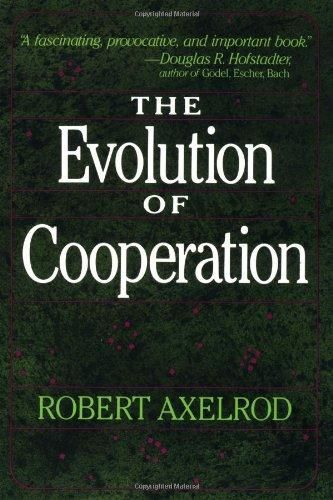
The much-discussed book that explores how cooperation can emerge in a world of self-seeking egoists–whether superpowers, businesses, or individuals–when there is no central authority to police their actions.”A remarkable mixture of theoretical analysis, anecdotal evidence, and a most unusual mode of empirical research…In it he applies the prisoner’s dilemma to topics ranging from collusion among large corporations to U.S. involvement in Vietnam.”–James L. Gould and Carol Grant Gould, “Sciences” “A fascinating contribution to the theory of cooperation, and written in a clear, informal style that makes it a joy to read.” “–Times Literary Supplement (London)”
Virtue ethics has attracted a lot of attention over the past few decades, and more recently there has been considerable interest in virtue epistemology as an alternative to traditional approaches in that field. Ironically, although virtue epistemology got its inspiration from virtue ethics, this is the first book that brings virtue epistemologists and virtue ethicists together to contribute their particular expertise, and the first that is devoted to the topic of intellectual virtue. All new and right up to date, the papers collected here by Zagzebski and DePaul demonstrate the benefit of each branch of philosophy to the other. Intellectual Virtue will be required reading for anyone working in either field.
Containing material from hundreds of highly distinguished contributors representing the world’s top universities and institutions, the second edition has a truly global perspective. It contains more than 2,100 entries — including more than 450 new articles. Among the many topics covered are African, Islamic, Jewish, Russian, Chinese, and Buddhist philosophies; bioethics and biomedical ethics; art and aesthetics; epistemology; metaphysics; peace and war; social and political philosophy; the Holocaust; feminist thought; and much more. Additionally, the second edition also features 1,000 biographical entries on major figures in philosophical thought throughout history.
ما از اخلاق چه انتظاری داریم؟ این سوال شاید تاحدودی برای عموم مردم و یا متخصصان این رشته قابل پاسخ باشد؛ اینکه خوب بودن را به ما بیاموزد و در تنظیم روابط فردی م...

جشن کتاب تهران به ایستگاه سی و یکم رسیده است. حال و احوال نشر کتاب خوب نیست و باید فرهنگدوستان را به خرید و هدیه دادن کتاب ترغیب نمود. خانه اخلاقپژوهان جوان ب...

بنیاد کتابهای اخلاق اسلامی عمدتا پالایش جان از آلودگیها و آراستن آن به زیباییها است. اندیشه محوری این قبیل کتابها آن است که انسان فعلی آنی نیست که باید باشد...

-
0 Comments