Notice: تابع WP_Block_Type_Registry::register به طورنادرست فراخوانی شد. نامهای نوع بلوک نباید حروف بزرگ داشته باشند. لطفاً برای اطلاعات بیشتر، اشکال زدایی در وردپرس را مشاهده کنید. (این پیام در نگارش 5.0.0 افزوده شده است.) in /home/ethicsho/public_html/wp-includes/functions.php on line 5313
Warning: Use of undefined constant TDC_PATH_LEGACY - assumed 'TDC_PATH_LEGACY' (this will throw an Error in a future version of PHP) in /home/ethicsho/public_html/wp-content/plugins/td-composer/td-composer.php on line 109
Warning: Use of undefined constant TDSP_THEME_PATH - assumed 'TDSP_THEME_PATH' (this will throw an Error in a future version of PHP) in /home/ethicsho/public_html/wp-content/plugins/td-composer/td-composer.php on line 113 بایگانیهای Robert Wright - خانه اخلاق پژوهان جوان Notice: Trying to access array offset on value of type bool in /home/ethicsho/public_html/wp-content/plugins/wp-ulike/inc/general-functions.php on line 807
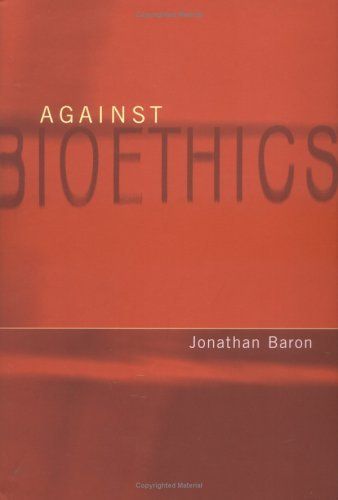
Governments, health professionals, patients, research institutions, and research subjects look to bioethicists for guidance in making important decisions about medical treatment and research. And yet, argues Jonathan Baron in Against Bioethics, applied bioethics lacks the authority of a coherent guiding theory and is based largely on intuitive judgments. Baron proposes an alternative, arguing that bioethics could have a coherent theory based on utilitarianism and decision analysis. Utilitarianism holds that the best option is the one that does the most expected good. Decision analysis provides a way of thinking about the risks and trade-offs of specific options. Like economics, utilitarian decision analysis makes predictions of expected good in complex situations, using data when possible, and focusing human judgment on the issues relevant to consequences. With such a guiding theory, bioethics would never yield decisions that clearly go against the expected good of those involved, as some do now. Baron discusses issues in bioethics that can be illuminated by such analysis, including “enhancements” to nature in the form of genetics, drugs, and mind control; reproduction; death and end-of-life issues, including advance directives, euthanasia, and organ donation; coercion and consent; conflict of interest and the reform of internal review boards; and drug research. Although Baron opposes current practice in bioethics, he argues that by combining utilitarianism and decision analysis, bioethics can achieve its aims of providing authoritative guidance in resolving thorny medical and ethical issues.
Metaethics occupies a central place in analytical philosophy, and the last forty years has seen an upsurge of interest in questions about the nature and practice of morality. This collection presents original and ground-breaking research on metaethical issues from some of the very best of a new generation of philosophers working in this field.
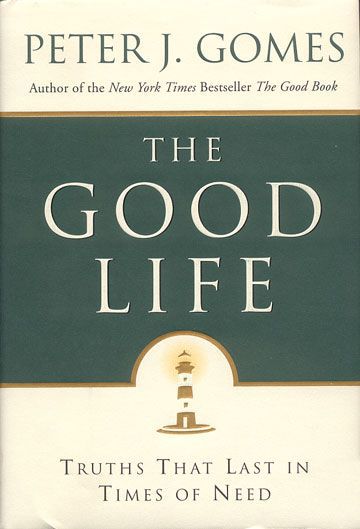
Urges readers to adopt deeper truths and more significant values, and challenges the allure of wealth and power, blind faith in science, and the desire for success, freedom, immortality, and personal happiness.
The past decade has seen an explosion of writing about media ethics and accountability. Most of the work has been focused on the normative side of the subject: ethical philosophies, ethics codes, suggestions for how journalists (and other media workers) can make justifiable decisions when faced with tough ethical questions.Empirical research into media ethics and accountability, by contrast, is hard to find. Relatively little of the past decade’s work–and virtually none of the book-length treatments of the subject–focus on how media accountability works in practice. The gap in practical knowledge is somewhat puzzling, given that most faculty who teach media ethics and accountability work in academic departments that have professional training as part of their academic mission.The underlying assumption of Holding the Media Accountable is that systems of norms such as media law and journalism ethics have meaning only in the context of the actual workings of mechanisms of accountability. No other volume has adopted such an approach.
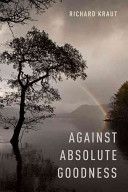
Are there things we should value because they are, quite simply, good? If so, such things might be said to have “absolute goodness.” They would be good simpliciter or full stop – not good for someone, not good of a kind, but nonetheless good (period). They might also be called “impersonal values.” The reason why we ought to value such things, if there are any, would merely be the fact that they are, quite simply, good things. In the twentieth century, G. E. Moore was the great champion of absolute goodness, but he is not the only philosopher who posits the existence and importance of this property. Against these friends of absolute goodness, Richard Kraut here builds on the argument he made in What is Good and Why, demonstrating that goodness is not a reason-giving property – in fact, there may be no such thing. It is, he holds, an insidious category of practical thought, because it can be and has been used to justify what is harmful and condemn what is beneficial. Impersonal value draws us away from what is good for persons. His strategy for opposing absolute goodness is to search for domains of practical reasoning in which it might be thought to be needed, and this leads him to an examination of a wide variety of moral phenomena: pleasure, knowledge, beauty, love, cruelty, suicide, future generations, bio-diversity, killing in self-defense, and the extinction of our species. Even persons, he proposes, should not be said to have absolute value. The special importance of human life rests instead on the great advantages that such lives normally offer. “When one reads this, one sees the possibility of real philosophical progress. If Kraut is right, I’d be wrong to say that this book is good, period. Or even great, period. But I will say that, as a work of philosophy, and for those who read it, it is excellent indeed.” –Russ Shafer-Landau, University of Wisconsin-Madison
ما از اخلاق چه انتظاری داریم؟ این سوال شاید تاحدودی برای عموم مردم و یا متخصصان این رشته قابل پاسخ باشد؛ اینکه خوب بودن را به ما بیاموزد و در تنظیم روابط فردی م...

جشن کتاب تهران به ایستگاه سی و یکم رسیده است. حال و احوال نشر کتاب خوب نیست و باید فرهنگدوستان را به خرید و هدیه دادن کتاب ترغیب نمود. خانه اخلاقپژوهان جوان ب...

بنیاد کتابهای اخلاق اسلامی عمدتا پالایش جان از آلودگیها و آراستن آن به زیباییها است. اندیشه محوری این قبیل کتابها آن است که انسان فعلی آنی نیست که باید باشد...

-
0 Comments