Notice: تابع WP_Block_Type_Registry::register به طورنادرست فراخوانی شد. نامهای نوع بلوک نباید حروف بزرگ داشته باشند. لطفاً برای اطلاعات بیشتر، اشکال زدایی در وردپرس را مشاهده کنید. (این پیام در نگارش 5.0.0 افزوده شده است.) in /home/ethicsho/public_html/wp-includes/functions.php on line 5313
Warning: Use of undefined constant TDC_PATH_LEGACY - assumed 'TDC_PATH_LEGACY' (this will throw an Error in a future version of PHP) in /home/ethicsho/public_html/wp-content/plugins/td-composer/td-composer.php on line 109
Warning: Use of undefined constant TDSP_THEME_PATH - assumed 'TDSP_THEME_PATH' (this will throw an Error in a future version of PHP) in /home/ethicsho/public_html/wp-content/plugins/td-composer/td-composer.php on line 113 بایگانیهای R.S. Woolhouse - خانه اخلاق پژوهان جوان Notice: Trying to access array offset on value of type bool in /home/ethicsho/public_html/wp-content/plugins/wp-ulike/inc/general-functions.php on line 807
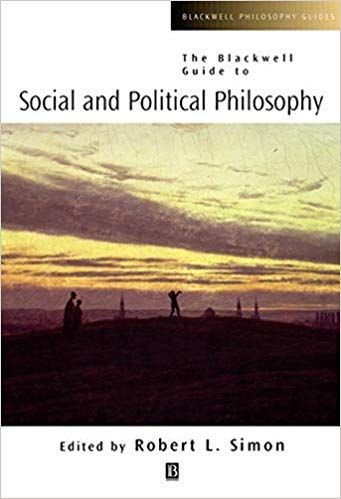
“The Blackwell Guide to Social and Political Philosophy” brings together a collection of newly commissioned essays which examine fundamental issues in social and political theory. Written by leading social and political philosophers, each essay provides a history of the issue at hand and a judicious assessment of the main arguments that have been brought to bear upon that issue.The collection deals with traditional topics in social and political philosophy, such as liberty, authority, justice, and equality as well as with issues raised by diversity and pluralism within the democratic state. The contributors offer a sustained dialogue on the merits of liberal political theory and on the views of some of its critics. Each essay begins with an accessible introduction but develops into a philosophically acute evaluation of the issue in question.The compilation is ideal as a self-standing text for an introductory or intermediate course in social and political philosophy.
Since 1967, the Encyclopedia of Philosophy, described by Booklist as ”the best and most comprehensive English-language reference source for philosophy,” has been the cornerstone of the philosophy reference shelf. Lauded for its clear and accessible presentation of wide-ranging philosophical subjects, the Encyclopedia has earned its place as a first-stop resource for general readers, students and educators. A Supplement to the first edition was released to critical acclaim in 1996. A new and updated edition of this multivolume set – the first comprehensive new edition in almost 40 years – has been compiled under the close guidance of a 20-member board of scholars headed by Donald Borchert (Ohio University). Containing material from hundreds of highly distinguished contributors representing the world’s top universities and institutions, the new edition has a truly global perspective. It contains more than 2,100 entries – including more than 450 new articles. Among the many topics covered are African, Islamic, Jewish, Russian, Chinese, and Buddhist philosophies; bioethics and biomedical ethics; art and aesthetics; epistemology; metaphysics; peace and war; social and political philosophy; the Holocaust; feminist thought; and much more. Additionally, the second edition also features 1,000 biographical entries on major figures in philosophical thought throughout history.
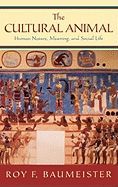
What makes us human? Why do people think, feel and act as they do? What is the essence of human nature? What is the basic relationship between the individual and society? These questions have fascinated both great thinkers and ordinary humans for centuries. Now, at last, there is a solid basis for answering them, in the form of accumulated efforts and studies by thousands of psychology researchers. We no longer have to rely on navel-gazing and speculation to understand why people are the way they are – we can instead turn to solid, objective findings. This book, by an eminent social psychologist at the peak of his career, not only summarizes what we know about people – it also offers a coherent, easy-to-understand, though radical, explanation. Turning conventional wisdom on its head, the author argues that culture shaped human evolution. Contrary to theories that depict the individual’s relation to society as one of victimization, endless malleability, or just a square peg in a round hole, he proposes that the individual human being is designed by nature to be part of society. Moreover, he argues that we need to briefly set aside the endless study of cultural differences to look at what most cultures have in common – because that holds the key to human nature. Culture is in our genes, although cultural differences may not be. This core theme is further developed by a powerful tour through the main dimension of human psychology. What do people want? How do people think? How do emotions operate? How do people behave? And how do they interact with each other? The answers are often surprising, and along the way the author explains how human desire, thought, feeling, and action are connected.
ما از اخلاق چه انتظاری داریم؟ این سوال شاید تاحدودی برای عموم مردم و یا متخصصان این رشته قابل پاسخ باشد؛ اینکه خوب بودن را به ما بیاموزد و در تنظیم روابط فردی م...

جشن کتاب تهران به ایستگاه سی و یکم رسیده است. حال و احوال نشر کتاب خوب نیست و باید فرهنگدوستان را به خرید و هدیه دادن کتاب ترغیب نمود. خانه اخلاقپژوهان جوان ب...

بنیاد کتابهای اخلاق اسلامی عمدتا پالایش جان از آلودگیها و آراستن آن به زیباییها است. اندیشه محوری این قبیل کتابها آن است که انسان فعلی آنی نیست که باید باشد...

-
0 Comments