Notice: تابع WP_Block_Type_Registry::register به طورنادرست فراخوانی شد. نامهای نوع بلوک نباید حروف بزرگ داشته باشند. لطفاً برای اطلاعات بیشتر، اشکال زدایی در وردپرس را مشاهده کنید. (این پیام در نگارش 5.0.0 افزوده شده است.) in /home/ethicsho/public_html/wp-includes/functions.php on line 5313
Warning: Use of undefined constant TDC_PATH_LEGACY - assumed 'TDC_PATH_LEGACY' (this will throw an Error in a future version of PHP) in /home/ethicsho/public_html/wp-content/plugins/td-composer/td-composer.php on line 109
Warning: Use of undefined constant TDSP_THEME_PATH - assumed 'TDSP_THEME_PATH' (this will throw an Error in a future version of PHP) in /home/ethicsho/public_html/wp-content/plugins/td-composer/td-composer.php on line 113 بایگانیهای Martin E. Seligman - خانه اخلاق پژوهان جوان Notice: Trying to access array offset on value of type bool in /home/ethicsho/public_html/wp-content/plugins/wp-ulike/inc/general-functions.php on line 807
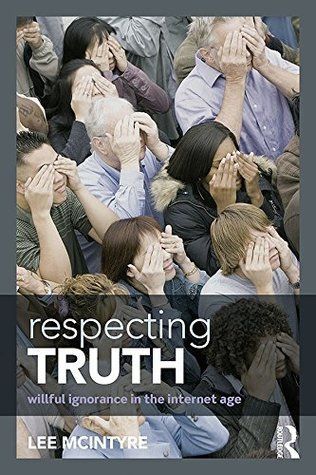
Throughout history, humans have always indulged in certain irrationalities and held some fairly wrong-headed beliefs. But in his newest book, philosopher Lee McIntyre shows how we’ve now reached a watershed moment for ignorance in the modern era, due to the volume of misinformation, the speed with which it can be digitally disseminated, and the savvy exploitation of our cognitive weaknesses by those who wish to advance their ideological agendas. In Respecting Truth: Willful Ignorance in the Internet Age, McIntyre issues a call to fight back against this slide into the witless abyss. In the tradition of Galileo, the author champions the importance of using tested scientific methods for arriving at true beliefs, and shows how our future survival is dependent on a more widespread, reasonable world.
“What implications do recent empirical findings from the fields of biology, primatology, anthropology, psychology and history have for metaethical theories about moral objectivity? I defend the thesis that these findings detract from the plausibility of a realist account of moral objectivity but leave room for a more moderate, antirealist account of objectivity, framed in terms of stance-invariance. The dissertation consists of six articles written for publication in academic journals. In these articles I present two novel, empirically informed challenges to moral realism, and point out some shortcomings of existing challenges. One of the novel challenges builds on the second horn of Sharon Street’s ‘Darwinian Dilemma’, according to which moral realists are committed to an implausible evolutionary hypothesis, and extends this criticism to the historical realm. The other novel challenge is fuelled by theoretical and experimental work in moral psychology, and takes issue with the presumed advantages of moral realism in explaining the qualities of our moral experience. Apart from criticizing moral realism, I also develop and defend an alternative account of moral objectivity in antirealist terms and argue that it is as least as successful as a realist account in capturing the objectivist commitments of ordinary moral discourse.”– Page 14.
Russell Hardin presents a new explication of David Hume’s moral and political theory. With Hume, he holds that our normative views can be scientifically explained but they cannot be justified as true. Hume argued for the psychological basis of such views. In particular, he argued for sympathy as the mirroring of the psychological sensations and emotions of others. By placing Hume in the developing tradition of social science, as a strong forerunner of his younger friend Adam Smith, Hardin demonstrates Hume’s strong strategic sense, his nascent utilitarianism, his powerful theory of convention as a main source of social and political order, and his recognition of moral and political theory as a single enterprise.
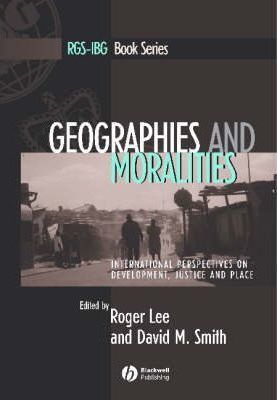
This topical book addresses contemporary concern with the interconnections between geography and morality. Covers both the geographical context of morality, and moralities in geographical methods and practices. Contains up-to-date case studies based on original research. Deals with controversial issues, such as problems of globalization, European integration, human rights in Nigeria, territorial conflict in Israel, and land reform in post-apartheid South Africa. The editors are well-published leading international authorities. The contributors are drawn from Australia, Eastern Europe, Israel, South Africa, the UK and the US.
ما از اخلاق چه انتظاری داریم؟ این سوال شاید تاحدودی برای عموم مردم و یا متخصصان این رشته قابل پاسخ باشد؛ اینکه خوب بودن را به ما بیاموزد و در تنظیم روابط فردی م...

جشن کتاب تهران به ایستگاه سی و یکم رسیده است. حال و احوال نشر کتاب خوب نیست و باید فرهنگدوستان را به خرید و هدیه دادن کتاب ترغیب نمود. خانه اخلاقپژوهان جوان ب...

بنیاد کتابهای اخلاق اسلامی عمدتا پالایش جان از آلودگیها و آراستن آن به زیباییها است. اندیشه محوری این قبیل کتابها آن است که انسان فعلی آنی نیست که باید باشد...

-
0 Comments