Notice: تابع WP_Block_Type_Registry::register به طورنادرست فراخوانی شد. نامهای نوع بلوک نباید حروف بزرگ داشته باشند. لطفاً برای اطلاعات بیشتر، اشکال زدایی در وردپرس را مشاهده کنید. (این پیام در نگارش 5.0.0 افزوده شده است.) in /home/ethicsho/public_html/wp-includes/functions.php on line 5313
Warning: Use of undefined constant TDC_PATH_LEGACY - assumed 'TDC_PATH_LEGACY' (this will throw an Error in a future version of PHP) in /home/ethicsho/public_html/wp-content/plugins/td-composer/td-composer.php on line 109
Warning: Use of undefined constant TDSP_THEME_PATH - assumed 'TDSP_THEME_PATH' (this will throw an Error in a future version of PHP) in /home/ethicsho/public_html/wp-content/plugins/td-composer/td-composer.php on line 113 بایگانیهای Leo Pessini - خانه اخلاق پژوهان جوان Notice: Trying to access array offset on value of type bool in /home/ethicsho/public_html/wp-content/plugins/wp-ulike/inc/general-functions.php on line 807
To be responsible for their acts, agents must both perform those acts voluntarily and in some sense know what they are doing. Of these requirements, the voluntariness condition has been much discussed, but the epistemic condition has received far less attention. In Who Knew? George Sher seeks to rectify that imbalance. The book is divided in two halves, the first of which criticizes a popular but inadequate way of understanding the epistemic condition, while the second seeks to develop a more adequate alternative. It is often assumed that agents are responsible only for what they are aware of doing or bringing about–that their responsibility extends only as far as the searchlight of their consciousness. The book criticizes this “searchlight view” on two main grounds: first, that it is inconsistent with our attributions of responsibility to a broad range of agents who should but do not realize that they are acting wrongly or foolishly, and, second, that the view is not independently defensible. The book’s positive view construes the crucial relation between an agent and his failure to recognize the wrongness or foolishness of what he is doing in causal terms: the agent is responsible when, and because, his failure to respond to his reasons for believing that he is acting wrongly or foolishly has its origins in the same constitutive psychology that generally does render him reason-responsive.
Crispin Wright’s Truth and Objectivity brought about a far-reaching reorientation of the metaphysical debates concerning realism and truth. The essays in this companion volume prefigure, elaborate, or defend the proposals put forward in that landmark work. The collection includes the Gareth Evans memorial lecture in which the program of Truth and Objectivity was first announced, as well as all of Wright’s published reactions to the extensive commentary his study provoked; it presents substantial new developments and applications of the pluralistic outlook on the realism debates proposed in Truth and Objectivity, and further pursues its distinctive minimalist conceptions of truth and of truth-aptitude. Among the papers are important discussions of coherence conceptions of truth, of Hilary Putnam’s most recent views on truth, and of the classical debate between correspondence, coherence, pragmatism, and deflationary conceptions of the notion. Others are concerned with Kripke’s famous argument against physicalist conceptions of sensation; the distinction between minimal truth-aptitude and cognitive command; a novel prospectus for a philosophy of vagueness; and a new proposal about the most resilient interpretation of relativism.
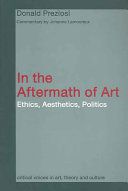
By juxtaposing issues and problems, Donald Preziosi’s latest collection of essays, In the Aftermath of Art, opens up multiple interpretive possibilities by bringing to the surface hidden resonances in the implications of each text. In re-reading his own writings, Preziosi opens up alternatives to contemporary discourses on art history and visual culture. A critical commentary by critic, historian, and theorist Johanne Lamoureux complements the author’s own introduction, mirroring the multiple interpretations within the essays themselves.
This encyclopedia considers both the professional ethics of science and technology, and the social, ethical, and political issues raised by science and technology.
ما از اخلاق چه انتظاری داریم؟ این سوال شاید تاحدودی برای عموم مردم و یا متخصصان این رشته قابل پاسخ باشد؛ اینکه خوب بودن را به ما بیاموزد و در تنظیم روابط فردی م...

جشن کتاب تهران به ایستگاه سی و یکم رسیده است. حال و احوال نشر کتاب خوب نیست و باید فرهنگدوستان را به خرید و هدیه دادن کتاب ترغیب نمود. خانه اخلاقپژوهان جوان ب...

بنیاد کتابهای اخلاق اسلامی عمدتا پالایش جان از آلودگیها و آراستن آن به زیباییها است. اندیشه محوری این قبیل کتابها آن است که انسان فعلی آنی نیست که باید باشد...

-
0 Comments