Notice: تابع WP_Block_Type_Registry::register به طورنادرست فراخوانی شد. نامهای نوع بلوک نباید حروف بزرگ داشته باشند. لطفاً برای اطلاعات بیشتر، اشکال زدایی در وردپرس را مشاهده کنید. (این پیام در نگارش 5.0.0 افزوده شده است.) in /home/ethicsho/public_html/wp-includes/functions.php on line 5313
Warning: Use of undefined constant TDC_PATH_LEGACY - assumed 'TDC_PATH_LEGACY' (this will throw an Error in a future version of PHP) in /home/ethicsho/public_html/wp-content/plugins/td-composer/td-composer.php on line 109
Warning: Use of undefined constant TDSP_THEME_PATH - assumed 'TDSP_THEME_PATH' (this will throw an Error in a future version of PHP) in /home/ethicsho/public_html/wp-content/plugins/td-composer/td-composer.php on line 113 بایگانیهای John Balint - خانه اخلاق پژوهان جوان Notice: Trying to access array offset on value of type bool in /home/ethicsho/public_html/wp-content/plugins/wp-ulike/inc/general-functions.php on line 807
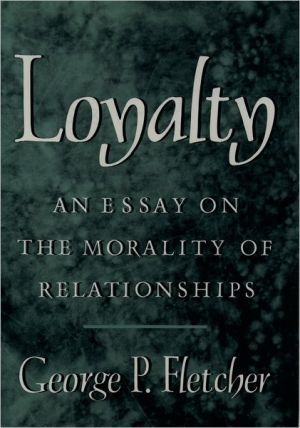
At a time when age-old political structures are crumbling, civil strife abounds, and economic uncertainty permeates the air, loyalty offers us security in our relationships with associates, friends, and family. Yet loyalty is a suspect virtue. It is not impartial. It is not blind. Itviolates the principles of morality that have dominated Western thought for the last two hundred years.Loyalties are also thought to be irrational and contrary to the spirit of Capitalism. In a free market society, we are encouraged to move to the competition when we are not happy. This way of thinking has invaded our personal relationships and undermined our capacities for friendship and loyaltyto those who do not serve our immediate interests. As George P. Fletcher writes, it is time for loyal bonds, born of history and experience, to prevail both over impartial morality and the self-interested thinking of the market trader.In this extended essay, George P. Fletcher offers an account of loyalty that illuminates its role in our relationships with family and friends, our ties to country, and the commitment of the religious to God and their community. Fletcher opposes the traditional view of the moral self as detachedfrom context and history. He argues instead that loyalty, not impartial detachment, should be the central feature of our moral and political lives. Writing as a political “liberal,” he claims that a commitment to country is necessary to improve the lot of the poor and disadvantaged. This commitmentto country may well require greater reliance on patriotic rituals in education and a reconsideration of the Supreme Court’s extending the First Amendment to protect flag burning. Given the worldwide currents of parochialism and political decentralization, the task for us, Fletcher argues, is torenew our commitment to a single nation united in its diversity.Bringing to bear his expertise as a law professor, Fletcher reasons that the legal systems should defer to existing relationships of loyalty. Familial, professional, and religious loyalties should be respected as relationships beyond the limits of the law. Thus surrogate mothers should not beforced to surrender and betray their children, spouses should not be required to testify against each other in court, parents should not be prevented from willing their property to their children, and the religiously committed should not be forced to act contrary to conscience.Yet the question remains: Aren’t loyalty, and particularly patriotism, dangerously one-sided? Indeed, they are, but no more than are love and friendship. The challenge, Fletcher maintains, is to overcome the distorting effects of impartial morality and to develop a morality of loyalty properlysuited to our emotional and spiritual lives. Justice has its sphere, as do loyalties. In this book, Fletcher provides the first step toward a new way of thinking that recognizes the complexity of our moral and political lives.
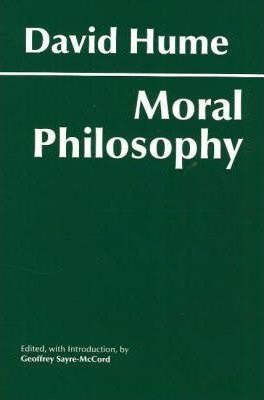
A genuine understanding of Hume’s extraordinarily rich, important, and influential moral philosophy requires familiarity with all of his writings on vice and virtue, the passions, the will, and even judgments of beauty–and that means familiarity not only with large portions of A Treatise of Human Nature, but also with An Enquiry Concerning the Principles of Morals and many of his essays as well. This volume is the one truly comprehensive collection of Hume’s work on all of these topics. Geoffrey Sayre-McCord, a leading moral philosopher and Hume scholar, has done a meticulous job of editing the texts and has provided an extensive Introduction that is at once accessible, accurate, and philosophically engaging, revealing the deep structure of Hume’s moral philosophy. –Don Garrett, New York University
This book examines the depiction of the social construction of male homosexuality, lesbianism, and women’s role in “The Bell”, “A Fairly Honourable Defeat”, “An Accidental Man”, “The Philosopher’s Pupil”, and “The Green Knight”. It also explores the representation of power dynamics in the portrayal of homosexuality in Murdoch’s fiction and takes a detailed look at the illustration of power-knowledge vis-a-vis incest in “A Severed Head and The Time of the Angels”. Murdoch’s representation of Platonic “bisexuality” in “Henry and Cato” and “The Book and the Brotherhood” is examined in depth, and is followed by an analysis of the representation of transvestism in “The Philosopher’s Pupil”, “The Green Knight”, and “The Black Prince”. The study finds that it is generally difficult to classify the genders and sexualities to Murdoch’s characters, and that Murdoch’s narrative style also evades classification under traditional rubrics of gender or artistic achievement. Tammy Grimshaw teaches at the University of Leeds.
ما از اخلاق چه انتظاری داریم؟ این سوال شاید تاحدودی برای عموم مردم و یا متخصصان این رشته قابل پاسخ باشد؛ اینکه خوب بودن را به ما بیاموزد و در تنظیم روابط فردی م...

جشن کتاب تهران به ایستگاه سی و یکم رسیده است. حال و احوال نشر کتاب خوب نیست و باید فرهنگدوستان را به خرید و هدیه دادن کتاب ترغیب نمود. خانه اخلاقپژوهان جوان ب...

بنیاد کتابهای اخلاق اسلامی عمدتا پالایش جان از آلودگیها و آراستن آن به زیباییها است. اندیشه محوری این قبیل کتابها آن است که انسان فعلی آنی نیست که باید باشد...

-
0 Comments