Notice: تابع WP_Block_Type_Registry::register به طورنادرست فراخوانی شد. نامهای نوع بلوک نباید حروف بزرگ داشته باشند. لطفاً برای اطلاعات بیشتر، اشکال زدایی در وردپرس را مشاهده کنید. (این پیام در نگارش 5.0.0 افزوده شده است.) in /home/ethicsho/public_html/wp-includes/functions.php on line 5313
Warning: Use of undefined constant TDC_PATH_LEGACY - assumed 'TDC_PATH_LEGACY' (this will throw an Error in a future version of PHP) in /home/ethicsho/public_html/wp-content/plugins/td-composer/td-composer.php on line 109
Warning: Use of undefined constant TDSP_THEME_PATH - assumed 'TDSP_THEME_PATH' (this will throw an Error in a future version of PHP) in /home/ethicsho/public_html/wp-content/plugins/td-composer/td-composer.php on line 113 بایگانیهای Homosexuality And Literature - History - England - خانه اخلاق پژوهان جوان Notice: Trying to access array offset on value of type bool in /home/ethicsho/public_html/wp-content/plugins/wp-ulike/inc/general-functions.php on line 807
This narrative about two boys from different backgrounds touches on family, forgiveness, sport, and making peace with tragedy. Dan Snyder was not a sure thing in professional hockey, but defied expectations—playing for both the minor league’s Chicago Wolves and the NHL’s Atlanta Thrashers. Dany Heatley, on the other hand, had been tapped for success from the start as a college star and high draft pick. The two made an unlikely pair, but became friends. In September of 2003, the then 22-year-old Heatley lost control of his speeding Ferrari; Snyder was thrown from the vehicle and died six days later. The loss of their teammate, friend, and son sent those who knew Snyder looking for healing or revenge. As the legal story unfolds, so too does a story of forgiveness, rooted in the Canadian Mennonite tradition from which Snyder hailed. Snyder’s family, taking an approach to their loss dictated by their faith, chose to make peace with both Heatley and his parents. This story of forgiveness reveals a lesson in loss, hope, and peace in the face of tragedy.
Philosophers have increasingly advocated a virtue-based ethics that challenges traditional moral theories founded on moral obligation and delineation of right or wrong in given situations. Stan van Hooft provides a broad overview of the history of virtue ethics from Aristotle to Nietzsche to the ideas of contemporary writers Ricoeur and Levinas. He explores the major themes of moral theory and shows how a virtue ethics approach differs from those of other traditions. Van Hooft considers how morally complex practical problems, such as abortion, euthanasia, and integrity in politics, might be approached from a virtue perspective and addresses the charges of relativism and egoism that are often mounted against virtue ethics, arguing that virtue ethics is highly relevant to our understanding of the moral dimensions of professional roles.
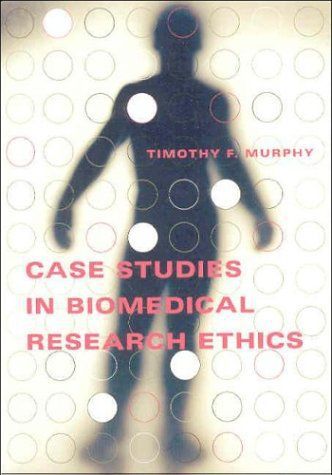
This textbook for instruction in biomedical research ethics can also serve as a valuable reference for professionals in the field of bioethics. The 149 cases included in the book are grouped in nine chapters, each of which covers a key area of debate in the field. Some of the case studies are classics, including the famous cases of the Tuskegee Syphilis Study (in which subjects with syphilis were not given treatment) and the Willowbrook hepatitis studies (in which institutionalized subjects were intentionally exposed to hepatitis). Others focus on such current issues as human embryonic stem cell research, cloning by somatic nuclear transfer, and the design and function of institutional review boards. Each chapter begins with a brief introduction that places the issues raised in context; this is followed by a number of cases (each of which is no more than a few pages). Study questions meant to encourage further discussion follow each case.After an introductory discussion of the history and tenets of ethics in medical research, the book’s chapters cover the topics of oversight and study design; informed consent; the selection of subjects; conflicts of interest; the social effects of research; embryos, fetuses, and children; genetic research; the use of animals; and authorship and publication. Following these chapters are appendixes with the texts of the Nuremburg Code and the World Declaration of Geneva, two key documents in the establishment of bioethical standards for research. Also included are a glossary, a table of cases by general category, and an alphabetical listing of cases.
ما از اخلاق چه انتظاری داریم؟ این سوال شاید تاحدودی برای عموم مردم و یا متخصصان این رشته قابل پاسخ باشد؛ اینکه خوب بودن را به ما بیاموزد و در تنظیم روابط فردی م...

جشن کتاب تهران به ایستگاه سی و یکم رسیده است. حال و احوال نشر کتاب خوب نیست و باید فرهنگدوستان را به خرید و هدیه دادن کتاب ترغیب نمود. خانه اخلاقپژوهان جوان ب...

بنیاد کتابهای اخلاق اسلامی عمدتا پالایش جان از آلودگیها و آراستن آن به زیباییها است. اندیشه محوری این قبیل کتابها آن است که انسان فعلی آنی نیست که باید باشد...

-
0 Comments