Notice: تابع WP_Block_Type_Registry::register به طورنادرست فراخوانی شد. نامهای نوع بلوک نباید حروف بزرگ داشته باشند. لطفاً برای اطلاعات بیشتر، اشکال زدایی در وردپرس را مشاهده کنید. (این پیام در نگارش 5.0.0 افزوده شده است.) in /home/ethicsho/public_html/wp-includes/functions.php on line 5313
Warning: Use of undefined constant TDC_PATH_LEGACY - assumed 'TDC_PATH_LEGACY' (this will throw an Error in a future version of PHP) in /home/ethicsho/public_html/wp-content/plugins/td-composer/td-composer.php on line 109
Warning: Use of undefined constant TDSP_THEME_PATH - assumed 'TDSP_THEME_PATH' (this will throw an Error in a future version of PHP) in /home/ethicsho/public_html/wp-content/plugins/td-composer/td-composer.php on line 113 بایگانیهای Greg Forster - خانه اخلاق پژوهان جوان Notice: Trying to access array offset on value of type bool in /home/ethicsho/public_html/wp-content/plugins/wp-ulike/inc/general-functions.php on line 807
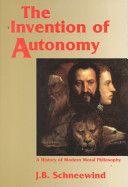
This remarkable book is the most comprehensive study ever written of the history of moral philosophy in the seventeenth and eighteenth centuries. Its aim is to set Kant’s still influential ethics in its historical context by showing in detail what the central questions in moral philosophy were for him and how he arrived at his own distinctive ethical views. The book is organised into four main sections, each exploring moral philosophy by discussing the work of many influential philosophers of the seventeenth and eighteenth centuries. In an epilogue the author discusses Kant’s view of his own historicity, and of the aims of moral philosophy. In its range, in its analyses of many philosophers not discussed elsewhere, and in revealing the subtle interweaving of religious and political thought with moral philosophy, this is an unprecedented account of the evolution of Kant’s ethics.
Since its first publication in 1945? Lord Russell’s A History of Western Philosophy has been universally acclaimed as the outstanding one-volume work on the subject — unparalleled in its comprehensiveness, its clarity, its erudition, its grace and wit. In seventy-six chapters he traces philosophy from the rise of Greek civilization to the emergence of logical analysis in the twentieth century. Among the philosophers considered are: Pythagoras, Heraclitus, Parmenides, Empedocles, Anaxagoras, the Atomists, Protagoras, Socrates, Plato, Aristotle, the Cynics, the Sceptics, the Epicureans, the Stoics, Plotinus, Ambrose, Jerome, Augustine, Benedict, Gregory the Great, John the Scot, Aquinas, Duns Scotus, William of Occam, Machiavelli, Erasmus, More, Bacon, Hobbes, Descartes, Spinoza, Leibniz, Locke, Berkeley, Hume, Rousseau, Kant, Hegel, Schopenhauer, Nietzsche, the Utilitarians, Marx, Bergson, James, Dewey, and lastly the philosophers with whom Lord Russell himself is most closely associated — Cantor, Frege, and Whitehead, co-author with Russell of the monumental Principia Mathematica.
What does it take to follow and not merely admire Jesus? How do religious affections reshape the practice of Christian values like love, peace, justice, and compassion? How can they possess both universal truth and local meaning? What role can they play in public life? In Fidelity of Heart Gilman answers these questions, while showing, in an innovative and provocative approach, how Christians can practice these values in ways continuous with the life of Jesus.
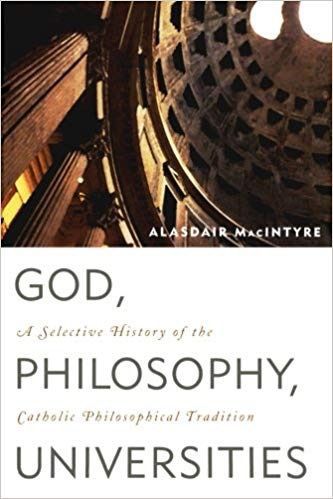
‘What does it mean to be a human being?’ Given this perennial question, Alasdair MacIntyre, one of America’s preeminent philosophers, presents a compelling argument on the necessity and importance of philosophy. Because of a need to better understand Catholic philosophical thought, especially in the context of its historical development and realizing that philosophers interact within particular social and cultural situations, MacIntyre offers this brief history of Catholic philosophy. Tracing the idea of God through different philosophers’ engagement of God and how this engagement has played out in universities, MacIntyre provides a valuable, lively, and insightful study of the disintegration of academic disciplines with knowledge. MacIntyre then demonstrates the dangerous implications of this happening and how universities can and ought to renew a shared understanding of knowledge in their mission. This engaging work will be a benefit and a delight to all readers.
ما از اخلاق چه انتظاری داریم؟ این سوال شاید تاحدودی برای عموم مردم و یا متخصصان این رشته قابل پاسخ باشد؛ اینکه خوب بودن را به ما بیاموزد و در تنظیم روابط فردی م...

جشن کتاب تهران به ایستگاه سی و یکم رسیده است. حال و احوال نشر کتاب خوب نیست و باید فرهنگدوستان را به خرید و هدیه دادن کتاب ترغیب نمود. خانه اخلاقپژوهان جوان ب...

بنیاد کتابهای اخلاق اسلامی عمدتا پالایش جان از آلودگیها و آراستن آن به زیباییها است. اندیشه محوری این قبیل کتابها آن است که انسان فعلی آنی نیست که باید باشد...

-
0 Comments