Notice: تابع WP_Block_Type_Registry::register به طورنادرست فراخوانی شد. نامهای نوع بلوک نباید حروف بزرگ داشته باشند. لطفاً برای اطلاعات بیشتر، اشکال زدایی در وردپرس را مشاهده کنید. (این پیام در نگارش 5.0.0 افزوده شده است.) in /home/ethicsho/public_html/wp-includes/functions.php on line 5313
Warning: Use of undefined constant TDC_PATH_LEGACY - assumed 'TDC_PATH_LEGACY' (this will throw an Error in a future version of PHP) in /home/ethicsho/public_html/wp-content/plugins/td-composer/td-composer.php on line 109
Warning: Use of undefined constant TDSP_THEME_PATH - assumed 'TDSP_THEME_PATH' (this will throw an Error in a future version of PHP) in /home/ethicsho/public_html/wp-content/plugins/td-composer/td-composer.php on line 113 بایگانیهای Gene Harold Outka - خانه اخلاق پژوهان جوان Notice: Trying to access array offset on value of type bool in /home/ethicsho/public_html/wp-content/plugins/wp-ulike/inc/general-functions.php on line 807
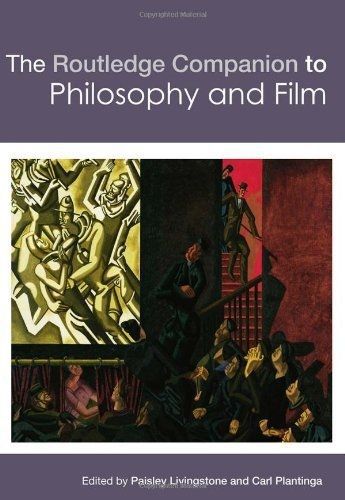
The Routledge Companion to Philosophy and Filmis the first comprehensive volume to explore the main themes, topics, thinkers and issues in philosophy and film. The Companionfeatures sixty specially commissioned chapters from international scholars and is divided into four clear parts: ⬢ issues and concepts ⬢ authors and trends ⬢ genres ⬢ film as philosophy. Part one is a comprehensive section examining key concepts, including chapters on acting, censorship, character, depiction, ethics, genre, interpretation, narrative, reception and spectatorship and style. Part two covers authors and scholars of film and significant theories Part three examines genres such as documentary, experimental cinema, horror, comedy and tragedy. Part four includes chapters on key directors such as Tarkovsky, Bergman and Terrence Malick and on particular films including Memento. Each chapter includes a section of annotated further reading and is cross-referenced to related entries. The Routledge Companion to Philosophy and Filmis essential reading for anyone interested in philosophy of film, aesthetics and film and cinema studies.
A paradox can be defined as an unacceptable conclusion derived by apparently acceptable reasoning from apparently acceptable premises. Many paradoxes raise serious philosophical problems, and they are associated with crises of thought and revolutionary advances. The expanded and revised third edition of this intriguing book considers a range of knotty paradoxes including Zeno’s paradoxical claim that the runner can never overtake the tortoise, a new chapter on paradoxes about morals, paradoxes about belief, and hardest of all, paradoxes about truth. The discussion uses a minimum of technicality but also grapples with complicated and difficult considerations, and is accompanied by helpful questions designed to engage the reader with the arguments. The result is not only an explanation of paradoxes but also an excellent introduction to philosophical thinking.
Literature often deals with moral issues. It focuses on human dilemmas and awakens our imagination to new possibilities. It compels us to rethink and revise our everyday assumptions, enabling us to consider ethical questions in creative ways. The Moral Life: An Introductory Reader in Ethics and Literature brings together an extensive and varied collection of 87 classical and contemporary readings on ethical theory and practice. The book is divided into four sections covering the nature of morality, moral theories, moral issues, and applied ethics. Integrating literature with philosophy in an innovative way, editor Louis Pojman uses literary works to enliven and make concrete the ethical theory or applied issues addressed in each chapter. Literary works by Hugo, Hawthorne, Melville, Tolstoy, Ibsen, Huxley, Orwell, Camus, LeGuin, Styron, and many others lead students into philosophical concepts and issues such as relativism, utilitarianism, virtue ethics, the meaning of life, freedom, sex, love and marriage, and environmental ethics. Once introduced, these topics are developed further through readings by philosophers including Aristotle, Sartre, Bernard Williams, Jane English, and Thomas E. Hill, Jr. This unique anthology emphasizes the personal dimension of ethics, which is often ignored or minimized in ethics texts. Featuring insightful part and chapter introductions as well as biographical sketches, abstracts, and study questions for each reading selection, The Moral Life is ideal for introductory ethics courses. It also provides an engaging gateway into personal and social ethics for the general reader.
ما از اخلاق چه انتظاری داریم؟ این سوال شاید تاحدودی برای عموم مردم و یا متخصصان این رشته قابل پاسخ باشد؛ اینکه خوب بودن را به ما بیاموزد و در تنظیم روابط فردی م...

جشن کتاب تهران به ایستگاه سی و یکم رسیده است. حال و احوال نشر کتاب خوب نیست و باید فرهنگدوستان را به خرید و هدیه دادن کتاب ترغیب نمود. خانه اخلاقپژوهان جوان ب...

بنیاد کتابهای اخلاق اسلامی عمدتا پالایش جان از آلودگیها و آراستن آن به زیباییها است. اندیشه محوری این قبیل کتابها آن است که انسان فعلی آنی نیست که باید باشد...

-
0 Comments