Notice: تابع WP_Block_Type_Registry::register به طورنادرست فراخوانی شد. نامهای نوع بلوک نباید حروف بزرگ داشته باشند. لطفاً برای اطلاعات بیشتر، اشکال زدایی در وردپرس را مشاهده کنید. (این پیام در نگارش 5.0.0 افزوده شده است.) in /home/ethicsho/public_html/wp-includes/functions.php on line 5313
Warning: Use of undefined constant TDC_PATH_LEGACY - assumed 'TDC_PATH_LEGACY' (this will throw an Error in a future version of PHP) in /home/ethicsho/public_html/wp-content/plugins/td-composer/td-composer.php on line 109
Warning: Use of undefined constant TDSP_THEME_PATH - assumed 'TDSP_THEME_PATH' (this will throw an Error in a future version of PHP) in /home/ethicsho/public_html/wp-content/plugins/td-composer/td-composer.php on line 113 بایگانیهای Ethnophilosophy - Congresses - خانه اخلاق پژوهان جوان Notice: Trying to access array offset on value of type bool in /home/ethicsho/public_html/wp-content/plugins/wp-ulike/inc/general-functions.php on line 807
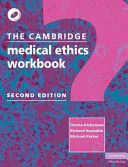
This new edition of The Cambridge Medical Ethics Workbook builds on the success of the first edition by working from the ‘bottom up’, with a widely praised case-based approach. A variety of guided exercises are supplemented by short papers and commentaries on legal and ethical issues, challenging readers to develop their own analyses and recommendations. Chapters cover death, genetics, new reproductive technologies, research, long-term care, mental health, children and young people, allocation of scarce resources, and general issues about autonomy and patient choice. An appendix discusses the use of this book in teaching, along with a full bibliography, list of Kennedy Institute keywords, and suggestions for further reading. An interactive CD-ROM packaged with the book provides extra cases, a glossary, legal references and the chance to record a personal learning diary. Its simple, clear style makes this book ideal for individual reference and as a set text for group teaching.
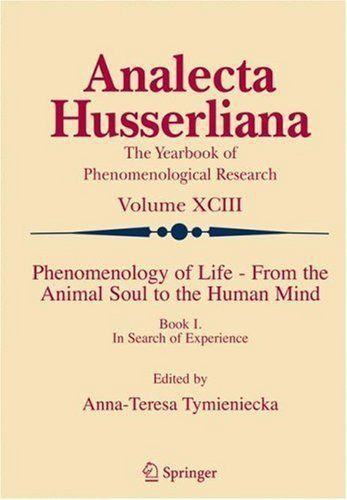
Transcendental phenomenology presumed to have overcome the classic mind-body dichotomy in terms of consciousness, yet, according to progress in scientific studies, the biological functions of the brain seem to appropriate significant functions attributed traditionally to consciousness. Should we indeed dissolve the specificity of human consciousness by explaining human experience in its multiple sense-giving modalities through the physiological functions of the brain? The present collection of studies addresses this crucial question challenging such “naturalizing” reductionism from multiple angles. In search for the roots of “The Specifically Human Experience” (Bombala), moving along the line of “Animality and Intellection”(Gosetti-Ferencei), “Naturalistic Attitude and Personalistic Attitude”(Villela-Petit), and numerous other perspectives, we arrive at a novel proposal to explain the scholar functional differentiation of conscious modalities. We reach their source in the ontopoietic thread conducting the Logos of Life in its stepwise “Evolutive Unfolding”(Carmen Cozma), and in “sentience” as its quintessential core of further irreducible continuity (Tymieniecka) dispelling dichotomies and reductionisms. Papers by: Grahame Lock, Anna-Teresa Tymieniecka, Daniela Verducci, Ted Toadvine, Mary Trachsel, Martin Holt, Mary Jeanne Larrabee, Leszek Pyra, Bronislaw Bombala, Konrad Rokstad, Ilja Maso, Nancy Mardas, Jennifer Anna Gosetti-Ferencei, Maria Villela-Petit, Mara Stafecka, Carmen Cozma, Francesco Totaro, Andreas Brenner, Sinan Kadir Celik, Osvaldo Rossi, Maria Manuela Brinto Martins, Elga Freiberga, Klymet Selvi, J.C. Couciero-Bueno, Patricia Trutty-Coohill, Walter Lammi, Ljudmila Molodkina, Martin Nkafu Nkemnkia.
ما از اخلاق چه انتظاری داریم؟ این سوال شاید تاحدودی برای عموم مردم و یا متخصصان این رشته قابل پاسخ باشد؛ اینکه خوب بودن را به ما بیاموزد و در تنظیم روابط فردی م...

جشن کتاب تهران به ایستگاه سی و یکم رسیده است. حال و احوال نشر کتاب خوب نیست و باید فرهنگدوستان را به خرید و هدیه دادن کتاب ترغیب نمود. خانه اخلاقپژوهان جوان ب...

بنیاد کتابهای اخلاق اسلامی عمدتا پالایش جان از آلودگیها و آراستن آن به زیباییها است. اندیشه محوری این قبیل کتابها آن است که انسان فعلی آنی نیست که باید باشد...

-
0 Comments