Notice: تابع WP_Block_Type_Registry::register به طورنادرست فراخوانی شد. نامهای نوع بلوک نباید حروف بزرگ داشته باشند. لطفاً برای اطلاعات بیشتر، اشکال زدایی در وردپرس را مشاهده کنید. (این پیام در نگارش 5.0.0 افزوده شده است.) in /home/ethicsho/public_html/wp-includes/functions.php on line 5313
Warning: Use of undefined constant TDC_PATH_LEGACY - assumed 'TDC_PATH_LEGACY' (this will throw an Error in a future version of PHP) in /home/ethicsho/public_html/wp-content/plugins/td-composer/td-composer.php on line 109
Warning: Use of undefined constant TDSP_THEME_PATH - assumed 'TDSP_THEME_PATH' (this will throw an Error in a future version of PHP) in /home/ethicsho/public_html/wp-content/plugins/td-composer/td-composer.php on line 113 بایگانیهای Dr. John D. Lantos MD - خانه اخلاق پژوهان جوان Notice: Trying to access array offset on value of type bool in /home/ethicsho/public_html/wp-content/plugins/wp-ulike/inc/general-functions.php on line 807
This Companion provides a fresh and comprehensive account of this outstanding work, which remains among the most frequently read works of Greek philosophy, indeed of Classical antiquity in general. The sixteen essays, by authors who represent various academic disciplines, bring a spectrum of interpretive approaches to bear in order to aid the understanding of a wide-ranging audience, from first-time readers of the Republic who require guidance, to more experienced readers who wish to explore contemporary currents in the work’s interpretation. The three initial chapters address aspects of the work as a whole. They are followed by essays that match closely the sequence in which topics are presented in the ten books of the Republic. Since the Republic returns frequently to the same topics by different routes, so do the authors of this volume, who provide the readers with divergent yet complementary perspectives by which to appreciate the Republic’s principal concerns.
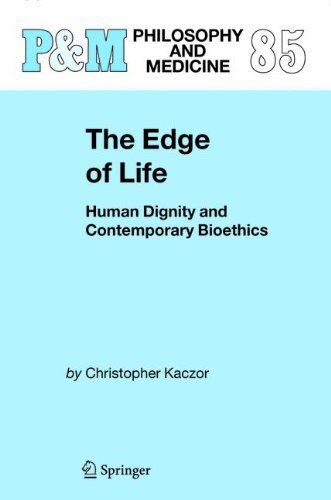
The Edge of Life: Human Dignity and Contemporary Bioethics treats a number of distinct moral questions and ?nds their answer in the dignity of the person, both as an agent and as a patient (in the sense of the recipient of action). Characteristically one’s view of the human being ultimately shapes one’s outlook on these matters. This book addresses questions that divide a culture of life from a culture of death as well as a number of questions debated within the Catholic tradition itself. The Edge of Life offers a critique of the new bio-ethic, represented by such notable authors as Peter Singer; it also attempts to shore up some of the dif?culties leveled by critics against the traditional ethic as well as to answer some questions disputed by those within the tradition. This book does not treat the basic principles of morality but rather many of their applications and suppositions. (For an account of contemporary debates within the Catholic tradition on these matters, see Kaczor 2002). Rather, The Edge of Life seeks to address a number of disputed contemporary questions touching upon human dignity at what has been called “the margins of life. ” The ?rst section of the book treats the dignity of the human person as recipient of action and as agent. Chapter two examines various accounts of when a human being becomes a person.
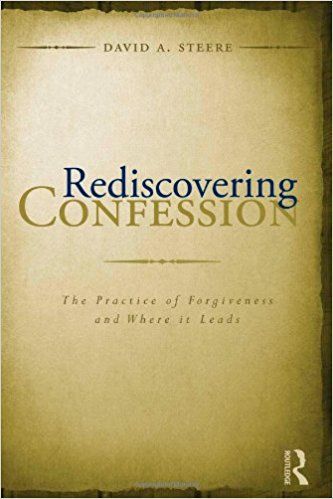
Rediscovering Confession is about recovering the experience of confession, in danger now of becoming a lost art. It identifies four elements present in psychotherapy and confession: a state of heightened self-awareness, a growing realization that our predicament points in some meaningful direction beyond itself, the necessity to make a relevant response to our situation, and a potential for spiritual encounter that accompanies the process. Each chapter contains a section devoted to Practice with exercises for individual contemplation and experimentation, guidelines for forming a confessional partnership, directions for conducting discussions in a study goup, and ways to organize a small confessional group.
Plato’s Utopia Recast is an illuminating reappraisal of Plato’s later works, which reveals radical changes in his ethical and political theory. Christopher Bobonich examines later dialogues, with a special emphasis upon the Laws, and argues that in these late works, Plato both rethinks and revises the basic ethical and political positions that he held in his better-known earlier works, such as the Republic. This book will change our understanding of Plato. His controversial moral and political theory, so influential in Western thought, will henceforth be seen in a new light.
ما از اخلاق چه انتظاری داریم؟ این سوال شاید تاحدودی برای عموم مردم و یا متخصصان این رشته قابل پاسخ باشد؛ اینکه خوب بودن را به ما بیاموزد و در تنظیم روابط فردی م...

جشن کتاب تهران به ایستگاه سی و یکم رسیده است. حال و احوال نشر کتاب خوب نیست و باید فرهنگدوستان را به خرید و هدیه دادن کتاب ترغیب نمود. خانه اخلاقپژوهان جوان ب...

بنیاد کتابهای اخلاق اسلامی عمدتا پالایش جان از آلودگیها و آراستن آن به زیباییها است. اندیشه محوری این قبیل کتابها آن است که انسان فعلی آنی نیست که باید باشد...

-
0 Comments