Notice: تابع WP_Block_Type_Registry::register به طورنادرست فراخوانی شد. نامهای نوع بلوک نباید حروف بزرگ داشته باشند. لطفاً برای اطلاعات بیشتر، اشکال زدایی در وردپرس را مشاهده کنید. (این پیام در نگارش 5.0.0 افزوده شده است.) in /home/ethicsho/public_html/wp-includes/functions.php on line 5313
Warning: Use of undefined constant TDC_PATH_LEGACY - assumed 'TDC_PATH_LEGACY' (this will throw an Error in a future version of PHP) in /home/ethicsho/public_html/wp-content/plugins/td-composer/td-composer.php on line 109
Warning: Use of undefined constant TDSP_THEME_PATH - assumed 'TDSP_THEME_PATH' (this will throw an Error in a future version of PHP) in /home/ethicsho/public_html/wp-content/plugins/td-composer/td-composer.php on line 113 بایگانیهای Charles Fried - خانه اخلاق پژوهان جوان Notice: Trying to access array offset on value of type bool in /home/ethicsho/public_html/wp-content/plugins/wp-ulike/inc/general-functions.php on line 807
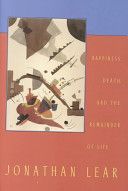
Separated by millennia, Aristotle and Sigmund Freud gave us disparate but compelling pictures of the human condition. But if, with Jonathan Lear, we scrutinize these thinkers’ attempts to explain human behavior in terms of a higher principle–whether happiness or death–the pictures fall apart. Aristotle attempted to ground ethical life in human striving for happiness, yet he didn’t understand what happiness is any better than we do. Happiness became an enigmatic, always unattainable, means of seducing humankind into living an ethical life. Freud fared no better when he tried to ground human striving, aggression, and destructiveness in the death drive, like Aristotle attributing purpose where none exists. Neither overarching principle can guide or govern “the remainder of life,” in which our inherently disruptive unconscious moves in breaks and swerves to affect who and how we are. Lear exposes this tendency to self-disruption for what it is: an opening, an opportunity for new possibilities. His insights have profound consequences not only for analysis but for our understanding of civilization and its discontent.
In these three Tanner lectures, distinguished ethical theorist Allan Gibbard explores the nature of normative thought and the bases of ethics. In the first lecture he explores the role of intuitions in moral thinking and offers a way of thinking about the intuitive method of moral inquiry that both places this activity within the natural world and makes sense of it as an indispensable part of our lives as planners. In the second and third lectures he takes up the kind of substantive ethical inquiry he has described in the first lecture, asking how we might live together on terms that none of us could reasonably reject. Since working at cross purposes loses fruits that might stem from cooperation, he argues, any consistent ethos that meets this test would be, in a crucial way, utilitarian. It would reconcile our individual aims to establish, in Kant’s phrase, a “kingdom of ends.” The volume also contains an introduction by Barry Stroud, the volume editor, critiques by Michael Bratman (Stanford University), John Broome (Oxford University), and F. M. Kamm (Harvard University), and Gibbard’s responses.
ما از اخلاق چه انتظاری داریم؟ این سوال شاید تاحدودی برای عموم مردم و یا متخصصان این رشته قابل پاسخ باشد؛ اینکه خوب بودن را به ما بیاموزد و در تنظیم روابط فردی م...

جشن کتاب تهران به ایستگاه سی و یکم رسیده است. حال و احوال نشر کتاب خوب نیست و باید فرهنگدوستان را به خرید و هدیه دادن کتاب ترغیب نمود. خانه اخلاقپژوهان جوان ب...

بنیاد کتابهای اخلاق اسلامی عمدتا پالایش جان از آلودگیها و آراستن آن به زیباییها است. اندیشه محوری این قبیل کتابها آن است که انسان فعلی آنی نیست که باید باشد...

-
0 Comments