Notice: تابع WP_Block_Type_Registry::register به طورنادرست فراخوانی شد. نامهای نوع بلوک نباید حروف بزرگ داشته باشند. لطفاً برای اطلاعات بیشتر، اشکال زدایی در وردپرس را مشاهده کنید. (این پیام در نگارش 5.0.0 افزوده شده است.) in /home/ethicsho/public_html/wp-includes/functions.php on line 5313
Warning: Use of undefined constant TDC_PATH_LEGACY - assumed 'TDC_PATH_LEGACY' (this will throw an Error in a future version of PHP) in /home/ethicsho/public_html/wp-content/plugins/td-composer/td-composer.php on line 109
Warning: Use of undefined constant TDSP_THEME_PATH - assumed 'TDSP_THEME_PATH' (this will throw an Error in a future version of PHP) in /home/ethicsho/public_html/wp-content/plugins/td-composer/td-composer.php on line 113 بایگانیهای C. Keans - خانه اخلاق پژوهان جوان Notice: Trying to access array offset on value of type bool in /home/ethicsho/public_html/wp-content/plugins/wp-ulike/inc/general-functions.php on line 807
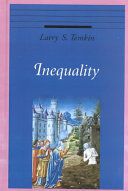
Equality has long been among the most potent of human ideals and it continues to play a prominent role in political argument. Views about equality inform much of the debate about wide-ranging issues such as racism, sexism, obligations to the poor or handicapped, relations between developed and developing countries, and the justification of competing political, economic, and ideological systems. Temkin begins his illuminating examination with a simple question: when is one situation worse than another regarding inequality? In exploring this question, a new approach to understanding inequality emerges. Temkin goes against the common view that inequality is simple and holistic and argues instead that it is complex, individualistic, and essentially comparative. He presents a new way of thinking about equality and inequality that challenges the assumptions of philosophers, welfare economists, and others, and has significant and far-reaching implications on a practical as well as a theoretical level.
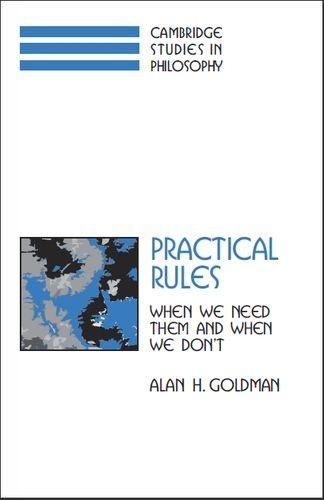
Rules proliferate; some are kept with a bureaucratic stringency bordering on the absurd, while others are manipulated and ignored in ways that injure our sense of justice. Under what conditions should we make exceptions to rules, and when should they be followed despite particular circumstances? The two dominant models in the current literature on rules are the particularist account and that which sees the application of rules as normative. Taking a position that falls between these two extremes, Alan Goldman is the first to provide a systematic framework to clarify when we need to follow rules in our moral, legal, and prudential decisions, and when we ought not to do so.
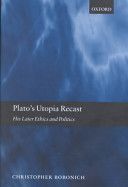
Plato’s Utopia Recast is an illuminating reappraisal of Plato’s later works, which reveals radical changes in his ethical and political theory. Christopher Bobonich examines later dialogues, with a special emphasis upon the Laws, and argues that in these late works, Plato both rethinks and revises the basic ethical and political positions that he held in his better-known earlier works, such as the Republic. This book will change our understanding of Plato. His controversial moral and political theory, so influential in Western thought, will henceforth be seen in a new light.
ما از اخلاق چه انتظاری داریم؟ این سوال شاید تاحدودی برای عموم مردم و یا متخصصان این رشته قابل پاسخ باشد؛ اینکه خوب بودن را به ما بیاموزد و در تنظیم روابط فردی م...

جشن کتاب تهران به ایستگاه سی و یکم رسیده است. حال و احوال نشر کتاب خوب نیست و باید فرهنگدوستان را به خرید و هدیه دادن کتاب ترغیب نمود. خانه اخلاقپژوهان جوان ب...

بنیاد کتابهای اخلاق اسلامی عمدتا پالایش جان از آلودگیها و آراستن آن به زیباییها است. اندیشه محوری این قبیل کتابها آن است که انسان فعلی آنی نیست که باید باشد...

-
0 Comments