Notice: تابع WP_Block_Type_Registry::register به طورنادرست فراخوانی شد. نامهای نوع بلوک نباید حروف بزرگ داشته باشند. لطفاً برای اطلاعات بیشتر، اشکال زدایی در وردپرس را مشاهده کنید. (این پیام در نگارش 5.0.0 افزوده شده است.) in /home/ethicsho/public_html/wp-includes/functions.php on line 5313
Warning: Use of undefined constant TDC_PATH_LEGACY - assumed 'TDC_PATH_LEGACY' (this will throw an Error in a future version of PHP) in /home/ethicsho/public_html/wp-content/plugins/td-composer/td-composer.php on line 109
Warning: Use of undefined constant TDSP_THEME_PATH - assumed 'TDSP_THEME_PATH' (this will throw an Error in a future version of PHP) in /home/ethicsho/public_html/wp-content/plugins/td-composer/td-composer.php on line 113 بایگانیهای Andrew Fisher - خانه اخلاق پژوهان جوان Notice: Trying to access array offset on value of type bool in /home/ethicsho/public_html/wp-content/plugins/wp-ulike/inc/general-functions.php on line 807
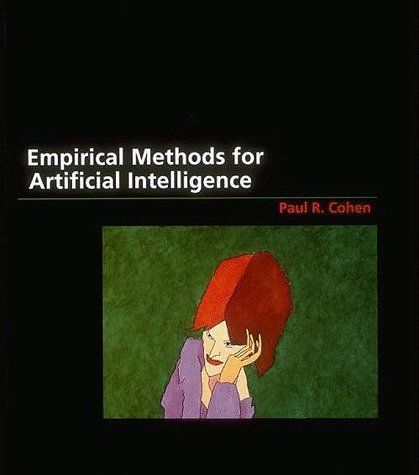
Computer science and artificial intelligence in particular have no curriculum in research methods, as other sciences do. This book presents empirical methods for studying complex computer programs: exploratory tools to help find patterns in data, experiment designs and hypothesis-testing tools to help data speak convincingly, and modeling tools to help explain data. Although many of these techniques are statistical, the book discusses statistics in the context of the broader empirical enterprise. The first three chapters introduce empirical questions, exploratory data analysis, and experiment design. The blunt interrogation of statistical hypothesis testing is postponed until chapters 4 and 5, which present classical parametric methods and computer-intensive (Monte Carlo) resampling methods, respectively. This is one of few books to present these new, flexible resampling techniques in an accurate, accessible manner.Much of the book is devoted to research strategies and tactics, introducing new methods in the context of case studies. Chapter 6 covers performance assessment, chapter 7 shows how to identify interactions and dependencies among several factors that explain performance, and chapter 8 discusses predictive models of programs, including causal models. The final chapter asks what counts as a theory in AI, and how empirical methods—which deal with specific systems—can foster general theories.Mathematical details are confined to appendixes and no prior knowledge of statistics or probability theory is assumed. All of the examples can be analyzed by hand or with commercially available statistics packages.The Common Lisp Analytical Statistics Package (CLASP), developed in the author’s laboratory for Unix and Macintosh computers, is available from The MIT Press.A Bradford Book
Philosophy of Right remains among the most influential works in Western political theory. It introduces a notion of civil society that has proven of inestimable importance to diverse philosophical and social agendas. In this transcription of the lectures that formed the initial version of Hegel’s text, the philosopher presents his thought with a clarity and directness seldom matched in his later writings. Nowhere does Hegel make clearer the difference between his concept of objective spirit and traditional concepts of natural law. Nowhere does he offer a more prominent treatment of the key notion of recognition. The long-awaited appearance of this first English-language translation of these lectures is a major event for Hegel scholars, philosophers, and political theorists. Philosophy of Right remains among the most influential works in Western political theory. It introduces a notion of civil society that has proven of inestimable importance to diverse philosophical and social agendas. In this transcription of the lectures that formed the initial version of Hegel’s text, the philosopher presents his thought with a clarity and directness seldom matched in his later writings. Nowhere does Hegel make clearer the difference between his concept of objective spirit and traditional concepts of natural law. Nowhere does he offer a more prominent treatment of the key notion of recognition. The long-awaited appearance of this first English-language translation of these lectures is a major event for Hegel scholars, philosophers, and political theorists.
Christine M. Korsgaard presents an account of the foundation of practical reason and moral obligation. Moral philosophy aspires to understand the fact that human actions, unlike the actions of the other animals, can be morally good or bad, right or wrong. Few moral philosophers, however, have exploited the idea that actions might be morally good or bad in virtue of being good or bad of their kind – good or bad as actions. Just as we need to know that it is the function of the heart to pump blood to know that a good heart is one that pumps blood successfully, so we need to know what the function of an action is in order to know what counts as a good or bad action. Drawing on the work of Plato, Aristotle, and Kant, Korsgaard proposes that the function of an action is to constitute the agency and therefore the identity of the person who does it. As rational beings, we are aware of, and therefore in control of, the principles that govern our actions. A good action is one that constitutes its agent as the autonomous and efficacious cause of her own movements. These properties correspond, respectively, to Kant’s two imperatives of practical reason. Conformity to the categorical imperative renders us autonomous, and conformity to the hypothetical imperative renders us efficacious. And in determining what effects we will have in the world, we are at the same time determining our own identities. Korsgaard develops a theory of action and of interaction, and of the form interaction must take if we are to have the integrity that, she argues, is essential for agency. On the basis of that theory, she argues that only morally good action can serve the function of action, which is self-constitution.
Do the reasons we have for acting as we do derive from our concerns and desires, or are there objective values in the world that we are rationally required to pursue and protect? Alan Goldman argues for the internalist or subjectivist view of practical reasons on the grounds that it is simpler, more unified, and more comprehensible than the rival objectivist position. He provides a naturalistic account of practical rationality in terms of coherence within sets of desires or motivational states, and between motivations, intentions, and actions. Coherence is defined as the avoidance of self-defeat, the defeat of one’s own deepest concerns. The demand for coherence underlies both practical and theoretical reason and derives from the natural aims of belief and action. In clarifying which desires create reasons, drawing on the literature of cognitive psychology, Goldman offers conceptual analyses of desires, emotions, and attitudes. Reasons are seen to derive ultimately from our deepest occurrent concerns. These concerns require no reasons themselves but provide reasons for many more superficial desires. In defense of this theory, Goldman argues that rational agents need not be morally motivated or concerned for their narrow self-interest. Objective values would demand such concern. They would be independent of our desires but would provide reasons for us to pursue and protect them. They would require rational agents to be motivated by them. But, Goldman argues, we are not motivated in that way, and it makes no sense to demand that our informed and coherent desires be generally other than they are. We need not appeal to such objective values in order to explain how our lives can be good and meaningful. Reasons from Within will appeal to anyone interested in the nature of values and reasons, particularly students of philosophy, psychology, and decision theory.
For the first time in history, eradicating world poverty is within our reach. Yet around the world, a billion people struggle to live each day on less than many of us pay for bottled water. In The Life You Can Save, Peter Singer uses ethical arguments, illuminating examples, and case studies of charitable giving to show that our current response to world poverty is not only insufficient but morally indefensible. The Life You Can Save teaches us to be a part of the solution, helping others as we help ourselves.
ما از اخلاق چه انتظاری داریم؟ این سوال شاید تاحدودی برای عموم مردم و یا متخصصان این رشته قابل پاسخ باشد؛ اینکه خوب بودن را به ما بیاموزد و در تنظیم روابط فردی م...

جشن کتاب تهران به ایستگاه سی و یکم رسیده است. حال و احوال نشر کتاب خوب نیست و باید فرهنگدوستان را به خرید و هدیه دادن کتاب ترغیب نمود. خانه اخلاقپژوهان جوان ب...

بنیاد کتابهای اخلاق اسلامی عمدتا پالایش جان از آلودگیها و آراستن آن به زیباییها است. اندیشه محوری این قبیل کتابها آن است که انسان فعلی آنی نیست که باید باشد...

-
0 Comments