Notice: تابع WP_Block_Type_Registry::register به طورنادرست فراخوانی شد. نامهای نوع بلوک نباید حروف بزرگ داشته باشند. لطفاً برای اطلاعات بیشتر، اشکال زدایی در وردپرس را مشاهده کنید. (این پیام در نگارش 5.0.0 افزوده شده است.) in /home/ethicsho/public_html/wp-includes/functions.php on line 5313
Warning: Use of undefined constant TDC_PATH_LEGACY - assumed 'TDC_PATH_LEGACY' (this will throw an Error in a future version of PHP) in /home/ethicsho/public_html/wp-content/plugins/td-composer/td-composer.php on line 109
Warning: Use of undefined constant TDSP_THEME_PATH - assumed 'TDSP_THEME_PATH' (this will throw an Error in a future version of PHP) in /home/ethicsho/public_html/wp-content/plugins/td-composer/td-composer.php on line 113 بایگانیهای World Politics - خانه اخلاق پژوهان جوان Notice: Trying to access array offset on value of type bool in /home/ethicsho/public_html/wp-content/plugins/wp-ulike/inc/general-functions.php on line 807
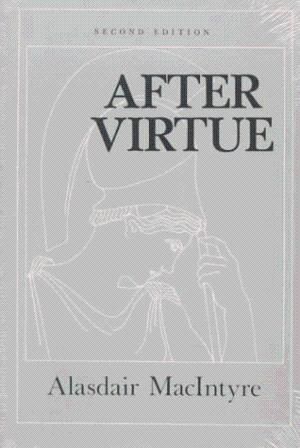
A disquieting suggestion — The nature of moral disagreement today and the claims of emotivism — Emotivism: social content and social context — The predecessor culture and the enlightenment project of justifying morality — Why the enlightenment project of justifying morality had to fail — Some consequences of the failure of the enlightenment project — “Fact”, explanation and expertise — The character of generalizations in social science and their lack of predictive power — Nietzsche or Aristotle? — The virtues in heroic societies — The virtues at Athens — Aristotle’s account of the virtues — Medieval aspects and occasions — The nature of the virtues — The virtues, the unity of a human life and the concept of a tradition — From the virtues to virtue and after virtue — Justice as a virtue: changing conceptions — After virtue: Nietzsche or Aristotle, Trotsky and St. Benedict — Postscript to the second edition.
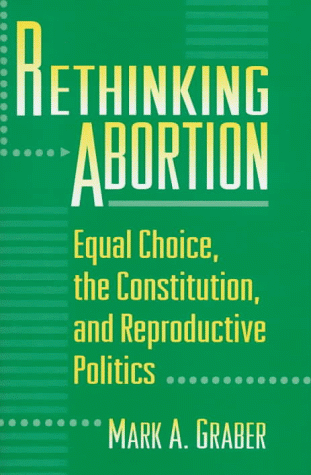
Mark Graber looks at the history of abortion law in action to argue that the only defensible, constitutional approach to the issue is to afford all women equal choice – abortion should remain legal or bans should be strictly enforced. Steering away from metaphysical critiques of privacy, Graber compares the philosophical, constitutional, and democratic merits of the two systems of abortion regulation witnessed in the twentieth-century: pre-Roe v. Wade statutory prohibitions on abortion and Roe’s ban on significant state interference with the market for safe abortion services. He demonstrates that before Roe, pro-life measures were selectively and erratically administered, thereby subverting our constitutional commitment to equal justice. Claiming that these measures would be similarly administered if reinstated, the author seeks to increase support for keeping abortion legal, even among those who have reservations about its morality. Abortion should remain legal, Graber argues, because statutory bans on abortion have a history of being enforced in ways that intentionally discriminate against poor persons and persons of color. In the years before Roe, the same law enforcement officials who routinely ignored and sometimes assisted those physicians seeking to terminate pregnancies for their private patients too often prevented competent abortionists from offering the same services to the general public. This double standard violated the fundamental human and constitutional right of equal justice under law, a right that has powerful roots in the American political tradition and that remains a major concern of the equal protection clause of the Fourteenth Amendment.
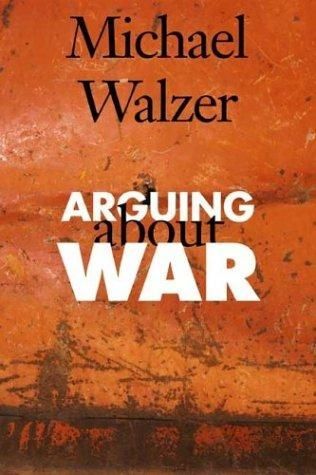
In this book Uwe Steinhoff describes and explains the basic tenets of just war theory and gives a precise, succinct and highly critical account of its present status and of the most important and controversial current debates surrounding it. Rejecting certain in effect medieval assumptions of traditional just war theory and advancing a liberal outlook, Steinhoff argues that every single individual is a legitimate authority and has under certain circumstances the right to declare war on others or the state. He also argues that the just cause cannot be established independently of the other criteria of jus ad bellum (the justification of entering a war), except for right intention, which he interprets more leniently than the tradition does. Turning to jus in bello (which governs the conduct of a war) he criticizes the Doctrine of Double Effect and concludes that insofar as wars kill innocents, and be it as “collateral damage”, they cannot be just but at best justified as the lesser evil. Steinhoff gives particular attention to the question why soldiers, allegedly, are legitimate targets and civilians not. Discussing four approaches to the explanation of the difference he argues that the four principles underlying them all need to be taken into account and outlines how their weighing can proceed if applied to concrete cases. The resulting approach does not square the distinction between legitimate and illegitimate targets with the distinction between soldiers and civilians, which has extremely important consequences for the conduct of war. Finally, Steinhoff analyses the concept of terrorism and argues that some forms of “terrorism” are actually not terrorism at all and that even terrorism proper can under certain circumstances be justified.
For centuries philosophers have wrestled with the dichotomy between individual freedom on the one hand and collective solidarity on the other. Yet today there is a growing realization that this template is fundamentally flawed. In this book, Mark Young embraces and advocates a more holistic concept of freedom; one which is not merely defined negatively but which positively provides the preconditions for individuals to actively exercise their autonomy and to flourish as human beings in the process.Young posits the idea of ‘freedom in community’ and traces its origin back to Aristotle. Taking as his premise that humans are deeply social beings who live their lives intricately interwoven with each other, he examines what type of political community is relevant for us in this post-Classical, post-Enlightenment and, indeed, post-Existential world. Identifying the failure of traditional ‘statist’ models of politics, Young instead argues for a civil society: a globally interlinked and free set of liberal communities as the best context for nourishing human flourishing. In this way we can achieve a proper setting for Eudaimonia in a modern sense.
ما از اخلاق چه انتظاری داریم؟ این سوال شاید تاحدودی برای عموم مردم و یا متخصصان این رشته قابل پاسخ باشد؛ اینکه خوب بودن را به ما بیاموزد و در تنظیم روابط فردی م...

جشن کتاب تهران به ایستگاه سی و یکم رسیده است. حال و احوال نشر کتاب خوب نیست و باید فرهنگدوستان را به خرید و هدیه دادن کتاب ترغیب نمود. خانه اخلاقپژوهان جوان ب...

بنیاد کتابهای اخلاق اسلامی عمدتا پالایش جان از آلودگیها و آراستن آن به زیباییها است. اندیشه محوری این قبیل کتابها آن است که انسان فعلی آنی نیست که باید باشد...

-
0 Comments