
Notice: تابع WP_Block_Type_Registry::register به طورنادرست فراخوانی شد. نامهای نوع بلوک نباید حروف بزرگ داشته باشند. لطفاً برای اطلاعات بیشتر، اشکال زدایی در وردپرس را مشاهده کنید. (این پیام در نگارش 5.0.0 افزوده شده است.) in /home/ethicsho/public_html/wp-includes/functions.php on line 5313
Warning: Use of undefined constant TDC_PATH_LEGACY - assumed 'TDC_PATH_LEGACY' (this will throw an Error in a future version of PHP) in /home/ethicsho/public_html/wp-content/plugins/td-composer/td-composer.php on line 109
Warning: Use of undefined constant TDSP_THEME_PATH - assumed 'TDSP_THEME_PATH' (this will throw an Error in a future version of PHP) in /home/ethicsho/public_html/wp-content/plugins/td-composer/td-composer.php on line 113 بایگانیهای Well-being - خانه اخلاق پژوهان جوان Notice: Trying to access array offset on value of type bool in /home/ethicsho/public_html/wp-content/plugins/wp-ulike/inc/general-functions.php on line 807
Gives students philosophical tools to think clearly about divisive moral issues faced today. Early chapters introduce moral theory, ethical relativism and objectivism, and classical ethical theories to provide a framework for understanding moral issues. Later chapters explore specific moral issues, such as cloning, suicide, abortion, the death penalty, and animal rights. This second edition contains four new chapters. Can be used as a stand-alone text, or with an anthology by the author. The author teaches philosophy at the US Military Academy in West Point, NY.
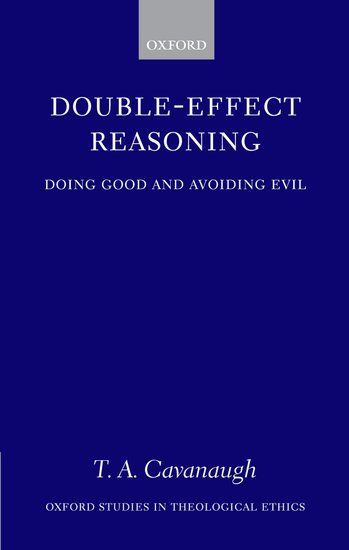
T. A. Cavanaugh defends double-effect reasoning (DER), also known as the principle of double effect. DER plays a role in anti-consequentialist ethics (such as deontology), in hard cases in which one cannot realize a good without also causing a foreseen, but not intended, bad effect (for example, killing non-combatants when bombing a military target). This study is the first book-length account of the history and issues surrounding this controversial approach to hard cases. It will be indispensable in theoretical ethics, applied ethics (especially medical and military), and moral theology. It will also interest legal and public policy scholars.
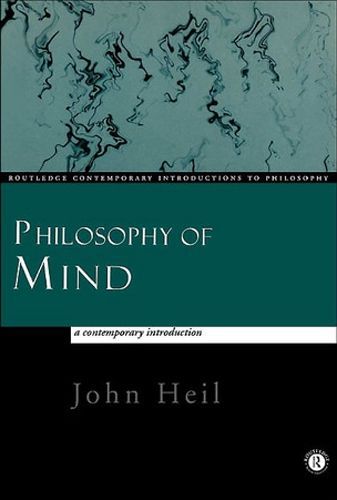
Philosophy of Mind: A Contemporary Introductioncovers the major topics typically studied in philosophy of mind and discusses the dualist, behaviorist, functionalist, interpretationist, and eliminativist accounts of the nature of mind, along with a critical assessment of the recent trends in the subject. This fully revised and updated version of the highly successful first edition builds on the previously addressed themes and expands on central topics. The new edition includes: * A brand new chapter on consciousness * An expansion of the Davidson and Dennett discussions, splitting them into two stand-alone chapters * A chapter looking at general issues associated with present day approaches to the theory of mind
In this book Linda Trinkaus Zagzebski gives an extended argument that the self-reflective person is committed to belief on authority. Epistemic authority is compatible with autonomy, but epistemic self-reliance is incoherent. She argues that epistemic and emotional self-trust are rational and inescapable, that consistent self-trust commits us to trust in others, and that among those we are committed to trusting are some whom we ought to treat as epistemic authorities, modeled on the well-known principles of authority of Joseph Raz. Some of these authorities can be in the moral and religious domains. Why have people for thousands of years accepted epistemic authority in religious communities? A religious community’s justification for authority is typically based on beliefs unique to that community. Unfortunately, that often means that from the community’s perspective, its justifying claims are insulated from the outside; whereas from an outside perspective, epistemic authority in the community appears unjustified. But as Zagzebski’s argument shows, an individual’s acceptance of authority in her community can be justified by principles that outsiders accept, and the particular beliefs justified by that authority are not immune to external critiques. Why have people for thousands of years accepted epistemic authority in religious communities? A religious community’s justification for authority is typically based on beliefs unique to that community. Unfortunately, that often means that from the community’s perspective, its justifying claims are insulated from the outside; whereas from an outside perspective, epistemic authority in the community appears unjustified. But as Zagzebski’s argument shows, an individual’s acceptance of authority in her community can be justified by principles that outsiders accept, and the particular beliefs justified by that authority are not immune to external critiques.
ما از اخلاق چه انتظاری داریم؟ این سوال شاید تاحدودی برای عموم مردم و یا متخصصان این رشته قابل پاسخ باشد؛ اینکه خوب بودن را به ما بیاموزد و در تنظیم روابط فردی م...

جشن کتاب تهران به ایستگاه سی و یکم رسیده است. حال و احوال نشر کتاب خوب نیست و باید فرهنگدوستان را به خرید و هدیه دادن کتاب ترغیب نمود. خانه اخلاقپژوهان جوان ب...

بنیاد کتابهای اخلاق اسلامی عمدتا پالایش جان از آلودگیها و آراستن آن به زیباییها است. اندیشه محوری این قبیل کتابها آن است که انسان فعلی آنی نیست که باید باشد...

-
0 Comments