Notice: تابع WP_Block_Type_Registry::register به طورنادرست فراخوانی شد. نامهای نوع بلوک نباید حروف بزرگ داشته باشند. لطفاً برای اطلاعات بیشتر، اشکال زدایی در وردپرس را مشاهده کنید. (این پیام در نگارش 5.0.0 افزوده شده است.) in /home/ethicsho/public_html/wp-includes/functions.php on line 5313
Warning: Use of undefined constant TDC_PATH_LEGACY - assumed 'TDC_PATH_LEGACY' (this will throw an Error in a future version of PHP) in /home/ethicsho/public_html/wp-content/plugins/td-composer/td-composer.php on line 109
Warning: Use of undefined constant TDSP_THEME_PATH - assumed 'TDSP_THEME_PATH' (this will throw an Error in a future version of PHP) in /home/ethicsho/public_html/wp-content/plugins/td-composer/td-composer.php on line 113 بایگانیهای Virtues In Literature - خانه اخلاق پژوهان جوان Notice: Trying to access array offset on value of type bool in /home/ethicsho/public_html/wp-content/plugins/wp-ulike/inc/general-functions.php on line 807
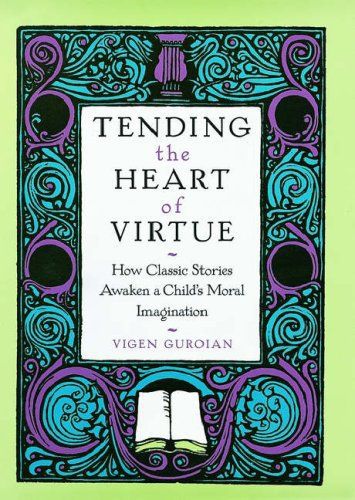
As the popularity of William Bennett’s Book of Virtues attests, parents are turning more and more to children’s literature to help instill values in their kids. Now, in this elegantly written and passionate book, Vigen Guroian provides the perfect complement to books such as Bennett’s, offering parents and teachers a much-needed roadmap to some of our finest children’s stories. Guroian illuminates the complex ways in which fairy tales and fantasies educate the moral imagination from earliest childhood. Examining a wide range of stories–from “Pinocchio” and “The Little Mermaid” to “Charlotte’s Web,” “The Velveteen Rabbit,” “The Wind in the Willows,” and the “Chronicles of Narnia”–he argues that these tales capture the meaning of morality through vivid depictions of the struggle between good and evil, in which characters must make difficult choices between right and wrong, or heroes and villains contest the very fate of imaginary worlds. Character and the virtues are depicted compellingly in these stories; the virtues glimmer as if in a looking glass, and wickedness and deception are unmasked of their pretensions to goodness and truth. We are made to face the unvarnished truth about ourselves, and what kind of people we want to be. Throughout, Guroian highlights the classical moral virtues such as courage, goodness, and honesty, especially as they are understood in traditional Christianity. At the same time, he so persuasively evokes the enduring charm of these familiar works that many readers will be inspired to reread their favorites and explore those they may have missed.
Currently, there is an upsurge of interest in the study of Christian ethics but much of what is written can appear confusing or beyond reach. In Christian Ethics, the first one-volume reference to include all the main themes in fundamental and applied moral theology, Bernard Hoose puts in understandable terms the state of moral theology today. At a time when many people fear that society has lost its way morally, he helps Christians make sense of the major issues that confront us all. Written by well-known ethicists in the English-speaking world, Christian Ethics is a comprehensive work of reference for students of moral theology. Scholars will value the excellent collection of essays and the range of scholarship they represent. The educated lay reader will also benefit from its highly readable text. Part one of the book deals with the fundamental themes in moral theology, including the role of the Bible, natural law, conscience, virtue, and the feminist contribution to Christian ethics. Part two is devoted to specific areas of applied or special ethics, under the headings of social ethics, interpersonal and sexual ethics, and medical ethics. Chapters in “Part 1: Basic Christian Ethics” are “The Bible and Christian Ethics,” by Tom Deidun; “Natural Law,” by Gerard J. Hughes; “Authority and Moral Teaching in a Catholic Christian Context,” by Joseph Selling; “Absolute Moral Norms,” by Charles E. Curran; “Virtue Ethics,” by James F. Keenan; “The Human Person,” by Joseph Selling; “Conscience,” by Richard M. Gula; “The Theory of the Fundamental Option and Moral Action,” by Thomas R. Kopfensteiner; “Feminist Ethics,” by Susan F. Parsons,” and “The Distinctiveness of Christian Morality,” by Vincent MacNamara. Chapters in “Part 2: Applied Ethics” are “Justice,” by Karen Lebacqz; “Property,” by Timothy J. Gorringe; “Morality and Law,” by Patrick Hannon; “The Punishment of Criminals,” by Bernard Hoose; “Peace, Violence and War,” by Richard G. Jones; “Sex, Sexuality, and Relationships,” by Gareth Moore; “Divorce and Remarriage,” by Kevin T. Kelly; “Truth and Lies,” by Bernard Hoose; “Euthanasia,” by Richard M. Gula; “Ethical Problems Arising from New Reproductive Techniques,” by Joyce Poole; “Organ Transplantation,” by David F. Kelly; and “Hypnosis and General Anaesthesia,” by Aureliano Pacciolla.
Although much human action serves as proof that irrational behavior is remarkably common, certain forms of irrationality–most notably, incontinent action and self-deception–pose such difficult theoretical problems that philosophers have rejected them as logically or psychologically impossible. Here, Mele shows that, and how, incontinent action and self-deception are indeed possible. Drawing upon recent experimental work in the psychology of action and inference, he advances naturalized explanations of akratic action and self-deception while resolving the paradoxes around which the philosophical literature revolves. In addition, he defends an account of self-control, argues that “strict” akratic action is an insurmountable obstacle for traditional belief-desire models of action-explanation, and explains how a considerably modified model accommodates action of this sort.
ما از اخلاق چه انتظاری داریم؟ این سوال شاید تاحدودی برای عموم مردم و یا متخصصان این رشته قابل پاسخ باشد؛ اینکه خوب بودن را به ما بیاموزد و در تنظیم روابط فردی م...

جشن کتاب تهران به ایستگاه سی و یکم رسیده است. حال و احوال نشر کتاب خوب نیست و باید فرهنگدوستان را به خرید و هدیه دادن کتاب ترغیب نمود. خانه اخلاقپژوهان جوان ب...

بنیاد کتابهای اخلاق اسلامی عمدتا پالایش جان از آلودگیها و آراستن آن به زیباییها است. اندیشه محوری این قبیل کتابها آن است که انسان فعلی آنی نیست که باید باشد...

-
0 Comments