





Notice: تابع WP_Block_Type_Registry::register به طورنادرست فراخوانی شد. نامهای نوع بلوک نباید حروف بزرگ داشته باشند. لطفاً برای اطلاعات بیشتر، اشکال زدایی در وردپرس را مشاهده کنید. (این پیام در نگارش 5.0.0 افزوده شده است.) in /home/ethicsho/public_html/wp-includes/functions.php on line 5313
Warning: Use of undefined constant TDC_PATH_LEGACY - assumed 'TDC_PATH_LEGACY' (this will throw an Error in a future version of PHP) in /home/ethicsho/public_html/wp-content/plugins/td-composer/td-composer.php on line 109
Warning: Use of undefined constant TDSP_THEME_PATH - assumed 'TDSP_THEME_PATH' (this will throw an Error in a future version of PHP) in /home/ethicsho/public_html/wp-content/plugins/td-composer/td-composer.php on line 113 بایگانیهای Values - صفحه 2 از 3 - خانه اخلاق پژوهان جوان Notice: Trying to access array offset on value of type bool in /home/ethicsho/public_html/wp-content/plugins/wp-ulike/inc/general-functions.php on line 807
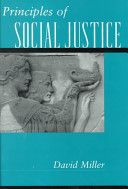
Social justice has been the animating ideal of democratic governments throughout the twentieth century. Even those who oppose it recognize its potency. Yet the meaning of social justice remains obscure, and existing theories put forward by political philosophers to explain it have failed to capture the way people in general think about issues of social justice. This book develops a new theory. David Miller argues that principles of justice must be understood contextually, with each principle finding its natural home in a different form of human association. Because modern societies are complex, the theory of justice must be complex, too. The three primary components in Miller’s scheme are the principles of desert, need, and equality.The book uses empirical research to demonstrate the central role played by these principles in popular conceptions of justice. It then offers a close analysis of each concept, defending principles of desert and need against a range of critical attacks, and exploring instances when justice requires equal distribution and when it does not. Finally, it argues that social justice understood in this way remains a viable political ideal even in a world characterized by economic globalization and political multiculturalism. Accessibly written, and drawing upon the resources of both political philosophy and the social sciences, this book will appeal to readers with interest in public policy as well as to students of politics, philosophy, and sociology.
The idea of a virtue has traditionally been important in ethics, but only recently has gained attention as an idea that can explain how we ought to form beliefs as well as how we ought to act. Moral philosophers and epistemologists have different approaches to the idea of intellectual virtue; here, Michael DePaul and Linda Zagzebski bring work from both fields together for the first time to address all of the important issues. It will be required reading for anyone working on either side of the debate.
Do we desire things because they are good, or are they good because we desire them? Objectivists answer that we desire things because they are good; subjectivists answer that things are good because we desire them. Further, does it make sense to account for moral disagreement by claiming, as the moral relativist does, that something might be good for one person but not for another? Some essays in this book consider whether objective moral truths can be grounded in an understanding of the nature of human beings as rational and social animals. Some discuss the ethical theories of historical figures-Aristotle, Aquinas, or Kant-or offer critical assessments of the work of recent and contemporary theorists-such as Moore, Putnam, Ayn Rand, Philippa Foot, and Rosalind Hursthouse. Other essays ask whether moral principles and values can be constructed through a process of practical reasoning or deliberation. Still others consider what the phenomenology of our moral experiences can reveal about moral objectivity.
The substance of these chapters was delivered as a course of lectures at Harvard University, Dartmouth and Wellesley Colleges, Western reserve University, the University of California, and the Twentieth Century Club of Boston. Contents: double aspect of goodness; misconceptions of goodness; self-consciousness; self-direction; self-development; self-sacrifice; nature and spirit; three stages of goodness.
Almost all theories of knowledge and justified belief employ moral concepts and forms of argument borrowed from moral theories, but none of them pay attention to the current renaissance in virtue ethics. This remarkable book is the first attempt to establish a theory of knowledge based on the model of virtue theory in ethics. The book develops the concept of an intellectual virtue, and then shows how the concept can be used to give an account of the major concepts in epistemology, including the concept of knowledge.
ما از اخلاق چه انتظاری داریم؟ این سوال شاید تاحدودی برای عموم مردم و یا متخصصان این رشته قابل پاسخ باشد؛ اینکه خوب بودن را به ما بیاموزد و در تنظیم روابط فردی م...

جشن کتاب تهران به ایستگاه سی و یکم رسیده است. حال و احوال نشر کتاب خوب نیست و باید فرهنگدوستان را به خرید و هدیه دادن کتاب ترغیب نمود. خانه اخلاقپژوهان جوان ب...

بنیاد کتابهای اخلاق اسلامی عمدتا پالایش جان از آلودگیها و آراستن آن به زیباییها است. اندیشه محوری این قبیل کتابها آن است که انسان فعلی آنی نیست که باید باشد...

-
0 Comments