Notice: تابع WP_Block_Type_Registry::register به طورنادرست فراخوانی شد. نامهای نوع بلوک نباید حروف بزرگ داشته باشند. لطفاً برای اطلاعات بیشتر، اشکال زدایی در وردپرس را مشاهده کنید. (این پیام در نگارش 5.0.0 افزوده شده است.) in /home/ethicsho/public_html/wp-includes/functions.php on line 5313
Warning: Use of undefined constant TDC_PATH_LEGACY - assumed 'TDC_PATH_LEGACY' (this will throw an Error in a future version of PHP) in /home/ethicsho/public_html/wp-content/plugins/td-composer/td-composer.php on line 109
Warning: Use of undefined constant TDSP_THEME_PATH - assumed 'TDSP_THEME_PATH' (this will throw an Error in a future version of PHP) in /home/ethicsho/public_html/wp-content/plugins/td-composer/td-composer.php on line 113 بایگانیهای Subconsciousness - خانه اخلاق پژوهان جوان Notice: Trying to access array offset on value of type bool in /home/ethicsho/public_html/wp-content/plugins/wp-ulike/inc/general-functions.php on line 807
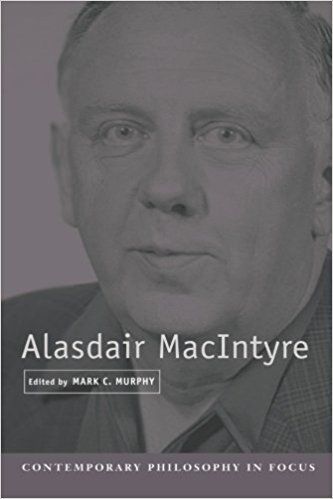
The contribution to contemporary philosophy of Alasdair MacIntyre is enormous. His writings on ethics, political philosophy, philosophy of religion, philosophy of the social sciences and the history of philosophy have established him as one of the philosophical giants of the last fifty years.
To understand one another as individuals and to fulfill the moral duties that require such understanding, we must communicate with each other. We must also maintain protected channels that render reliable communication possible, a demand that, Seana Shiffrin argues, yields a prohibition against lying and requires protection for free speech. This book makes a distinctive philosophical argument for the wrong of the lie and provides an original account of its difference from the wrong of deception. Drawing on legal as well as philosophical arguments, the book defends a series of notable claims–that you may not lie about everything to the “murderer at the door,” that you have reasons to keep promises offered under duress, that lies are not protected by free speech, that police subvert their mission when they lie to suspects, and that scholars undermine their goals when they lie to research subjects. Many philosophers start to craft moral exceptions to demands for sincerity and fidelity when they confront wrongdoers, the pressures of non-ideal circumstances, or the achievement of morally substantial ends. But Shiffrin consistently resists this sort of exceptionalism, arguing that maintaining a strong basis for trust and reliable communication through practices of sincerity, fidelity, and respecting free speech is an essential aspect of ensuring the conditions for moral progress, including our rehabilitation of and moral reconciliation with wrongdoers.
The Ethics of Aesthetics in Japanese Cinema and Literatureis a study of the ethics of modern Japanese aesthetics from the 1930s, through WWII and into the postwar period. What makes this book unique is that Nina Cornyetz opens up the field in new and controversial ways by exploring the tensions and harmonies between psychoanalytic ethics of the drive and socio-political ethics of relation to the other. Rejecting the convention of viewing these as contradictory, Cornyetz insists that the exemplars of psychoanalytic ethics are to the contrary, simultaneously politically ethical. Cornyetz embarks on innovative and unprecedented readings of some of the most significant literary and film texts of the Japanese canon, including works by Kawabata Yasunari, Mishima Yukio, Abe Kôbô and Shinoda Masahiro, all renowned for their texts’ aesthetic and philosophic brilliance. The study looks at how relations between individuals and communities in these texts either reiterate or transcend stereotypes, andhow desire is or is not limited by sociocultural norms. Cornyetz argues that these authors’ and filmmakers’ concepts of beauty and relation to others were, in fact, deeply impacted by political and social factors. Ranging from a discussion of fascist aesthetics to heterosexism in modern Japan,The Ethics of Aesthetics in Japanese Cinema and Literatureshows how certain changing political, intellectual and artistic issues, as well as sociocultural norms, variously nuanced these texts’ depictions of desire and the ‘other’. Through her analysis of cultural texts such as the filmsWoman in the DunesandDouble Suicide, Cornyetz challenges the convention that praises the universality of their artistic, existential or intellectual achievements. Rather she seeks to reorient these within a specifically Japanese historical context to give a new and insightful interpretation to the work. This ground breaking study is truly interdisciplinary and will appeal to students and scholars of Japaneseliterature, film, gender, culture, history and even psychoanalytic theory.
Is it rational to be moral? Can moral disputes be settled rationally? Which criteria determine what we have a good reason to do? In this innovative book, Logi Gunnarsson takes issue with the assumption made by many philosophers faced with the problem of reconciling moral norms with a scientific world view, namely that morality must be offered a non-moral justification based on a formal concept of rationality. He argues that the criteria for the rationality of an action are irreducibly substantive, rather than purely formal, and that assuming that morality must be given a non-moral justification amounts to a distortion of both rationality and morality. His discussion includes substantial critical engagement with major thinkers from two very different philosophical traditions, and is notable for its clear and succinct account of Habermas’ discourse ethics. It will appeal to anyone interested in practical reason and the rational credentials of morality.
Widely regarded as one of the foremost figures in contemporary philosophy of religion, Linda Zagzebski has written a new book that will be seen as a major contribution to ethical theory and theological ethics. At the core of the book lies a new form of virtue theory based on the emotions. Quite distinct from deontological, consequentialist and teleological virtue theories, this one has a particular theological, indeed Christian, foundation. The new theory helps to resolve philosophical problems and puzzles of various kinds: the dispute between cognitivism and non-cognitivism in moral psychology, the claims and counterclaims of realism and anti-realism in the metaphysics of value, and paradoxes of perfect goodness in natural theology, including the problem of evil. As with Zagzebski’s previous Cambridge book Virtues of the Mind, this new book will be sought out eagerly by a broad swathe of professionals and graduate students in philosophy and religious studies.
ما از اخلاق چه انتظاری داریم؟ این سوال شاید تاحدودی برای عموم مردم و یا متخصصان این رشته قابل پاسخ باشد؛ اینکه خوب بودن را به ما بیاموزد و در تنظیم روابط فردی م...

جشن کتاب تهران به ایستگاه سی و یکم رسیده است. حال و احوال نشر کتاب خوب نیست و باید فرهنگدوستان را به خرید و هدیه دادن کتاب ترغیب نمود. خانه اخلاقپژوهان جوان ب...

بنیاد کتابهای اخلاق اسلامی عمدتا پالایش جان از آلودگیها و آراستن آن به زیباییها است. اندیشه محوری این قبیل کتابها آن است که انسان فعلی آنی نیست که باید باشد...

-
0 Comments