Notice: تابع WP_Block_Type_Registry::register به طورنادرست فراخوانی شد. نامهای نوع بلوک نباید حروف بزرگ داشته باشند. لطفاً برای اطلاعات بیشتر، اشکال زدایی در وردپرس را مشاهده کنید. (این پیام در نگارش 5.0.0 افزوده شده است.) in /home/ethicsho/public_html/wp-includes/functions.php on line 5313
Warning: Use of undefined constant TDC_PATH_LEGACY - assumed 'TDC_PATH_LEGACY' (this will throw an Error in a future version of PHP) in /home/ethicsho/public_html/wp-content/plugins/td-composer/td-composer.php on line 109
Warning: Use of undefined constant TDSP_THEME_PATH - assumed 'TDSP_THEME_PATH' (this will throw an Error in a future version of PHP) in /home/ethicsho/public_html/wp-content/plugins/td-composer/td-composer.php on line 113 بایگانیهای Social Scientists - Vocational Guidance - خانه اخلاق پژوهان جوان Notice: Trying to access array offset on value of type bool in /home/ethicsho/public_html/wp-content/plugins/wp-ulike/inc/general-functions.php on line 807
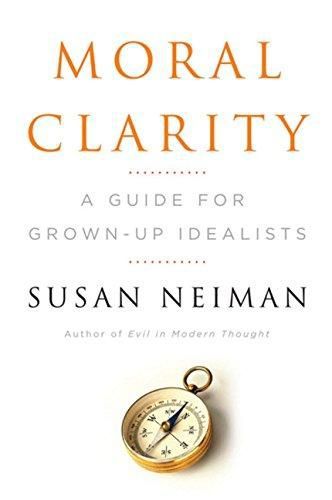
Susan Neiman is a moral philosopher committed to making the tools of her trade relevant to real life. In Moral Clarity, she shows how resurrecting a moral vocabulary good and evil, heroism and nobility can steer us clear of the dogmas of the right and the helpless pragmatism of the left. In search of a framework for forming clear opinions and taking responsible action on today’s urgent political and social questions, Neiman reaches back to the eighteenth century, retrieving a set of virtues happiness, reason, reverence, and hope that were held high by every Enlightenment thinker. She shows that the pursuit of moral clarity is not a matter of religious faith but is open to all who are committed to these ideals, believers and nonbelievers alike. And she draws on literature, evolutionary theory, and other contemporary research to show why, by keeping before us the distinction between the real and the possible, these ideals continue to guide and inspire.
R. M. Hare has brought together in this volume the best of his uncollected essays in moral philosophy, several of them previously unpublished or revised for this collection. They span the whole range of his ethical interests, from the most abstract to the most down-to-earth. The reader willfind here the bases of his ethical theory in Kantian prescriptivism, utilitarianism, and the logic of imperatives, and will see that theory applied to issues of bioethics, medical ethics, business ethics, loyalty and obedience, and racism. The essays display the author’s characteristic clarity andvigour; some of them are polemical, targeting particular opponents and rival theories. The volume provides a compelling demonstration of Hare’s commitment to bringing together the theoretical and the practical in ethics.
This second edition of the Oxford Handbook of Free Will is intended to be a sourcebook and guide to current work on free will and related subjects. Its focus is on writings of the past forty years, in which there has been a resurgence of interest in traditional issues about the freedom of the will in the light of new developments in the sciences, philosophy and humanistic studies. Special attention is given to research on free will of the first decade of the twenty-first century since the publication of the first edition of the Handbook. All the essays have been newly written or rewritten for this volume. In addition, there are new essayists and essays surveying topics that have become prominent in debates about free will in the past decade, including new work on the relation of free will to physics, the neurosciences, cognitive science, psychology and empirical philosophy, new versions of traditional views (compatibilist, incompatibilist, libertarian, etc.) and new views (e.g., revisionism) that have emerged. The twenty-eight essays by prominent international scholars and younger scholars cover a host of free will related issues, such as moral agency and responsibility, accountability and blameworthiness in ethics, autonomy, coercion and control in social theory, criminal liability, responsibility and punishment in legal theory, issues about the relation of mind to body, consciousness and the nature of action in philosophy of mind and the cognitive and neurosciences, questions about divine foreknowledge, providence and human freedom in philosophy of religion, and general metaphysical questions about necessity and possibility, determinism, time and chance, quantum reality, causation and explanation.
ما از اخلاق چه انتظاری داریم؟ این سوال شاید تاحدودی برای عموم مردم و یا متخصصان این رشته قابل پاسخ باشد؛ اینکه خوب بودن را به ما بیاموزد و در تنظیم روابط فردی م...

جشن کتاب تهران به ایستگاه سی و یکم رسیده است. حال و احوال نشر کتاب خوب نیست و باید فرهنگدوستان را به خرید و هدیه دادن کتاب ترغیب نمود. خانه اخلاقپژوهان جوان ب...

بنیاد کتابهای اخلاق اسلامی عمدتا پالایش جان از آلودگیها و آراستن آن به زیباییها است. اندیشه محوری این قبیل کتابها آن است که انسان فعلی آنی نیست که باید باشد...

-
0 Comments