Notice: تابع WP_Block_Type_Registry::register به طورنادرست فراخوانی شد. نامهای نوع بلوک نباید حروف بزرگ داشته باشند. لطفاً برای اطلاعات بیشتر، اشکال زدایی در وردپرس را مشاهده کنید. (این پیام در نگارش 5.0.0 افزوده شده است.) in /home/ethicsho/public_html/wp-includes/functions.php on line 5313
Warning: Use of undefined constant TDC_PATH_LEGACY - assumed 'TDC_PATH_LEGACY' (this will throw an Error in a future version of PHP) in /home/ethicsho/public_html/wp-content/plugins/td-composer/td-composer.php on line 109
Warning: Use of undefined constant TDSP_THEME_PATH - assumed 'TDSP_THEME_PATH' (this will throw an Error in a future version of PHP) in /home/ethicsho/public_html/wp-content/plugins/td-composer/td-composer.php on line 113 بایگانیهای Social Sciences/ Research/ Moral And Ethical Aspects - خانه اخلاق پژوهان جوان Notice: Trying to access array offset on value of type bool in /home/ethicsho/public_html/wp-content/plugins/wp-ulike/inc/general-functions.php on line 807
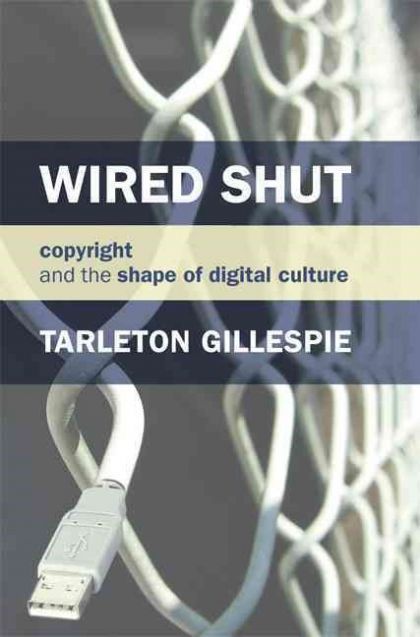
Winner, ICA 2009 Outstanding Book Award given by the International Communication Association. and Winner, 2009 CITASA Book Award given by the Communication and Information Technologies Section of the American Sociological AssociationWhile the public and the media have been distracted by the story of Napster, warnings about the evils of “piracy,” and lawsuits by the recording and film industries, the enforcement of copyright law in the digital world has quietly shifted from regulating copying to regulating the design of technology. Lawmakers and commercial interests are pursuing what might be called a technical fix: instead of specifying what can and cannot be done legally with a copyrighted work, this new approach calls for the strategic use of encryption technologies to build standards of copyright directly into digital devices so that some uses are possible and others rendered impossible. In Wired Shut, Tarleton Gillespie examines this shift to “technical copy protection” and its profound political, economic, and cultural implications.Gillespie reveals that the real story is not the technological controls themselves but the political, economic, and cultural arrangements being put in place to make them work. He shows that this approach to digital copyright depends on new kinds of alliances among content and technology industries, legislators, regulators, and the courts, and is changing the relationship between law and technology in the process. The film and music industries, he claims, are deploying copyright in order to funnel digital culture into increasingly commercial patterns that threaten to undermine the democratic potential of a network society.In this broad context, Gillespie examines three recent controversies over digital copyright: the failed effort to develop copy protection for portable music players with the Strategic Digital Music Initiative (SDMI); the encryption system used in DVDs, and the film industry’s legal response to the tools that challenged them; and the attempt by the FCC to mandate the “broadcast flag” copy protection system for digital television. In each, he argues that whether or not such technical constraints ever succeed, the political alignments required will profoundly shape the future of cultural expression in a digital age.
Choice Outstanding Academic Title, 2000.A Choice Outstanding Academic Title for 1999Academic debates about pluralism and truth have become increasingly polarized in recent years. One side embraces extreme relativism, deeming any talk of objective truth as philosophically naive. The opposition, frequently arguing that any sort of relativism leads to nihilism, insists on an objective notion of truth according to which there is only one true story of the world. Both sides agree that there is no middle path.In Truth in Context, Michael Lynch argues that there is a middle path, one where metaphysical pluralism is consistent with a robust realism about truth. Drawing on the work of Hilary Putnam, W. V. O. Quine, and Ludwig Wittgenstein, among others, Lynch develops an original version of metaphysical pluralism, which he calls relativistic Kantianism. He argues that one can take facts and propositions as relative without implying that our ordinary concept of truth is a relative, epistemic, or “soft” concept. The truths may be relative, but our concept of truth need not be.
This groundbreaking volume is the first to analyze how and to what extent bioethics considerations influence today’s judges. Previous books have attended to the law that governs bioethics problems, but Bioethics in Law is the first to examine when and how bioethical issues impact judicial reasoning and decision-making. The author undertakes careful analysis of health care committee recommendations, institutional review board determinations, bioethics commission reports, bioethics research materials, briefs of bioethics amicus curiae, and bioethics expert testimony that has been used in legal proceedings during the last decade. Through such examination, Bioethics in Law is able to offer critical insight into the ways that judges have invited, accepted, relied on, followed, critiqued, ignored, rejected, overridden, transformed, and otherwise responded to bioethics communications. This volume is the on the cutting-edge of the relationship of bioethics to law, and explores how law receives, assesses, and uses bioethics. Unlike previous treatments, which perceive the relationship between law and bioethics in an abstract or idealized sense, this book presents actual communications that have found their way to law, and then analyzes their effect on judicial outcomes.
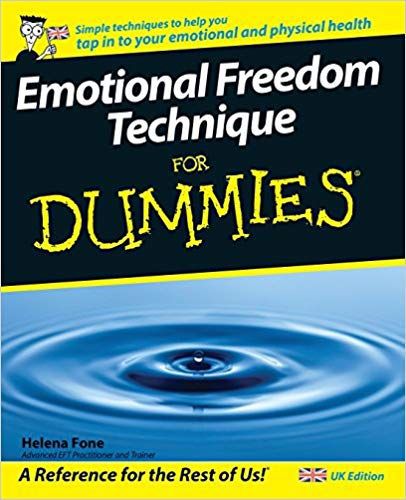
A member of the Energy Therapies family – which includes, acupuncture, acupressure and shiatsu – Emotional Freedom Technique is a simple and increasingly popular self- development therapy used to treat a wide range of physical and emotional issues. Popularised by figures including Paul McKenna, EFT is based on the theory that negative emotions are caused by disturbances in the body’s energy. Often referred to as acupuncture without needles, EFT involves locating and tapping on meridian points in the body while thinking of a negative emotion and using positive suggestion and thoughts to alter the body’s energy flow, restore balance and reprogram thought processes. This no-nonsense guide introduces readers to the theories and methods behind the technique and shows them how to use it to reduce the physical and emotional impact of a wide range of issues including, depression, fears, phobias, anger, addictions, sleeplessness and pain. It’s simple, safe, anyone can practice it at home and with EFT For Dummies readers can banish bad habits for good. Includes information on: The path to emotional freedom – explaining EFT Understanding your emotions Basic EFT tapping routines Improving emotional health with EFT Practising EFT on yourself and others Helena Fone is a registered EFT practitioner and trainer and an advanced hypnotherapist. She has a diploma in advanced holistic hypnotherapy and practices CBT and NLP. Find out more about Helena at www.EFTRegister.com
ما از اخلاق چه انتظاری داریم؟ این سوال شاید تاحدودی برای عموم مردم و یا متخصصان این رشته قابل پاسخ باشد؛ اینکه خوب بودن را به ما بیاموزد و در تنظیم روابط فردی م...

جشن کتاب تهران به ایستگاه سی و یکم رسیده است. حال و احوال نشر کتاب خوب نیست و باید فرهنگدوستان را به خرید و هدیه دادن کتاب ترغیب نمود. خانه اخلاقپژوهان جوان ب...

بنیاد کتابهای اخلاق اسلامی عمدتا پالایش جان از آلودگیها و آراستن آن به زیباییها است. اندیشه محوری این قبیل کتابها آن است که انسان فعلی آنی نیست که باید باشد...

-
0 Comments