Notice: تابع WP_Block_Type_Registry::register به طورنادرست فراخوانی شد. نامهای نوع بلوک نباید حروف بزرگ داشته باشند. لطفاً برای اطلاعات بیشتر، اشکال زدایی در وردپرس را مشاهده کنید. (این پیام در نگارش 5.0.0 افزوده شده است.) in /home/ethicsho/public_html/wp-includes/functions.php on line 5313
Warning: Use of undefined constant TDC_PATH_LEGACY - assumed 'TDC_PATH_LEGACY' (this will throw an Error in a future version of PHP) in /home/ethicsho/public_html/wp-content/plugins/td-composer/td-composer.php on line 109
Warning: Use of undefined constant TDSP_THEME_PATH - assumed 'TDSP_THEME_PATH' (this will throw an Error in a future version of PHP) in /home/ethicsho/public_html/wp-content/plugins/td-composer/td-composer.php on line 113 بایگانیهای Self-realization - خانه اخلاق پژوهان جوان Notice: Trying to access array offset on value of type bool in /home/ethicsho/public_html/wp-content/plugins/wp-ulike/inc/general-functions.php on line 807
Conceived originally as a serious presentation of the development of philosophy for Catholic seminary students, Frederick Copleston’s nine-volumeA History Of Philosophyhas journeyed far beyond the modest purpose of its author to universal acclaim as the best history of philosophy in English. Copleston, an Oxford Jesuit of immense erudition who once tangled with A.J. Ayer in a fabled debate about the existence of God and the possibility of metaphysics, knew that seminary students were fed a woefully inadequate diet of theses and proofs, and that their familiarity with most of history’s great thinkers was reduced to simplistic caricatures. Copleston set out to redress the wrong by writing a complete history of Western Philosophy, one crackling with incident and intellectual excitement – and one that gives full place to each thinker, presenting his thought in a beautifully rounded manner and showing his links to those who went before and to those who came after him.
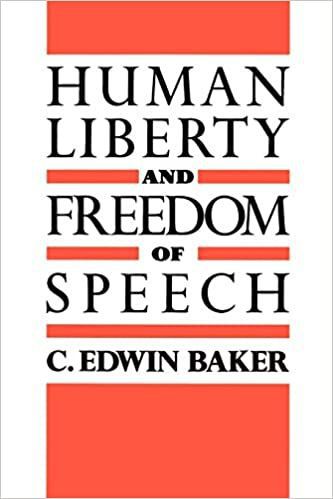
Although an inchoate liberty theory of freedom of speech has deep roots in Supreme Court decisions and political history, it has been overshadowed in judicial decisions and scholarly commentary by the marketplace of ideas theory. In this book, Baker critiques the assumptions required by the marketplace of ideas theory and develops the liberty theory, showing its philosophical soundness, persuasiveness, and ability to protect free speech. He argues that First Amendment liberty rights (as well as Fourteenth Amendment equality rights) required by political or moral theory are central to the possibility of progressive change. Problem areas are examined, including the question of whether individual political and civil rights can in principle be distinguished from property rights, freedom of the press, and the use of public spaces for expressive purposes.
Leading political theologian Oliver ODonovan here takes a fresh look at some traditional moral arguments about war. Modern Christians differ widely on this issue. A few hold that absolute pacifism is the only viable Christian position, others subscribe in various ways to concepts of ‘just war developed out of a Western tradition that arose from the legacies of Augustine and Aquinas, while others still adopt more pragmatically realist postures. Professor ODonovan re-examines questions of contemporary urgency including the use of biological and nuclear weapons, military intervention, economic sanctions, war crimes trials and the roles of the Geneva Convention, international conventions and the UN. His enquiry opens with a challenging dedication to the new Archbishop of Canterbury and proceeds to shed new light on vital topics with which the Archbishop and others will be very directly engaged. It should be read by anyone concerned with the ethics of warfare.
If globalization is to be a benefit and not a burden to humankind, it must be governed by global institutions that are perceived by all people to be democratic and just. But before we can create such institutions, we must imagine them, and that requires a rethinking and extension of normative political theory. Global Justice and Transnational Politics encourages and advances that work.The book’s first part, “Weak Universalism,” contains essays by Amartya Sen and Leif Wenar that offer constructive developments of John Rawls’s statement of the principles a liberal polity might reasonably propose to govern its relations with other peoples. The second part, “Strong Universalism and Transnational Commitments,” contains essays by Jurgen Habermas, David Luban, Martha Nussbaum, and Thomas Pogge examining the normative sources and possible types of cross-border commitments. In the third part, “Transnational Politics and National Identities,” Habermas discusses the possibility of a democratic political order developing within the institutional framework of the European Union; Thomas McCarthy draws on Kant to show how cosmopolitanism might be reconciled with the legacy of nationalism; and Craig Calhoun tries to retrieve a positive aspect of the tradition of nationalism, namely that it provides large populations with a powerful way of imagining political community across space and time.
ما از اخلاق چه انتظاری داریم؟ این سوال شاید تاحدودی برای عموم مردم و یا متخصصان این رشته قابل پاسخ باشد؛ اینکه خوب بودن را به ما بیاموزد و در تنظیم روابط فردی م...

جشن کتاب تهران به ایستگاه سی و یکم رسیده است. حال و احوال نشر کتاب خوب نیست و باید فرهنگدوستان را به خرید و هدیه دادن کتاب ترغیب نمود. خانه اخلاقپژوهان جوان ب...

بنیاد کتابهای اخلاق اسلامی عمدتا پالایش جان از آلودگیها و آراستن آن به زیباییها است. اندیشه محوری این قبیل کتابها آن است که انسان فعلی آنی نیست که باید باشد...

-
0 Comments