Notice: تابع WP_Block_Type_Registry::register به طورنادرست فراخوانی شد. نامهای نوع بلوک نباید حروف بزرگ داشته باشند. لطفاً برای اطلاعات بیشتر، اشکال زدایی در وردپرس را مشاهده کنید. (این پیام در نگارش 5.0.0 افزوده شده است.) in /home/ethicsho/public_html/wp-includes/functions.php on line 5313
Warning: Use of undefined constant TDC_PATH_LEGACY - assumed 'TDC_PATH_LEGACY' (this will throw an Error in a future version of PHP) in /home/ethicsho/public_html/wp-content/plugins/td-composer/td-composer.php on line 109
Warning: Use of undefined constant TDSP_THEME_PATH - assumed 'TDSP_THEME_PATH' (this will throw an Error in a future version of PHP) in /home/ethicsho/public_html/wp-content/plugins/td-composer/td-composer.php on line 113 بایگانیهای Self-determination, National - خانه اخلاق پژوهان جوان Notice: Trying to access array offset on value of type bool in /home/ethicsho/public_html/wp-content/plugins/wp-ulike/inc/general-functions.php on line 807
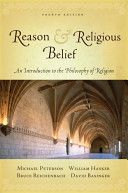
What is the status of belief in God? Must a rational case be made or can such belief be properly basic? Is it possible to reconcile the concept of a good God with evil and suffering? In light of great differences among religions, can only one religion be true? The most comprehensive work of its kind, Reason and Religious Belief, now in its fourth edition, explores these and other perennial questions in the philosophy of religion. Drawing from the best in both classical and contemporary discussions, the authors examine religious experience, faith and reason, the divine attributes, arguments for and against the existence of God, divine action (in various forms of theism), Reformed epistemology, religious language, religious diversity, religion and science, and much more. Retaining the engaging style and thorough coverage of previous editions, the fourth edition adds a critical new chapter on the ontological status of religion and the nature of religious claims. It also features revised treatments of omnipotence, miracles, and providence and updated suggestions for further reading. A sophisticated yet accessible introduction, Reason and Religious Belief, Fourth Edition, is ideally suited for use with the authors’ companion anthology, Philosophy of Religion: Selected Readings, Third Edition (OUP, 2006).
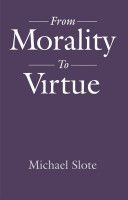
In this book, Slote offers the first full-scale foundational account of virtue ethics to have appeared since the recent revival of interest in the ethics of virtue. Slote advocates a particular form of such ethics for its intuitive and structural advantages over Kantianism, utilitarianism, and common-sense morality, and he argues that the problems of other views can be avoided and a contemporary plausible version of virtue ethics achieved only by abandoning specifically moral concepts for general aretaic notions like admirability and virtue. Although this study is not bound by particular Aristotelian doctrines, it places an Aristotelian emphasis on both self-benefiting and other-benefiting virtues. Slote criticizes Kantian and common-sense morality for internal incoherencies and for downgrading the moral individual and her well-being in some previously unnoticed ways. By contrast, this book defends a distinctive, intuitive, and symmetric ethical principle according to which we should balance self-concern with concern for others, but it also concludes that there is, contrary to utilitarianism, no single basis for status as a virtue nor any simple relation between the virtues and human well-being.
The Blackwell Guide to Aristotle’s Nicomachean Ethics illuminates Aristotle’s ethics for both academics and students new to the work, with sixteen newly commissioned essays by distinguished international scholars. The structure of the book mirrors the organization of the Nichomachean Ethics itself.Discusses the human good, the general nature of virtue, the distinctive characteristics of particular virtues, voluntariness, self-control, and pleasure.
“A Letter Concerning Toleration is an English translation of a Latin work, the Epistola de Tolerantia , that John Locke wrote towards the end of the year 1685, while living – often in hiding – in the Dutch Republic. The Epistola was not however published until 1689, after Locke’s return to England, and the English translation followed very shortly after. It soon met with a critical reply, in a pamphlet written by the Oxford chaplain Jonas Proast, which was to launch a polemical exchange in the course of which Locke wrote three further defences of his argument for toleration. Unlike the Epistola/Letter (hereafter: Letter ), which is intense and compactly expressed, these defences are lengthy and often repetitive. But they comprise Locke’s most fully elaborated statement of his case; they are valuable, too, because the pressure of controversy led him to clarify the priorities among his arguments”–
ما از اخلاق چه انتظاری داریم؟ این سوال شاید تاحدودی برای عموم مردم و یا متخصصان این رشته قابل پاسخ باشد؛ اینکه خوب بودن را به ما بیاموزد و در تنظیم روابط فردی م...

جشن کتاب تهران به ایستگاه سی و یکم رسیده است. حال و احوال نشر کتاب خوب نیست و باید فرهنگدوستان را به خرید و هدیه دادن کتاب ترغیب نمود. خانه اخلاقپژوهان جوان ب...

بنیاد کتابهای اخلاق اسلامی عمدتا پالایش جان از آلودگیها و آراستن آن به زیباییها است. اندیشه محوری این قبیل کتابها آن است که انسان فعلی آنی نیست که باید باشد...

-
0 Comments